Lowering LDL cholesterol doesn’t require medication as a first line of defense.
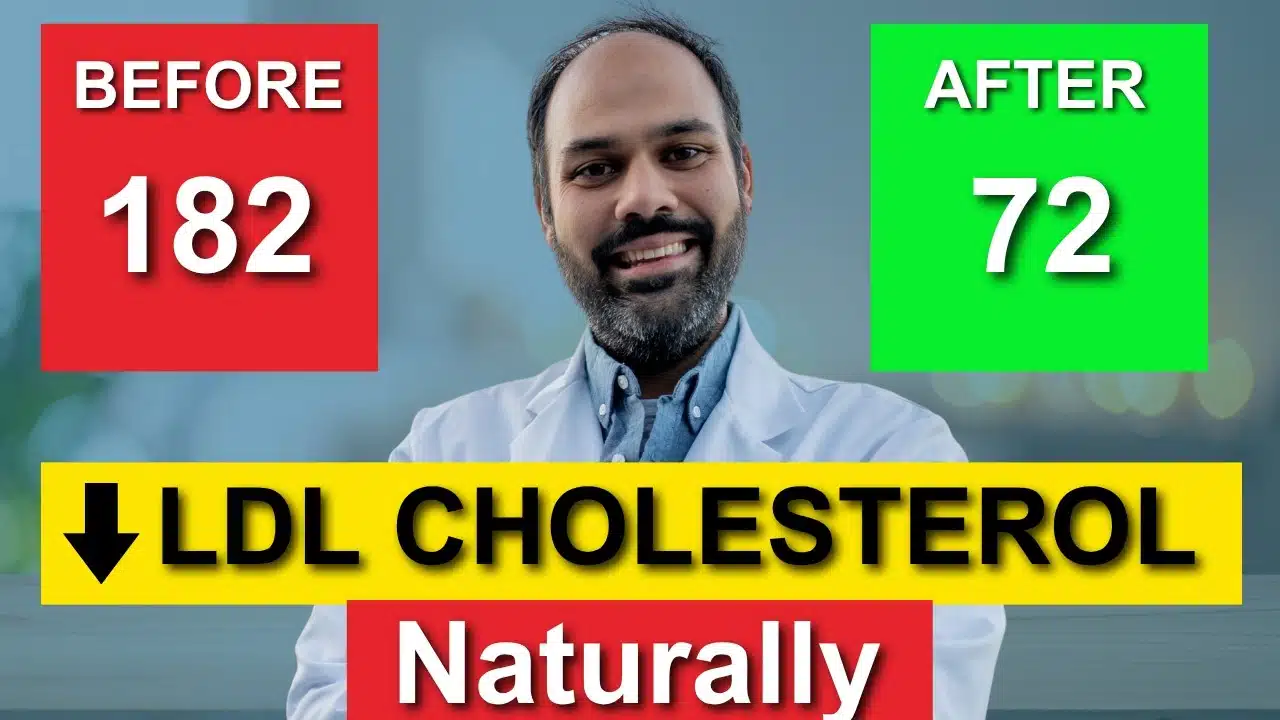
Dr. Kabir Harricharan Singh, a physician board certified in both family and obesity medicine, recently shared nine evidence-based strategies that can drop LDL by up to 30% without touching a single prescription.
Most people obsess over cutting eggs while their iced coffee loads them with dangerous amounts of saturated fat.
Others reach for supplements that could land them in hospital beds while ignoring interventions backed by robust scientific evidence.
Jump to:
- Dietary Fat Quality: What Actually Matters
- Switch Your Coffee Brewing Method
- Dietary Cholesterol and Genetic Variability
- Soluble Fiber Forces Cholesterol Clearance
- Plant Sterols: Benefits With Hidden Risks
- Replace Animal Protein With Plant Protein
- Exercise: The Real Numbers
- Sustainable Weight Loss Targets Root Causes
- Two Supplements to Avoid
- The Real Goal Beyond Numbers
Dietary Fat Quality: What Actually Matters
Fat quality determines whether cholesterol improves or worsens. Four categories define this landscape.
Saturated fat raises both LDL and Apo-B particle count, which predicts heart attack risk. Found in coconut oil, butter, fatty red meats, full-fat dairy, and processed snacks, it’s working against cardiovascular health.
Trans fat used to dominate health warnings but has largely disappeared from food supply after bans. Avoiding ultraprocessed foods eliminates most remaining exposure.
Monounsaturated fats (MUFAs) from olive oil, avocados, and almonds represent safe swaps. LDL holds steady or improves when these replace saturated fats.
Polyunsaturated fats (PUFAs) deliver massive benefits. Omega-3s from fatty fish, walnuts, and flaxseed, plus omega-6s from sunflower seeds and certain vegetable oils produce bigger LDL drops than any other fat category.
What replaces saturated fat determines success. A landmark study in the American Journal of Clinical Nutrition proved this conclusively.
Swapping saturated fat for refined carbs produced zero cardiovascular benefit. Swapping for PUFAs created real, measurable improvement.
Cutting 100 calories of pure saturated fat—roughly one glazed donut—and replacing with PUFAs drops LDL by 6.5 to 10.5 points. Swapping for MUFAs or whole food carbs still helps, just less dramatically. Trading for ultraprocessed foods like gummy bears or sugary drinks yields nothing.
Common Traps Sabotaging Results
Coconut oil contains 82% saturated fat—higher than butter or lard. Multiple trials show it meaningfully raises LDL, prompting the American Heart Association to call it out by name.
Coffee orders destroy progress faster than almost anything else. One large iced cappuccino from major chains packs up to 21 grams saturated fat.
That’s the same saturated fat as 16 slices of bacon in one drink.
People cut eggs, snack on walnuts, execute everything correctly all morning, then undo it with a single afternoon coffee run.
Switch Your Coffee Brewing Method
This might be the highest leverage change on the entire list. Cost? Nothing.
Coffee naturally contains cafestol and kahweol, compounds that block liver receptors regulating bile acid handling. When blocked, LDL rises.
Paper filters trap these compounds almost entirely. French press, espresso, and unfiltered coffee let them pour straight into cups.
A review of six randomized trials found switching from unfiltered to paper-filtered coffee dropped LDL by an average of 15 points. From changing brewing method alone.
Dietary Cholesterol and Genetic Variability
Some people eat eggs daily with almost no cholesterol effect. Others eat identical amounts and watch LDL climb.
No routine test identifies which group you belong to. When dietary cholesterol reaches the small intestine, average absorption sits around 50%. But genetic variability pushes some people to 90% absorption while others absorb almost none.
Randomized trials show average people experience roughly five-point LDL increases per egg per day—modest. If eggs replace worse options like pastries or sugary cereal, the swap might be neutral or beneficial.
But eating three or four eggs daily while trying to meaningfully lower LDL warrants testing a reduction, especially for potential hyperabsorbers.
Soluble Fiber Forces Cholesterol Clearance
This underused tool costs less than everything else combined. The mechanism is genuinely clever.
Liver pulls LDL from bloodstream and dumps it into small intestines as bile. Normally, bodies recycle about half. Soluble fiber breaks that cycle.
When hitting water, soluble fiber turns into thick gel—think chia seeds in liquid. That gel traps bile acids and carries them out in stool instead of allowing reabsorption.
Liver must pull more LDL from bloodstream to replace lost bile. Fiber forces daily cholesterol clearance.
For every 1 gram soluble fiber added daily, expect roughly two-point LDL drops. It compounds quickly.
Best food sources include:
- Oats and barley
- Psyllium husk
- Legumes like lentils, black beans, chickpeas
- Chia seeds and flaxseeds
- Apples and Brussels sprouts
Psyllium husk—Metamucil’s active ingredient—shows strongest supplement evidence. One tablespoon twice daily produces average 13-point LDL drops.
Plant Sterols: Benefits With Hidden Risks
Plant sterols and stanols compete with dietary cholesterol for gut absorption, reducing bloodstream entry. Data consistently shows 2 grams daily can drop LDL by 5-10%.
Getting 2 grams from food alone requires eating roughly 30 avocados daily. Realistically, fortified foods or supplements become necessary.
But a small subset of people are sterol hyperabsorbers. Instead of blocking cholesterol absorption, their bodies overabsorb sterols themselves. In that group, high doses may actually increase cardiovascular risk.
People with strong family histories of premature coronary disease should consult physicians before starting high-dose sterols.
Replace Animal Protein With Plant Protein
This doesn’t require giving up meat. Just swap it out a few times weekly.
One massive review of 108 randomized trials found replacing animal protein with plant protein drops LDL by about six points on average.
Plant protein contains zero dietary cholesterol, stays naturally low in saturated fat, and comes bundled with soluble fiber, plant sterols, and anti-inflammatory compounds. Single plant protein meals stack three strategies simultaneously.
Dr. David Jenkins at University of Toronto combined plant protein, soluble fiber, plant sterols, and nuts into the Portfolio Diet, validated in JAMA. It dropped LDL approximately 30%—comparable to low-dose statins from food alone.
Exercise: The Real Numbers
For years, lipid specialists thought exercise barely touched LDL. Recent well-conducted meta-analysis finally clarified it.
Aerobic exercise four times weekly lowers LDL by about five to six points independently. Adding resistance training—just two sessions weekly—climbs total reduction to roughly 11 points.
That’s before counting everything else exercise delivers: better insulin sensitivity, lower triglycerides, higher HDL, lower blood pressure, reduced systemic inflammation.
Ideal target: 150 to 180 minutes weekly of Zone 2 cardio—conversation pace—plus two to three resistance training sessions.
Zone 2 specifically trains mitochondria to burn fat more efficiently, directly improving insulin resistance driving plaque formation at its root through atherogenic dyslipidemia.
Even if exercise never moved LDL by a single point, VO2 max—aerobic fitness—ranks among medicine’s strongest predictors of all-cause mortality. Stronger than cholesterol numbers themselves.
Sustainable Weight Loss Targets Root Causes
Visceral fat around abdominal organs isn’t extra padding. It behaves like an active organ pumping out inflammatory signals, driving insulin resistance, pushing liver VLDL overproduction, and actively suppressing HDL.
Meta-analysis in American Journal of Clinical Nutrition tracked people maintaining weight loss for at least 12 months. Results showed clear dose-dependent LDL drops: about 1.3 points per kilogram lost.
Lose 10 kg, expect roughly 13 points LDL reduction—before counting improvements in triglycerides, HDL, blood pressure, insulin sensitivity, and inflammation.
Sustainable approach requires:
- Protein: 1.6 to 2.2 grams per kilogram body weight daily protects muscle mass during calorie deficits
- Resistance training: Prevents metabolic rate crashes as weight drops
- Whole foods focus: Lowers caloric density instead of just restricting calories on processed diets
Two Supplements to Avoid
Red yeast rice lowers LDL through identical mechanism as statin drugs because it contains monacolin K—chemically identical to lovastatin medication.
The problem isn’t mechanism. It’s mycotoxin citrinin contamination damaging kidneys. Independent lab testing found citrinin across products, including those labeled “citrinin-free.”
In 2024, in Japan, over 500 people taking red yeast rice supplements were hospitalized and up to 80 of them died of kidney failure.
Green tea extract (EGCG) differs drastically from drinking green tea. Concentrated supplements contain catechin doses never achieved through tea consumption.
High-dose EGCG causes documented acute liver damage, sometimes severe enough requiring transplants—even at label-recommended doses.
The Real Goal Beyond Numbers
LDL numbers aren’t goals. Preventing heart attacks, preventing strokes, adding years to life and life to years—that’s the goal.
These nine strategies work because they don’t just chase lab values. They improve insulin sensitivity, lower inflammation, reduce visceral fat, and improve blood vessel health from inside out.
Even if LDL doesn’t drop as hoped, every single intervention still lowers real lifetime risk.