Creatine has long been synonymous with muscle growth and athletic performance, but emerging research suggests this humble powder sitting in gym bags worldwide might be doing something far more profound for health than previously understood.
When fitness expert Thomas DeLauer started taking creatine consistently, he noticed something unexpected that had nothing to do with his workouts.
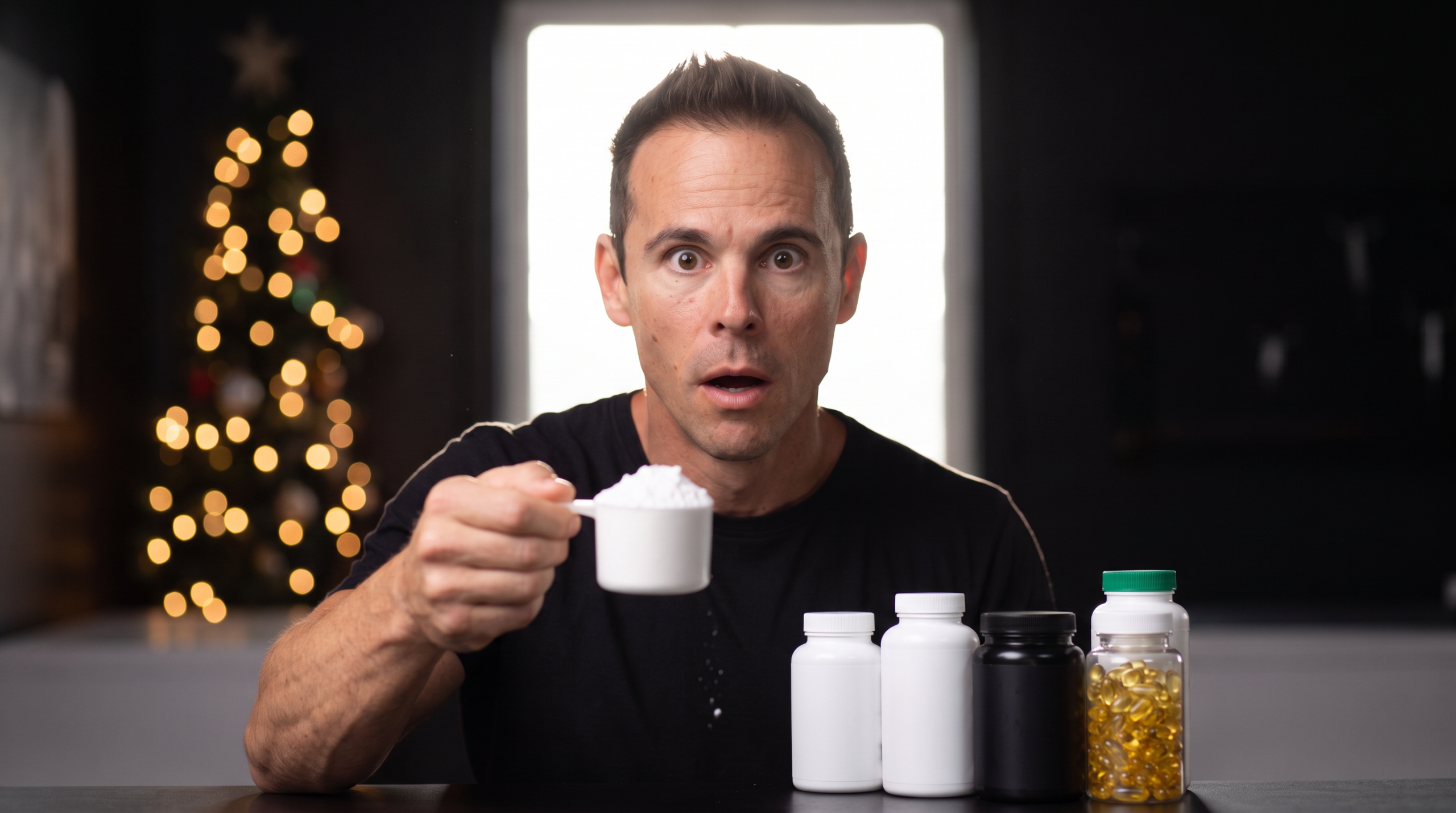
He felt cleaner, more efficient, like his liver was working better.
What he discovered in the research explains exactly why: creatine supplementation might be one of the most effective and overlooked tools for supporting your body’s natural detoxification systems.
Jump to:
The Hidden Cost of Making Your Own Creatine
Your body’s primary detoxification system runs on glutathione, a molecule your liver uses during phase two detoxification to neutralize and eliminate toxic compounds.
These include BPAs, phthalates, plastics, and environmental pollutants that have become unavoidable in modern life.
A study published in the New England Journal of Medicine found microplastics in 60% of carotid artery plaques examined, with patients showing detectable microplastics facing significantly higher risks of heart attack and stroke.
Research in Cells confirmed that microplastics increase production of pro-inflammatory cytokines through direct interaction with immune cells and oxidative stress.
Glutathione counteracts this oxidative damage and keeps your detoxification pipeline moving.
But here’s where creatine enters the picture in an unexpected way.
The Glycine Shortage Your Body Faces Daily
Glutathione is synthesized from three amino acids: glutamate, cysteine, and glycine.
While cysteine gets most of the attention—it’s why N-acetylcysteine (NAC) supplements are so popular—glycine is equally critical and far more scarce.
Your body requires approximately 10 grams of glycine daily just for collagen turnover alone. Yet your body manufactures only about 3 grams on its own, and diet typically provides just 2 grams more.
That leaves a 5-gram daily shortfall before accounting for any other needs.
And one of those other needs is substantial: creatine synthesis.
Creatine Production Steals From Detoxification
When your body manufactures creatine internally, the entire glycine molecule gets consumed in that process.
This creates a competitive relationship between creatine synthesis and glutathione production—your body must choose between making creatine for energy and muscle function, or making raw material for your number one detoxification system.
Creatine synthesis wins because muscles and energy systems demand it.
When your body is making its own creatine, it’s pulling glycine away from glutathione production. Your body has to choose between making creatine and making the raw material for your number one detox system.
DeLauer explains this metabolic tug-of-war as the detox system getting “sloppy seconds” of whatever glycine remains after creatine synthesis takes its share.
Supplementation Changes Everything
When you supplement with creatine, your body recognizes it no longer needs to manufacture its own supply.
It down-regulates the enzyme responsible for endogenous creatine synthesis, effectively shutting down that process.
The glycine that was being consumed for creatine production becomes available for other functions, including glutathione synthesis.
By adding creatine, you’re stopping the biggest competitor for glycine. So now the detox system that was running on leftovers has more raw material to work with.
This isn’t about adding more glycine to your system—though that can help too. It’s about eliminating the largest drain on your existing glycine supply.
The Methylation Connection
Creatine synthesis doesn’t just consume glycine. It also uses approximately 40% of all methyl groups in your body.
These methyl groups come from S-adenosylmethionine (SAM), your body’s primary methyl donor, which plays a direct role in liver detoxification during phase two metabolism.
When creatine synthesis consumes nearly half your methyl supply, liver detoxification methylation operates at a disadvantage.
Supplementing creatine removes this metabolic burden entirely.
More methyl groups become available for detoxification reactions that require them, supporting liver function at a fundamental level.
Now you have two critical resources freed up simultaneously:
- Glycine for glutathione production
- Methyl groups for phase two methylation
Both are essential to how your liver identifies, processes, and clears toxins from circulation.
That explains why my liver feels better. Things feel clear. And quite frankly, I noticed my liver enzymes improved, but I don’t want to talk up to that. I can’t guarantee it. It wasn’t in my head either. I’d taken the single biggest drain off my detox system.
Processing Toxins Is Only Half the Battle
Your liver can process toxins efficiently all day long, but those processed compounds get dumped into bile and sent to your intestines.
If gut transit is slow and you lack sufficient fiber to bind bile acids, toxins get reabsorbed back into circulation through a process called enterohepatic recirculation.
This puts your liver back to work on toxins it already dealt with.
Soluble Fiber Completes Detoxification
Soluble fiber binds to bile acids in your gut, trapping toxins conjugated to them and carrying them out through elimination.
It also speeds up transit time, reducing the window for reabsorption.
A meta-analysis in Frontiers in Veterinary Science confirmed that diets containing soluble fiber significantly increased fecal bile acid excretion, a mechanism that occurs in humans as well.
Fiber works on both ends: it carries unprocessed toxins out and upregulates liver detoxification machinery.
Quality sources include:
- Psyllium husk – 5 to 10 grams daily
- Chia seeds
- Flax seeds
A tablespoon or two provides all you need. Ten grams of psyllium husk daily is simple, overlooked, and powerful.
Building a Complete Detox System
Combining these strategies creates a comprehensive approach to supporting natural detoxification:
- Creatine monohydrate: 5 grams daily minimum, 10 grams if over 30 years old. No loading phase required, no cycling needed.
- Soluble fiber: 5 to 10 grams daily from psyllium, chia, or flax to bind bile acids and support elimination.
- N-acetylcysteine (NAC): Provides cysteine for glutathione production, covering both glycine and cysteine pathways.
This three-layer approach addresses detoxification at multiple critical points.
Creatine frees up glycine and methyl groups for phase two detoxification. Soluble fiber ensures processed toxins actually leave your body rather than recirculating. NAC provides additional glutathione precursors.
No fancy formulas. No expensive protocols. Just simple, research-supported compounds working together.
Why This Matters More Than Ever
Modern life exposes us to unprecedented levels of environmental toxins, microplastics, and synthetic compounds that previous generations never encountered.
Supporting your body’s natural detoxification systems isn’t about cleanses or quick fixes—it’s about addressing the metabolic bottlenecks that prevent your liver and gut from doing what they’re designed to do.
Creatine might be the most unexpected player in this system, but the biochemistry is clear: by removing the largest drain on glycine and methyl groups, five grams of creatine monohydrate daily might support detoxification more effectively than products explicitly marketed for that purpose.
You did all this work processing them and then you just let them right back in, right? So, soluble fiber is like the simplest fix for this.
The elegance lies in its simplicity: support what your body already does naturally by removing metabolic competition and ensuring elimination pathways stay clear.
Sources
- New England Journal of Medicine – microplastics in carotid plaques study
- Cells (journal) – review on microplastics and inflammatory cytokines
- Frontiers in Veterinary Science – meta-analysis on soluble fiber and bile acid excretion