Neurosurgeon Dr. Casey Halpern is pioneering revolutionary treatments that could transform how we address some of society’s most devastating conditions—from obsessive-compulsive disorder to life-threatening eating disorders.
In a recent conversation on the Huberman Lab podcast, Dr. Halpern revealed how deep brain stimulation is opening unprecedented windows into human consciousness and behavior.
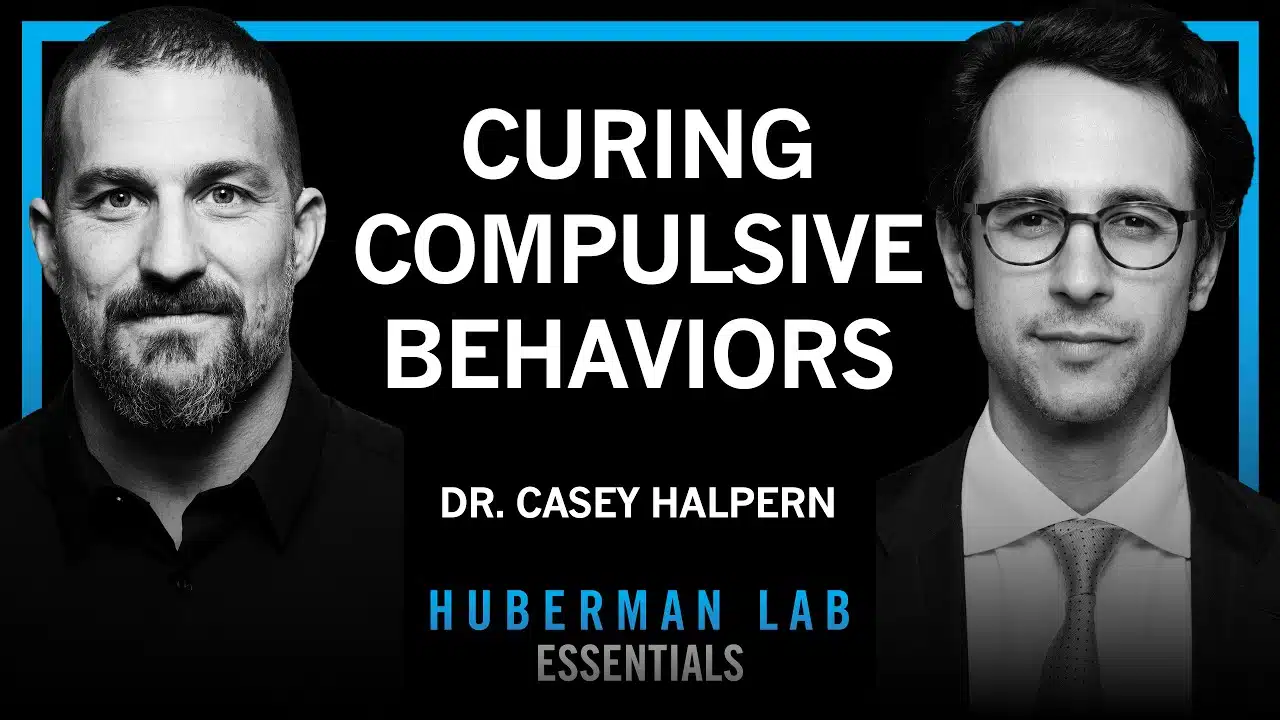
His work represents a fascinating intersection of cutting-edge technology and fundamental neuroscience, offering hope to patients who’ve exhausted every other treatment option.
What makes his approach particularly compelling is the precision involved—targeting brain regions smaller than a grain of rice to alleviate symptoms that have plagued patients for decades.
Jump to:
- The Astronauts of Neuroscience
- Unexpected Discoveries in the Operating Room
- Understanding Obsessive-Compulsive Disorder
- The Brain Circuits Behind Compulsion
- Listening for Disease in Brain Activity
- Provoking Symptoms to Understand Them
- The Promise of Non-Invasive Approaches
- Borrowing from Epilepsy Research
- The Future: Predictive Technology and AI
- The Scale of the Challenge
The Astronauts of Neuroscience
Dr. Halpern serves as Chief of Stereotactic Functional Neurosurgery at Penn Medicine, where he specializes exclusively in deep brain stimulation surgery and focused ultrasound procedures.
Unlike the broad scope of traditional neurosurgery—which encompasses everything from tumor removal to spinal fusions—his work focuses on implanting remarkably thin wires deep into specific brain structures.
I have to implant a tool to deliver you a medication. But that medication is going to be in the form of electricity and it’s going to be delivered into a very small region of the brain.
These electrodes don’t constitute the therapy themselves. Rather, they serve as delivery mechanisms for electrical stimulation targeted at brain regions involved in conditions like Parkinson’s disease.
The precision required is staggering—regions within just a few millimeters of the electrode placement can produce dramatically different effects when stimulated.
Unexpected Discoveries in the Operating Room
Some of the most promising therapeutic applications emerged accidentally through side effects observed during tremor treatment.
Patients with Parkinson’s disease who also suffered from depression or obsessive-compulsive tendencies reported unexpected improvements in their psychiatric symptoms.
Sometimes these problems actually melt away and we’re trying to help their tremor, but the patients also tell us that their gambling issue has gotten better or their mood has improved.
These observations weren’t merely placebo effects from tremor improvement. Stimulation was activating limbic circuits involved in emotion regulation—areas distinct from motor control pathways.
Dr. Halpern has witnessed moments of spontaneous laughter in the clinic when certain brain regions receive stimulation, demonstrating the profound connection between electrical activity and emotional experience.
Understanding Obsessive-Compulsive Disorder
Dr. Halpern considers OCD a spectrum disorder, acknowledging that obsessive and compulsive traits exist on a continuum.
Controlled obsessiveness can actually be beneficial—surgeons, scientists, and CEOs often exhibit these characteristics productively.
As a neurosurgeon, I’m really obsessive about safety and compulsive about my surgical procedures.
The disorder emerges when these tendencies become uncontrollable and interfere with daily functioning. Dr. Halpern treats patients representing the most severe cases—those who’ve failed multiple medications and intensive therapy.
Current treatment options include:
- SSRIs and tricyclic antidepressants targeting serotonin systems
- Exposure response prevention therapy helping patients habituate to stressors
- Deep brain stimulation for treatment-resistant cases
- Capsulotomy procedures involving targeted brain tissue ablation
Despite these interventions, approximately 30% of OCD patients continue suffering from moderate to severe symptoms.
The Brain Circuits Behind Compulsion
OCD involves dysfunction in both cortical and subcortical brain regions. The prefrontal and orbital frontal cortex often show hyperactivity compared to healthy individuals.
These areas project to subcortical structures including the basal ganglia and ventral striatum—a region containing the nucleus accumbens.
The nucleus accumbens plays a crucial role in gating reward-seeking behavior. When perturbed, it can drive compulsive actions despite negative consequences.
When it’s perturbed, it seems to gate compulsive behavior, meaning a rat will pursue a reward despite punishment, despite foot shock, for example.
This “urge despite risk” phenomenon appears across multiple conditions—OCD patients checking locks until 3 AM, individuals with eating disorders binging despite health consequences, and addiction driving drug-seeking despite obvious dangers.
Listening for Disease in Brain Activity
Dr. Halpern has adapted techniques used in Parkinson’s treatment to identify pathological brain activity in other conditions.
During surgery for tremor, neurosurgeons convert electrical signals from brain cells into audible sounds. “Tremor cells” fire at frequencies matching the visible hand shaking.
Dr. Halpern theorized that similar signature patterns might exist for psychological phenomena like craving and obsessive thoughts.
His team successfully identified what they believe are “obsession cells” in a patient with OCD—neurons firing in patterns associated with intrusive thoughts.
For eating disorders, the analog to tremor became craving—a relatable term that patients with binge eating disorder readily understand and report experiencing.
Provoking Symptoms to Understand Them
To validate their approach, Dr. Halpern’s laboratory employs “mood provocation” techniques similar to seizure induction in epilepsy monitoring.
Eating disorder specialists work with patients to induce emotional states associated with binge episodes while sophisticated equipment records brain activity.
The psychiatrist comes in and provokes a feeling that can evoke the negative behavior.
Patients wear eye trackers and are monitored through one-way mirrors. Remarkably, even under direct observation in a laboratory setting, patients with severe binge eating disorder still lose control.
This demonstrates that awareness alone cannot overcome the most severe cases—the compulsion operates at a level beyond conscious willpower.
The Promise of Non-Invasive Approaches
While deep brain stimulation shows remarkable promise, Dr. Halpern emphasizes the critical need for non-invasive alternatives.
Transcranial magnetic stimulation (TMS) already has FDA approval for depression, OCD, and nicotine addiction. Dr. Halpern’s team uses TMS to temporarily modulate circuits, identifying patients who might benefit from permanent implants.
MRI-guided focused ultrasound represents another frontier—currently FDA-approved for tremor treatment, delivering precise ablations without any incision.
It’s often just kind of a miracle because there’s no incision. I don’t have to place an electrode into the brain to achieve a similar result.
The challenge with psychiatric applications is identifying the correct targets. Unlike tremor, where decades of research have pinpointed effective zones, conditions like OCD and eating disorders require more investigation.
Dr. Halpern advocates for invasive recording studies to map these pathological circuits before attempting non-invasive interventions.
Borrowing from Epilepsy Research
Stereo-electroencephalography (sEEG)—placing multiple tiny electrodes throughout the brain to localize seizure origins—has become standard practice for epilepsy treatment.
The procedure is surprisingly safe and well-tolerated, with most patients leaving the hospital feeling they haven’t undergone surgery.
Researchers at Baylor and UCSF have pioneered using this technique to study depression in epilepsy patients with comorbid mood disorders.
Dr. Halpern is awaiting FDA approval to apply the same methodology to OCD, believing this approach could identify optimal stimulation targets and potentially inform future ultrasound therapies.
The Future: Predictive Technology and AI
Emerging research suggests artificial intelligence might detect impending episodes before patients consciously recognize warning signs.
University of Washington researchers are using voice pattern analysis, breathing rhythms, and sleep quality to predict suicidal episodes in high-risk individuals.
We have to get in the brain before we get out of it. And if we get in the brain and understand what these signals look like, we’ll know what those non-invasive signals are.
Machine learning could potentially integrate multiple physiological markers to anticipate dangerous impulses, offering intervention opportunities before crisis points.
Dr. Halpern acknowledges this technology is in its infancy but sees tremendous potential for scalable solutions addressing epidemic-level problems.
The Scale of the Challenge
Only about 200,000 deep brain stimulation surgeries have ever been performed globally.
Meanwhile, the conditions Dr. Halpern studies—obesity, addiction, depression, suicidality—affect tens of millions in the United States alone.
Surgical interventions can never scale to meet this demand, making his work on understanding brain circuits even more critical.
By identifying precise mechanisms and targets through invasive research on severe cases, Dr. Halpern hopes to inspire and inform non-invasive therapies that could help exponentially more people.
His research represents the essential groundwork—rigorous neuroscience that will eventually enable broader, more accessible treatments for conditions that currently devastate millions of lives.