Dr. Michael Diamonds is making waves with his homemade “velvet rope” pudding—a simple blend of whey protein and psyllium husk that he claims naturally triggers the same appetite-suppressing hormone mimicked by drugs like Ozempic.
The MD, scientist, and pro-natural bodybuilder says this 100-calorie pre-meal trick could help people lose weight without medication, or even transition off drugs like semaglutide.
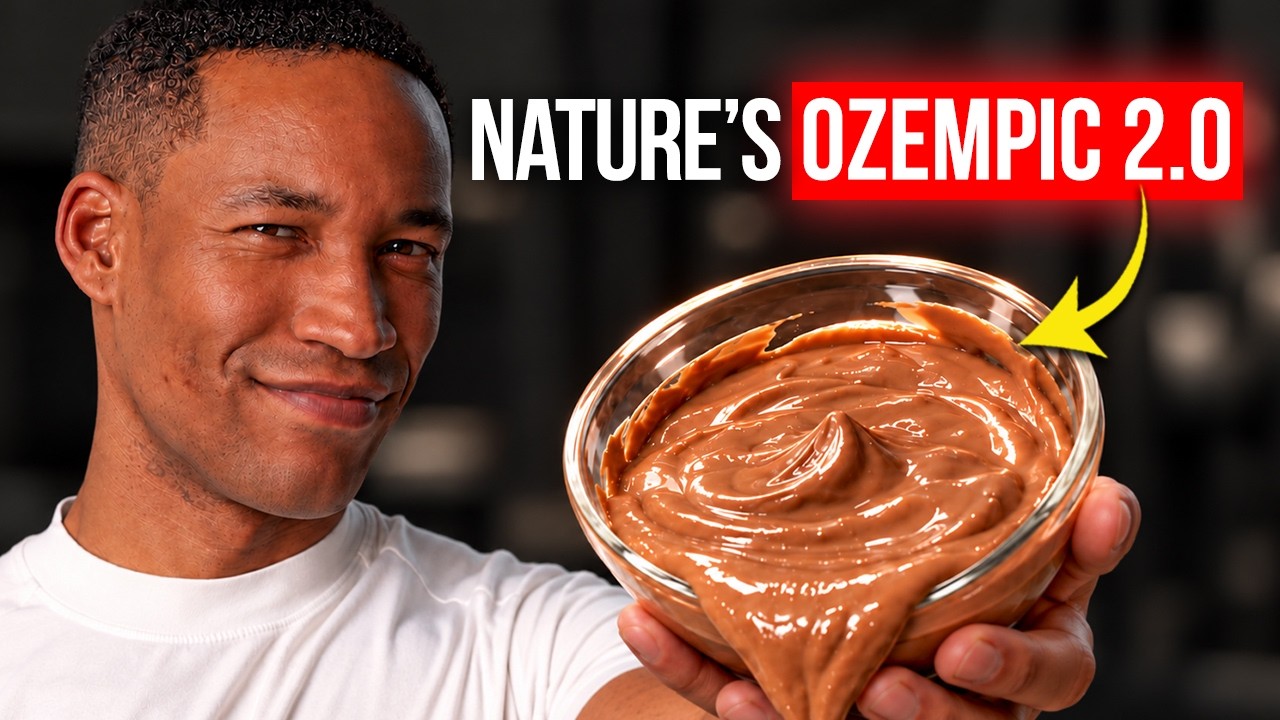
But does the science actually support the bold comparison to prescription weight-loss drugs?
And more importantly, could a three-minute kitchen hack really deliver results that rival medications costing hundreds of dollars per month?
Jump to:
- The Recipe: Whey Protein Meets Psyllium Husk
- How It’s Supposed to Work: The “Doorman” and “Velvet Rope”
- What Research Actually Shows About Whey Protein and GLP-1
- Psyllium Husk: The “Velvet Rope” for Blood Sugar
- Does It Really Compare to Ozempic?
- Combining Protein and Fiber: Stronger Together
- The Protein-First Eating Strategy
- Real-World Application and Weight Management
- The Bottom Line
The Recipe: Whey Protein Meets Psyllium Husk
Diamonds’ pudding formula is remarkably straightforward: mix half a scoop of whey protein (about 15 grams) with 5 ounces of warm water, then stir in a tablespoon of psyllium husk.
After adding optional flavorings like cinnamon or vanilla extract, the mixture thickens into a pudding consistency within 2-10 minutes.
This is a pudding. And it’s made from two things that’s probably sitting in your kitchen cupboard right now. Takes 3 minutes to make.
He recommends consuming the pudding 10 minutes before meals—breakfast, lunch, or dinner—up to three times daily. Each serving delivers roughly 15 grams of protein, 5 grams of carbohydrates (4 from fiber), and 100 calories total.
One crucial warning: drink a full 8-ounce glass of water after each pudding, as psyllium absorbs liquid and requires adequate hydration to move through your digestive system safely.
How It’s Supposed to Work: The “Doorman” and “Velvet Rope”
Diamonds uses a library analogy to explain his method. Carbohydrates are “books” entering your body, insulin is the “librarian” storing them, and when too many arrive at once, they get “swept under the carpet” as fat.
In his framework, whey protein acts as the “security guard” or “doorman,” while psyllium husk is the “velvet rope” creating an orderly queue. Together, they supposedly ensure nutrients enter your system slowly and steadily, preventing overwhelming insulin spikes.
The biological mechanism behind this involves glucagon-like peptide-1 (GLP-1), a hormone naturally released when protein reaches your gut.
When the protein reaches your gut, your gut releases a hormone called glucagon like peptide 1, aka GLP-1. The GLP is the message the doorman sends upstairs. It tells your brain once you’ve had this protein, slow down.
GLP-1 slows gastric emptying, signals fullness to your brain, and helps regulate blood sugar—the same hormone that medications like Ozempic (semaglutide) are designed to mimic.
What Research Actually Shows About Whey Protein and GLP-1
There’s solid evidence supporting whey protein’s impact on appetite and blood sugar regulation, though the effects are considerably more modest than Diamonds’ enthusiastic presentation suggests.
A Newcastle University study gave 24 men 15 grams of whey protein 10 minutes before breakfast. Compared to drinking water, the whey increased GLP-1 levels two to three times, slowed stomach emptying, and reduced post-meal blood sugar spikes by 13-18%.
When researchers expanded this to 18 people with type 2 diabetes consuming whey before all three meals for a week, participants spent approximately two additional hours per day with blood sugar in normal range.
A review of 16 trials confirmed that pre-meal whey consumption lowers blood sugar peaks, slows gastric emptying, and raises GLP-1 levels. The timing—whether 30 minutes or 10 minutes before eating—didn’t significantly affect results.
Whey also outperformed other protein sources in head-to-head comparisons. When researchers compared whey against casein and soy with a soy-based breakfast, whey delivered the strongest GLP-1 response and reduced hunger most effectively.
Why Whey Works Better Than Eggs
Diamonds specifically addresses why eggs—despite being excellent protein—aren’t his first choice for this strategy.
Eggs are an amazing form of protein and they belong in your meal. But every one of those trials that were run on whey, whey is one of the fastest proteins to reach your gut.
Whey protein is rapidly absorbed, reaching your gut quickly to trigger the GLP-1 response before your main meal arrives. For dairy-free individuals, Diamonds notes that pea protein appears to offer similar benefits based on small trials.
Psyllium Husk: The “Velvet Rope” for Blood Sugar
Psyllium husk, a soluble fiber supplement, forms a gel-like substance when mixed with liquid—similar to how chia seeds thicken yogurt.
Research demonstrates that psyllium can meaningfully affect blood sugar and cholesterol levels, particularly in people with diabetes.
In one trial, men with type 2 diabetes who took psyllium twice daily for 8 weeks experienced an 11% decrease in post-meal blood sugar across the entire day and a 19% reduction specifically after lunch.
Remarkably, psyllium’s effects extended beyond the meal it accompanied—it influenced blood sugar response at subsequent meals as well.
A review of 35 trials found that people with type 2 diabetes who consumed psyllium before meals saw their fasting blood sugar drop by 37%, and their hemoglobin A1C (a three-month blood sugar average) decreased by nearly one full percentage point.
Beyond blood sugar, psyllium is well-documented for lowering cholesterol, adding another potential benefit to the pudding formula.
Important Safety Considerations for Psyllium
Diamonds emphasizes several critical safety points:
- Never consume psyllium dry—it’s a choking hazard and can cause esophageal blockages
- Always drink plenty of water (at least 8 ounces) after consuming psyllium
- Start with a teaspoon during your first week to allow your gut to adjust
- Avoid if taking blood pressure medication, as psyllium may slow medication absorption
- Consult your doctor if taking diabetes or insulin medication
Does It Really Compare to Ozempic?
This is where Diamonds’ claims require significant context.
While both the pudding and semaglutide work through GLP-1, the mechanisms and magnitudes differ dramatically.
Natural GLP-1 released from whey protein lasts less than 2 minutes in your bloodstream before your body breaks it down. Your body produces it in short bursts around meals—which is exactly what the pudding enhances.
The drug holds the signal all day, every day at a level your body can never make on its own. The pudding turns your own signal up from one meal and then lets it go.
Semaglutide is engineered so your body can’t break it down quickly—a single injection maintains elevated GLP-1 levels for approximately one week, providing continuous appetite suppression.
That’s why drug results are “in a different league,” as Diamonds himself acknowledges. Clinical trials of semaglutide show average weight loss of 15-20% of body weight, while the pudding’s benefits are measured in smaller blood sugar improvements and modest appetite effects.
Individual Variation Matters
Diamonds mentions that men carrying more belly fat produced about 27% less GLP-1 from whey compared to leaner men, meaning results vary based on current body composition.
He also notes that research trials were mostly conducted on men and were relatively small in scale, limiting how broadly we can apply the findings.
Combining Protein and Fiber: Stronger Together
One trial specifically tested whey alone, guar gum fiber alone, and both together, 15 minutes before meals in people with type 2 diabetes.
The findings showed that whey produced the biggest GLP-1 spike, but whey plus fiber together slowed stomach emptying the most—creating complementary effects.
Diamonds treats his pudding as “two proven pieces put together,” acknowledging that nobody has tested this exact formulation in a clinical trial because he created it himself.
The Protein-First Eating Strategy
Beyond the pudding, Diamonds advocates for a broader principle: eating protein before carbohydrates at any meal.
A small trial with people with type 2 diabetes found that eating the same meal in different orders produced markedly different blood sugar responses. When participants ate chicken and vegetables before bread, their blood sugar was 29% lower at 30 minutes and 37% lower at one hour compared to eating bread first.
If you don’t have whey or psyllium available, Diamonds suggests simple alternatives:
- A half scoop of whey protein mixed with a quarter cup of Greek yogurt
- Any protein source consumed 10 minutes before your main meal
- Simply eating protein components of your meal before touching carbohydrates
Real-World Application and Weight Management
Diamonds shares a client case study: Donnie, age 50, reached 7% body fat without using the pudding at all.
Every time he brought his calories down, we pushed his protein up from 200 grams in the beginning to 237. So he never felt hungry. That there was never a point where he was thinking about food or needed to eat or that he wanted to snack on something.
This illustrates that sufficient protein intake—regardless of the delivery method—can significantly reduce hunger and support adherence to calorie-controlled diets.
For Those Currently Taking GLP-1 Medications
Diamonds explicitly advises people currently on semaglutide or similar drugs not to stop their medication and replace it with the pudding.
Instead, he suggests discussing with your doctor what a potential future without medication might look like, while continuing prescribed treatment.
He references research showing that people who discontinue GLP-1 medications typically regain two-thirds of lost weight within a year—highlighting that sustainable weight management requires behavioral and dietary changes regardless of medication status.
The Bottom Line
Diamonds’ “velvet rope” pudding isn’t a natural Ozempic replacement—and he eventually acknowledges this himself.
However, the underlying science supporting pre-meal whey protein and psyllium husk is legitimate, particularly for blood sugar management, appetite control, and cholesterol reduction.
At 100 calories per serving with 15 grams of protein and 4 grams of fiber, the pudding represents a low-risk, potentially beneficial addition to a weight management strategy—especially for people with prediabetes or type 2 diabetes.
It’s just going to cost you 100 calories and you’re going to notice that you’re going to eat less. Your energy is going to be better. Your digestion is going to be better. You’re going to improve your cholesterol. Like literally, I can’t think of any downside to this.
The real value may lie not in replacing medications but in establishing sustainable eating habits that naturally support appetite regulation—habits that remain effective whether you’re taking GLP-1 drugs, transitioning off them, or never using them at all.
For anyone interested in trying this approach, the key takeaways are straightforward: consume 15 grams of whey protein (with or without psyllium) 10 minutes before meals, drink plenty of water, start slowly with fiber, and view this as one component of an overall nutrition strategy rather than a magic solution.