In 2005, a 1950s laboratory molecule that had never been approved for human use suddenly appeared on supplement store shelves across America.
Superdrol wasn’t a questionable pre-workout or an overhyped protein powder.
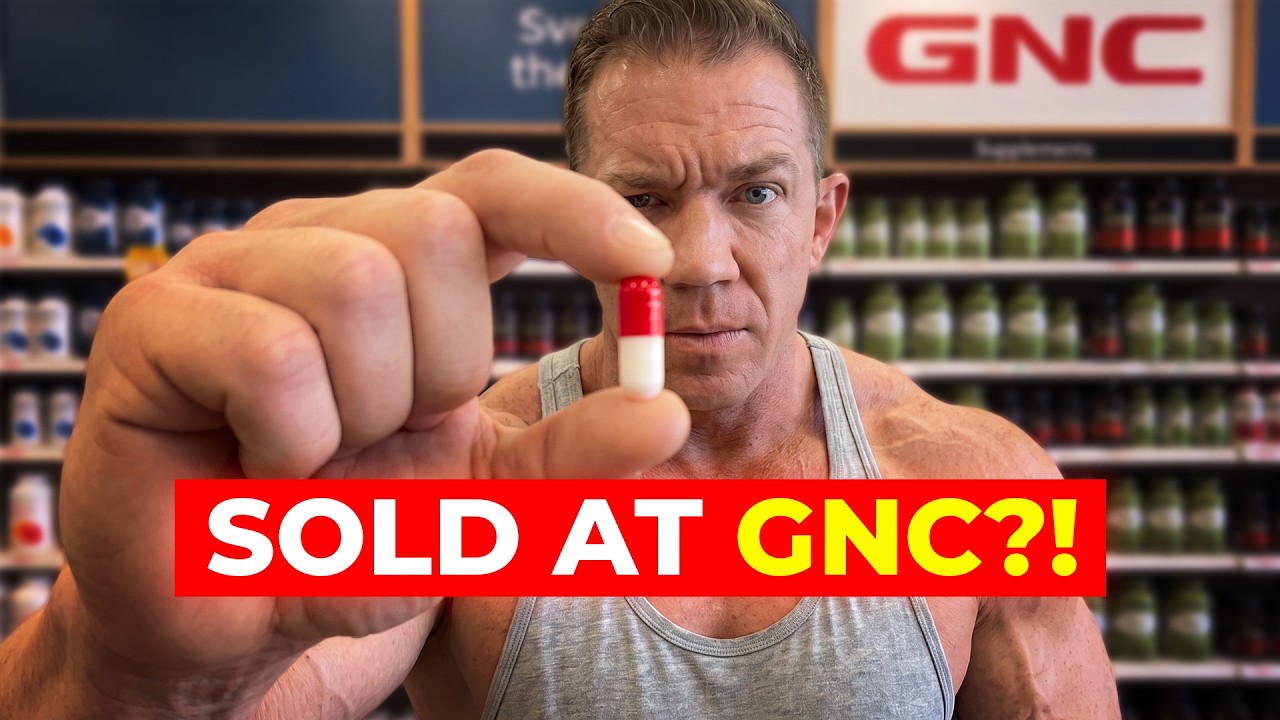
It was a legitimate anabolic steroid, legally sold next to creatine and multivitamins, and it remained available through various loopholes for more than six years after federal agencies first tried to stop it.
What followed was a wave of dramatic muscle gains, a regulatory cat-and-mouse game involving dozens of rebranded products, and a growing number of young men hospitalized with severe liver damage.
Jump to:
- The Molecule That Was Never Meant for Humans
- How a Loophole Made Steroids Legal Supplements
- Six Years of Rebranding and Regulatory Chaos
- The Chemistry Behind the Hype
- The 400-to-20 Ratio That Built a Reputation
- Why It Worked So Well
- The Liver Damage No One Expected
- What Happens When It Goes Wrong
- When the Liver Problem Becomes a Kidney Problem
- The Myths About Liver Protection
- Three Warning Signs That Matter
- Where Superdrol Stands in 2025
- Risk Versus Reward
- Sources
The Molecule That Was Never Meant for Humans
Methasterone, the chemical name for Superdrol, first appeared in scientific literature in 1959 when researchers at Syntex published its synthesis in the Journal of the American Chemical Society.
The same research team, in the very next paper of that same issue, described oxymetholone—better known today as Anadrol, another notoriously liver-toxic oral steroid still FDA-approved for treating anemia.
But while Anadrol went on to clinical trials and eventual approval, methasterone was described as “a potent orally active anabolic agent with only weak androgenic activity” and then completely abandoned.
No trials were conducted. No approvals were sought. The molecule sat dormant in old chemistry journals for 45 years.
Syntex already had injectable drostanolone (Masteron) on the market, which accomplished similar goals without the hepatotoxic 17-alpha methyl group that makes oral steroids so harsh on the liver.
How a Loophole Made Steroids Legal Supplements
Fast forward to 2005, and methasterone reappeared as a dietary supplement called Superdrol, sold openly in stores.
The Anabolic Steroid Control Act of 2004 had just placed numerous prohormones and steroid precursors into Schedule III, the same legal category as anabolic steroids and certain prescription medications.
But that law worked from a defined list of substances, and a molecule from 1959 that had never been marketed as a drug wasn’t on anyone’s radar.
The product label didn’t even say “methasterone.” It said “methasteron,” a trademarked name with no official chemical identity that regulators could immediately flag.
In November 2005, Dr. Don Catlin—who ran the U.S. Olympic drug testing lab at UCLA—analyzed five supplements purchased online at the request of The Washington Post.
They are all steroids, and they’re all going to be effective.
The Post published the findings on November 30, 2005. WADA added methasterone to its prohibited list for 2006, and on March 9, 2006, the FDA issued warning letters declaring these products unapproved drugs.
But the FDA calling something an “unapproved drug” is not the same as the DEA scheduling it as a controlled substance.
Six Years of Rebranding and Regulatory Chaos
Between 2006 and 2012, methasterone kept reappearing under new names.
Products like M-Drol, Masterdrol, Methyldrostanolone, and dozens of others flooded the market. One recall alone listed 65 products containing the compound.
By March 2010, the DEA had identified approximately 62 additional methasterone-containing supplements still being sold.
The actual DEA rule placing methasterone into Schedule III wasn’t proposed until November 2011, finalized in July 2012, and didn’t take effect until August 29, 2012.
Congress later reinforced the ban with the Designer Anabolic Steroid Control Act of December 2014, which named compounds directly rather than relying on agency action.
For more than half a decade, the supplement industry exploited gaps in federal coordination, and methasterone circulated freely in a legal gray zone.
The Chemistry Behind the Hype
Superdrol is structurally very simple. Start with dihydrotestosterone (DHT), a potent androgen the body naturally produces.
Add a methyl group at the 2-alpha position, and you get drostanolone—the injectable steroid Masteron, known for creating a dry, hard, vascular look in bodybuilders.
Add a second methyl group at the 17-alpha position, and you get methasterone—Superdrol.
That second methyl group does two things. First, it allows the drug to survive digestion and liver metabolism, making it orally active. Second, it dramatically increases the risk of liver toxicity.
The 17-alpha methyl group blocks the enzyme that would normally inactivate the steroid on its first pass through the liver, but that same modification is the structural feature most strongly associated with cholestatic liver injury across the entire steroid class.
The 400-to-20 Ratio That Built a Reputation
Superdrol’s mystique rests largely on one number: an anabolic-to-androgenic ratio of 400 to 20.
Testosterone, the reference standard, is rated 100 to 100. A ratio of 400 to 20 would suggest Superdrol is four times as muscle-building and only one-fifth as androgenic.
That would make it one of the most tissue-selective anabolic compounds ever described—essentially a SARM before SARMs existed.
But here’s the problem: that ratio comes from unpublished rodent data summarized in a 1969 pharmacology reference book by Julius Vida.
There is no peer-reviewed study confirming these numbers. There is no published androgen receptor binding study for methasterone in the indexed scientific literature.
The DEA’s own summary of animal studies reports that methasterone’s affinity for the androgen receptor was comparable to testosterone, not dramatically more selective.
In other words, the single most cited claim about Superdrol’s supposed selectivity has never been independently verified, and the available evidence suggests otherwise.
Why It Worked So Well
Even if Superdrol isn’t uniquely tissue-selective, it absolutely worked—and users from 2005 to 2012 still talk about it today.
Two pharmacological features explain why.
First, methasterone does not aromatize into estrogen. The 2-alpha methyl group blocks the aromatase enzyme, and the molecule is already 5-alpha reduced, meaning there’s no pathway for estrogen conversion.
That means no water retention, no bloating, and no puffy face. Users reported looking dry, hard, and vascular within days.
Second, it’s orally active and binds strongly to the androgen receptor. Users commonly reported gaining 8 to 10 pounds in a few weeks, with visible changes in muscle density and vascularity.
No injections. No prescriptions. No need for estrogen management. Just $40 at the mall.
The Liver Damage No One Expected
The 17-alpha methyl group that makes Superdrol orally active is also what makes it dangerous.
Recent research has identified a specific enzyme, AKR1D1, that plays a critical role in bile acid metabolism. This enzyme introduces a structural bend in bile acids that allows them to dissolve fats in the gut.
People born with mutations in this gene develop hepatic cholestasis and liver damage because their bile acids don’t fold correctly.
A 2023 study screened several anabolic steroids and found that methasterone, along with nandrolone (Deca), drostanolone (Masteron), and methenolone (Primobolan), inhibits AKR1D1.
When this enzyme is blocked, bile acids become chemically flat and less functional. Bile flow slows, turning into sludge. Bilirubin—a breakdown product of red blood cells—has nowhere to go, so it backs up into the bloodstream.
That’s when people turn yellow.
Some individuals carry genetic variants in ABCB11, the gene for the bile salt export pump, which makes them especially vulnerable to this type of injury.
The problem is that there’s no way to know in advance whether someone carries these genetic risk factors. Most users experience no issues. But those who do often don’t realize it until weeks after they’ve stopped taking the drug.
What Happens When It Goes Wrong
Real-world case reports paint a disturbingly consistent picture.
The first documented case appeared in 2006: a man taking an over-the-counter muscle builder presented with cholestatic jaundice and IgA nephropathy—a serious liver and kidney problem.
In 2008, five cases at major hospitals revealed a troubling timeline. Users became jaundiced two weeks after stopping the drug. They sought medical attention two weeks later. Bilirubin levels continued climbing for another two to three weeks before peaking, and full recovery took about 12 weeks.
Think about what that means: you finish the bottle, feel fine, and move on. Two weeks later, you start turning yellow and itching so severely you can’t sleep. And by then, there’s nothing left to stop taking—the drug is long gone, and your liver just has to survive.
A 2019 study examined 44 young men, average age 33, hospitalized with bodybuilding supplement liver injury. The median time from first use to symptom onset was 73 days. Every single patient was jaundiced. 84% had severe itching, and 71% required hospital admission.
Liver biopsies showed profound cholestasis with only mild hepatitis, but importantly, no bile duct injury, no duct loss, and no fibrosis.
A 2020 UK systematic review of 52 cases found that methyldrostanolone (Superdrol) was the single most common agent causing liver injury.
Peak bilirubin levels in these cases averaged around 41 mg/dL—roughly 34 times the upper limit of normal.
When the Liver Problem Becomes a Kidney Problem
A 2015 analysis from Spanish and Latin American liver injury registries identified something clinically important: in cholestatic cases, bilirubin levels predicted acute kidney injury.
When bilirubin rises high enough, bile acids and bilirubin can block kidney tubules, a condition called bile cast nephropathy.
In the UK case series, 43% of patients developed kidney injury. Some required dialysis.
A 2025 case report from Australia described a 35-year-old man who needed both hemodialysis and plasma exchange after using methasterone.
Despite the severity, most patients eventually recovered. Across all published series, no deaths or liver transplants were reported.
But “recovered” means surviving two to three months of jaundice, sleep-destroying itching, possible kidney failure, and no proven treatment to speed the process.
One 2014 case in Connecticut Medicine described a young man who developed severe aplastic anemia after methasterone-induced cholestatic hepatitis. It’s a single case, not a pattern, but it happened.
The Myths About Liver Protection
Many users believed they could protect themselves by taking liver support supplements alongside Superdrol.
There is no supplement proven to prevent methasterone-induced cholestasis.
- Not milk thistle
- Not TUDCA (tauroursodeoxycholic acid)
- Not N-acetylcysteine (NAC)
- Not anything else sold at supplement stores
There is also no proven treatment once cholestasis develops. Doctors provide supportive care and wait for the liver to recover on its own.
The idea that over-the-counter liver support can counteract the effects of a Schedule III anabolic steroid is one of the most dangerous myths in performance enhancement.
Three Warning Signs That Matter
If someone is going to use methasterone despite the risks, these are the signs that demand immediate medical attention:
- Injury often appears after stopping the drug. Feeling fine on day 20 of a cycle means nothing. Symptoms typically emerge two weeks after the last dose.
- Itching and dark urine come first. Before the skin turns yellow, users notice intense itching—especially on the shins—and urine that looks like cola. This isn’t dehydration. It’s bilirubin building up, and it’s a medical emergency.
- Once bilirubin is elevated, kidney function must be monitored. High bilirubin levels predict acute kidney injury, and the window for intervention is narrow.
Where Superdrol Stands in 2025
Methasterone remains a Schedule III controlled substance in the United States. It is illegal to manufacture, distribute, or possess without a valid prescription.
It still circulates on the black market, and it continues to appear in anti-doping test results. Both methasterone and oxymetholone (Anadrol) have been among the top 20 substances detected in WADA’s adverse analytical findings in recent years.
The compound is biologically effective. It works. But effectiveness and safety are not the same thing.
Risk Versus Reward
Testosterone has decades of clinical trials and established safety protocols. Trenbolone, while never approved for humans, has extensive animal research and a well-understood mechanism. Primobolan has 65 years of foreign clinical use.
Superdrol has zero human trials, no published pharmacokinetic data, no confirmed receptor binding studies, and a potency ratio that traces back to unpublished rat experiments from 1959.
What it does have is roughly 100 published case reports of previously healthy men turning yellow, itching uncontrollably, and in some cases, experiencing kidney failure.
The 17-alpha methyl group is not a design flaw—it’s the feature that makes the drug work orally. But it also makes it one of the most hepatotoxic modifications in steroid chemistry.
If the goal is a dry, hard, vascular look without water retention, other options exist with better-understood risk profiles and far more clinical data behind them.
Superdrol is effective. But that effectiveness comes at a cost that many users don’t fully understand until it’s too late—and by then, the damage is already unfolding.
Sources
Research brief contained no verifiable peer-reviewed sources with persistent identifiers (DOIs or PMIDs). The transcript references real case series, regulatory timelines, and enzymology (AKR1D1, ABCB11), but no specific studies with citations were provided in the research material supplied.