Carl Spilman thought his identity was set when he signed as a professional footballer at 17 in Liverpool.
But after his football career ended abruptly, he found himself completely lost—until kettlebells gave him a second chance.
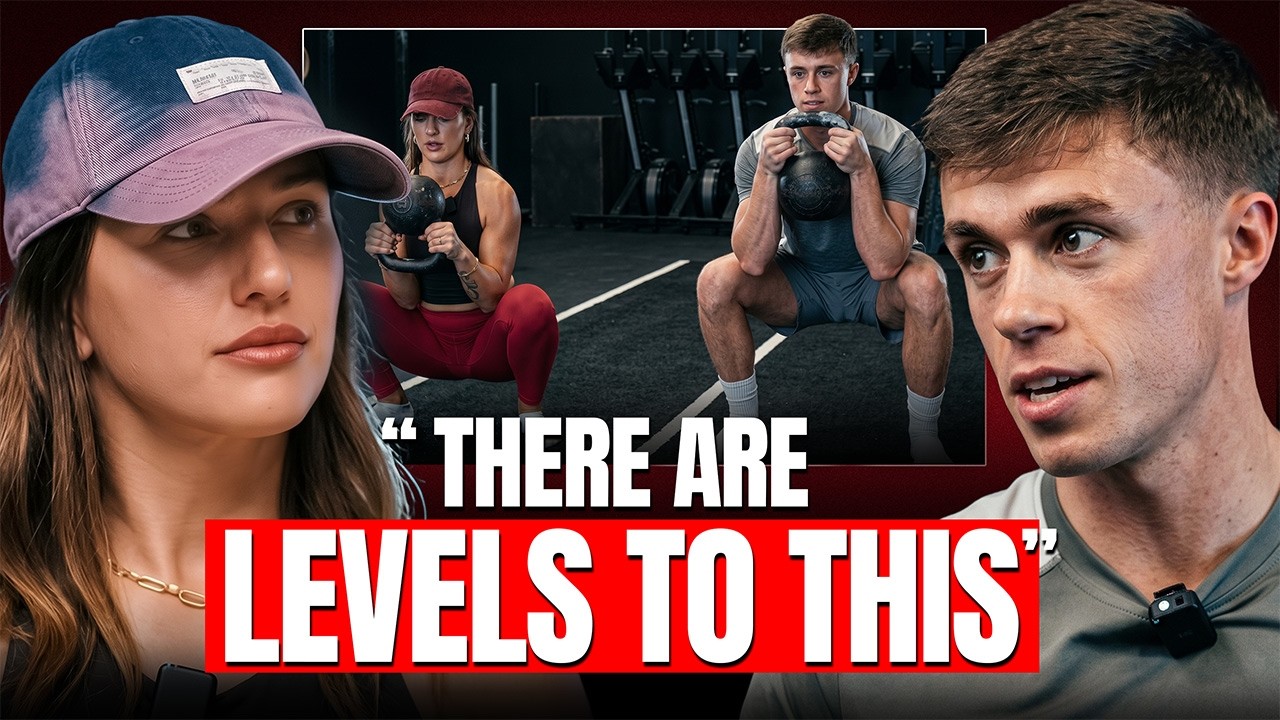
Now, as the face of Shredfast kettlebell training, Spilman is building a fitness movement that’s changing lives across Europe, from council estates in Liverpool to billionaires’ estates in Monaco.
His philosophy? Two kettlebells and 30 minutes can transform not just bodies, but entire lives.
Jump to:
- The Reality Behind the Fitness Fanatic Image
- What Footballer Bodies Know That Gym Bodies Don’t
- From Liverpool Council Estates to Monaco Mansions
- The Shredfast Philosophy: Simple but Intense
- When Identity Disappears: Life After Football
- Why Two Kettlebells Can Change Your Life
- The Mobility Wake-Up Call
- Faith as Foundation
- Building Better Humans, Not Just Better Bodies
- The Best Advice: Do the Right Thing
- From Couch to Gym to Complete Freedom
The Reality Behind the Fitness Fanatic Image
Most people assume dedicated fitness professionals wake up excited to train every day. Spilman shatters that illusion immediately.
Most days I don’t want to get up. Most days I don’t want to do it and most days I don’t enjoy it. So you might see me as a fitness fanatic, but most days I don’t want to train.
His secret? Pure discipline built through repetition. He describes it simply: “You do it that much it just becomes second nature.”
Whether he wants to train or not doesn’t really matter anymore—the habit is so ingrained that his body moves regardless of motivation.
This contrasts sharply with those who claim movement should always feel effortless and joyful. Spilman’s approach acknowledges the uncomfortable truth: transformation requires pushing through resistance, not waiting for inspiration to strike.
What Footballer Bodies Know That Gym Bodies Don’t
Spilman draws a sharp distinction between athletic training and traditional gym work. Football demands constant adaptation—sudden turns, tackles, unpredictable joint stress.
When you’re doing kettlebell training or gym training in general, everything is quite aligned and robotic. If we’re doing a squat, we’re in that position. If we’re doing a clean, we’re in that robotic position. But football is probably a little bit more fluid.
The trade-off? Athletes face far more injury risk because of those chaotic movement patterns and constant impact on joints.
Kettlebell training, according to Spilman, sits in a sweet spot—it builds strength and power without the joint-destroying impact of field sports. You’re building up the body, not breaking it down.
But even kettlebell training has limitations. Repetitive movements in fixed patterns can create their own restrictions, which is why Spilman now seeks to expand into true mobility work—freedom of movement in all directions, not just prescribed exercises.
From Liverpool Council Estates to Monaco Mansions
Spilman’s journey took him from the gritty streets of Liverpool to training a billionaire across Europe’s most exclusive locations.
Through Shredfast founder Luke’s connections, he found himself working with ultra-high-net-worth clients in Italy, Monaco, and Santorini. The experience opened his eyes to what wealth can and cannot provide.
All this is nice what I have, but it’s who you’re doing it with and why you’re doing it, which is the main reason.
Even his billionaire client emphasized that real relationships, family, and health matter more than material possessions. Money can buy access and comfort, but not genuine connection or purpose.
Liverpool taught Spilman toughness and resilience—qualities that come from surviving in challenging environments. Marbella and Monaco showed him lifestyle possibilities but reinforced that internal fulfillment can’t be purchased.
The Shredfast Philosophy: Simple but Intense
Shredfast workouts center on basic kettlebell movements performed with brutal intensity. During the training session, Spilman programmed a straightforward complex:
- Cleans – pulling kettlebells tight to the body, catching them at shoulder height
- Goblet squats – deep squats holding the bell at chest level
- Bent-over rows – hinging at the hips, pulling bells toward the torso
- Burpees – full-body ground-to-standing movements (though Spilman admits they might be “the most pointless exercise on planet Earth”)
The format follows EMOM (every minute on the minute) protocols—complete the prescribed reps, rest whatever time remains in the minute, then start again.
Round counts increase progressively: 10 reps, then 15, then 20, then 25, finishing with a two-minute maximum effort.
You do something hard to start the day. Rest of the day, any problems come your way, you’re ready to go. You’ve done the hardship.
This “hardship first” mentality builds mental resilience alongside physical capacity. Nothing later in the day feels as difficult as that morning training session.
When Identity Disappears: Life After Football
Losing professional football status hit Spilman hard. His entire self-concept revolved around being an athlete—when that vanished, he struggled to understand who he was.
Once I finished football, didn’t know what to do with me life. I was stuck. My whole personality, what people thought of me, my vision in my head—you’re this football player—and then what was I now?
It took approximately three years before he stopped identifying primarily as a footballer. That’s three years of psychological adjustment, searching for new purpose and meaning.
Shredfast provided the structure and community that gave him direction again. Training others, building programs, creating impact—these activities filled the void left by competitive sport.
Many athletes face similar identity crises when their playing careers end, often leading to depression, substance abuse, or complete loss of direction. Spilman’s story illustrates both the depth of that struggle and one possible path through it.
Why Two Kettlebells Can Change Your Life
Spilman genuinely believes minimal equipment can create maximum transformation. Two kettlebells, a mat, and consistency—that’s the formula.
Two kettlebells and a mat, you can do big things, you can do great things. And it might sound basic, but once people know, they’ll know.
The simplicity removes barriers. No gym membership required. No complicated equipment. No excuses about access or affordability.
But the real transformation comes from what builds around the training—community, accountability, shared struggle, mutual support.
Shredfast creates environments where people push beyond perceived limits together. That communal experience changes self-perception and builds confidence that extends far beyond fitness.
Participants start seeing improvements not just in strength or endurance, but in family relationships, work performance, and overall life satisfaction. The kettlebells serve as the entry point; the community provides the lasting impact.
The Mobility Wake-Up Call
During the training session, Spilman faced overhead kettlebell squats—holding a bell locked out overhead while squatting as deep as possible.
The movement exposed significant restrictions in shoulder stability and hip mobility. Despite being stronger than average and more flexible than most gym-goers, Spilman struggled considerably.
I think I’m athletic. And then you’re tested in a position where you’ve never been before.
The experience humbled him—a valuable reminder that strength in familiar patterns doesn’t equal true physical freedom.
Real mobility means controlling your body through unfamiliar ranges of motion, not just excelling at practiced movements. Spilman recognized he’d become locked into repetitive patterns, building strength without corresponding movement quality.
This realization sparked renewed commitment to exploring movement beyond kettlebell training—incorporating mobility work, different positions, and genuine physical adaptability.
Faith as Foundation
When asked about faith, Spilman didn’t hesitate. God and faith transformed his life, giving him strength during his darkest period after football ended.
As soon as I realized that there was someone there who I can tap into, who’s looking out for me, who made me, there was so much power that I gained from that.
Faith provided something to hold onto when his athletic identity disappeared—a sense of purpose and direction beyond personal achievement.
He acknowledges some people feel uncomfortable discussing religion or spirituality openly. But for Spilman, faith remains central to who he’s become and how he navigates challenges.
Whether people connect with traditional religious frameworks or prefer concepts like universal energy, Spilman sees value in recognizing something larger than individual ego driving human experience.
Building Better Humans, Not Just Better Bodies
Shredfast’s ultimate goal extends beyond physical transformation. Spilman sees fitness as a gateway to comprehensive personal development.
It’s helping people, changing people’s lives, making people feel good. So many people are lost, don’t know what to do, and not freeing up the body, staying indoors, not working on themselves.
Participants often arrive physically unfit and psychologically stuck. Through consistent training and community support, they develop discipline, confidence, and capability that transforms every life area.
People start showing up differently in relationships. They perform better at work. They handle stress more effectively. The kettlebell training catalyzes broader life improvements.
Spilman’s vision for the next decade centers on scaling this impact—reaching more people, building stronger communities, and demonstrating that physical training offers a pathway to holistic human development.
The Best Advice: Do the Right Thing
When asked about the best advice he’s received, Spilman returned to a simple principle taught by his father and grandfather.
Be kind, do the right thing. It sounds so basic, but it’s the hardest thing to do. Throughout the day you’re going to do something wrong. You’re going to have a wrong thought. You’re going to make a bad mistake.
The key isn’t perfection—it’s recovery. When you mess up, forgive yourself quickly and focus on making the next decision better.
Spilman frames life as a chess game: What’s the next best move on the board at all times? You can’t undo previous mistakes, but you can optimize your next action.
This philosophy applies equally to training, business, relationships, and personal growth. Consistency matters more than perfection. Progress comes from making better choices more often, not from never making mistakes.
From Couch to Gym to Complete Freedom
Spilman recognizes kettlebell training serves a specific purpose in the fitness journey—it gets people moving who would otherwise remain sedentary.
But he’s increasingly aware that true physical freedom requires more than repetitive strength patterns. Movement needs to expand beyond fixed exercises into genuine adaptability.
Complete freedom means waking up without stiffness, moving effortlessly through any position, and maintaining that capability for life. It requires addressing mobility, flexibility, stability, and movement quality—not just strength and conditioning.
I’ve become so obsessed with what I’m doing that I’m now not open to other movements, other ways, other thoughts.
This self-awareness represents significant growth. Spilman acknowledges that his strength in kettlebell training created blind spots—areas where his body remains restricted despite overall fitness.
Moving forward, he’s committed to expanding his movement practice, exploring different modalities, and building true physical freedom that allows adapting to any physical challenge life presents.
That willingness to remain a student, to expose weaknesses, and to integrate new approaches—that’s what separates good coaches from great ones.