Popular fitness expert Dr. Mike Israetel recently shared something surprising with his audience.
Six exercises that packed serious muscle onto his frame? He doesn’t do them anymore.
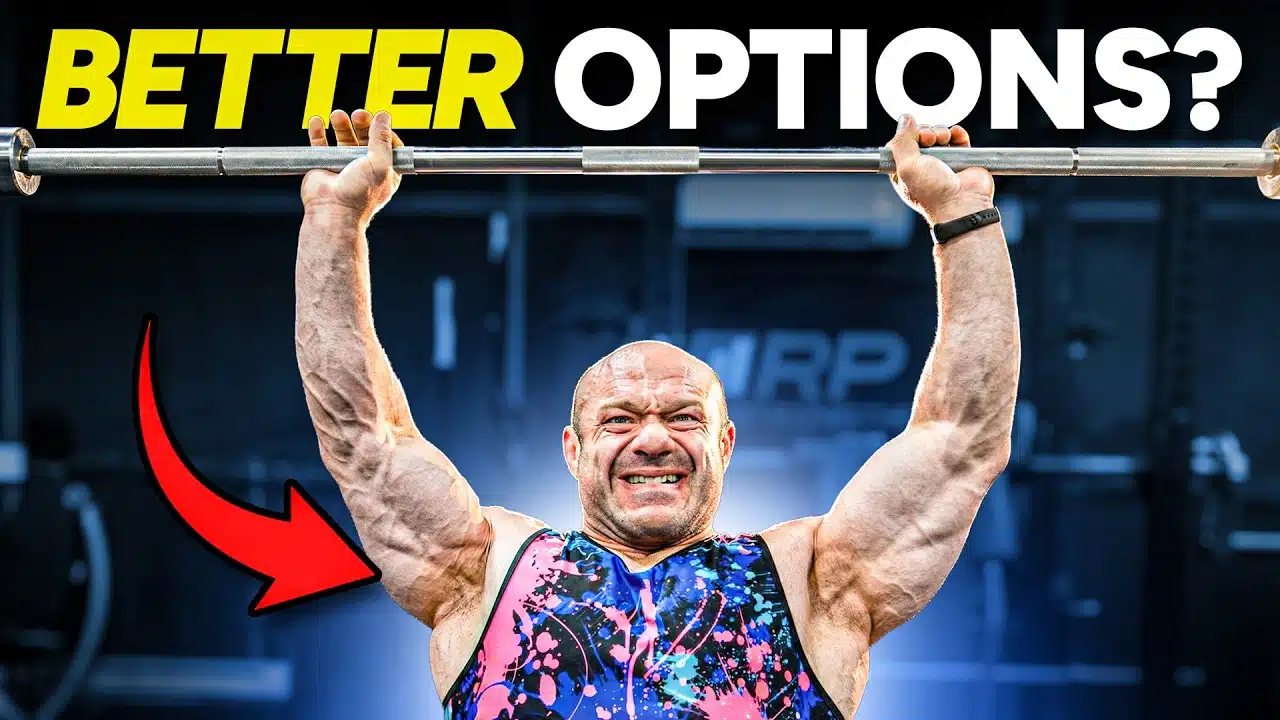
In a candid video breakdown, the Renaissance Periodization co-founder explained why ditching these “hardcore” movements actually improved his physique—and what that means for your own training decisions.
The lesson here goes far beyond just swapping exercises.
Jump to:
- Standing Overhead Press: When Ego Takes Over
- Dumbbell Flyes: The Cheesecake Factory Problem
- Ultra-Heavy Barbell Rows: Fatigue Management Matters
- High Bar Squats: The Vespa Versus Pickup Truck
- Behind-the-Neck Press: Assistance Work Without Main Lift
- Conventional Deadlifts: No Exercise Is Mandatory
- The Real Lesson: Fit for Purpose
- Practical Application for Your Training
Standing Overhead Press: When Ego Takes Over
Israetel built impressive strength with standing overhead press, eventually hitting 275 pounds for eight strict reps—an uncommon feat by any standard.
The number one reason I did that is because I could.
But strength and muscle growth don’t always align perfectly.
Standing overhead press crushes your spinal erectors with massive axial loading. That fatigue steals recovery resources from back rows, deadlifts, and squat variations—exercises targeting larger muscle groups.
Side Delts Build Boulder Shoulders
Israetel discovered something crucial: lateral raises built bigger shoulders than overhead pressing ever did.
I started doing way more lateral raises, super arm laterals, regular laterals, seated laterals, cable laterals, freemotion laterals, every single lateral I could for sets and sets and sets and my reps and my reps and my reps. That blew up my shoulders to where my shoulders are way bigger now than they ever were when I was at my strongest in the overhead press.
Side delts create that impressive width everyone notices. Overhead pressing hits them, sure—but upright rows and lateral raise variations target them with surgical precision.
His recommendation? Some overhead work is valuable, but prioritize side delt isolation for maximum shoulder development.
Dumbbell Flyes: The Cheesecake Factory Problem
Dumbbell flyes are biomechanically brilliant for chest growth.
Maximum tension at the stretched position, minimal load at contraction—exactly what research suggests for optimal hypertrophy stimulus.
So why did Israetel abandon them?
My chest gets such a big stimulus from presses, I just kind of don’t know where to stick in dumbbell flies after that.
He calls it “the Cheesecake Factory problem”—when you’re already stuffed from pressing variations, there’s simply no room for dessert.
Even modest pressing volume (six sets one day, four sets later that week) proved excessive for his chest recovery capacity.
When Flyes Make Sense
For those who can recover from additional chest work, Israetel still endorses flyes enthusiastically.
Three strategic placement options:
- Pre-exhaust at workout start
- Sandwich between pressing variations
- Finish with high-rep flyes after main pressing
His preferred rep range? 10-15 reps with controlled tempo, emphasizing that deep stretch without bicep involvement.
Ultra-Heavy Barbell Rows: Fatigue Management Matters
Ronnie Coleman did heavy rows. Israetel admired Coleman. Therefore, Israetel did heavy rows.
Simple logic, impressive results.
Heavy rowing built phenomenal back thickness—arguably Israetel’s strongest physique attribute. But that success created an interesting problem.
I’m in my 40s now. Overall general growth is still really good. Thank God. But I have to start thinking about prioritizing and really focusing on the muscle groups which are the furthest behind.
His back thickness dominated his lat width. Continuing heavy rows would just widen that imbalance.
Spinal Erector Economics
Bent-over rows hammer spinal erectors with brutal axial loading. That systemic fatigue bleeds into squats, deadlifts, lunges, and overhead work throughout your training week.
Israetel needed those resources for stiff-legged deadlifts and hamstring development instead.
His solution? Light cable or machine rows for maintenance, then prioritize vertical pulling for lat width—the weak point his physique actually needed.
One year of this approach visibly transformed his upper body proportions.
For intermediate lifters (under five years training), heavy barbell rows remain excellent. Just recognize when your individual needs shift.
High Bar Squats: The Vespa Versus Pickup Truck
Israetel describes high bar squats as his favorite exercise—the movement he most enjoys watching himself perform.
His leverages made him naturally gifted: long torso, relatively short femurs, excellent upright positioning. He built legs primarily through high bar squatting, peaking at 500 pounds for 10 reps.
Anything north of that is like you’re really just gambling on, you know, getting pretty goddamn well hurt.
As weights climbed, squats transformed from quad-focused exercises into total-body endurance tests.
Stimulus-to-Fatigue Ratio Wins
IFBB Pro Jared Feather posed a challenging question: why continue squatting when leg presses, hack squats, and Smith machine variations deliver equal quad stimulus with substantially less fatigue?
Israetel uses an analogy: driving a massive American pickup truck through narrow Italian cobblestone streets works for getting bread from the cafe. But a Vespa scooter accomplishes the same task with less fuel, time, and risk.
Squats remain undefeated for overall lower body development—strength, size, athletic carryover.
But for specific quadriceps hypertrophy in advanced lifters? Leg presses, hack squats, and belt squats often win on efficiency.
Israetel achieved his biggest quads ever during training blocks without barbell squats.
Behind-the-Neck Press: Assistance Work Without Main Lift
Standing barbell behind-the-neck extensions served as assistance for overhead pressing—building lockout strength through triceps and trap development.
Israetel worked up to 225 pounds for sets of 10, an impressive display that turned heads in commercial gyms.
But when heavy overhead pressing disappeared from his programming, so did the rationale for behind-the-neck work.
Cables Win for Tricep Specificity
Straight barbells limit forward elbow positioning. The movement becomes another press variation rather than targeted tricep isolation.
Cable and EZ-bar variations allow better elbow positioning, directing more tension specifically to triceps with less total load—lower fatigue, higher specificity.
Seated variations further reduce axial loading while maintaining the same muscle stimulus.
Behind-the-neck pressing remains valid, especially for those pursuing overhead strength. But recognize it’s primarily an ego lift once weights exceed two plates—impressive visually, questionable for targeted muscle development.
Conventional Deadlifts: No Exercise Is Mandatory
Israetel deadlifted extensively as both a competitive powerlifter and bodybuilder. The movement is irreplaceable for injury-proofing your back—if you can pull 225 for reps, grocery bags pose zero threat.
Deadlifts develop everything from traps to hamstrings, building glutes, grip, and forearms simultaneously.
So why stop?
Better Options for Specific Goals
For glute development, behind-the-back step lunges and glute-focused machines provide equivalent stimulus with dramatically lower fatigue and injury risk.
For back thickness, heavy rows suffice—especially when your limiting factor becomes width rather than thickness.
For hamstrings, stiff-legged deadlift variations target the muscle group more specifically.
There are zero must-do exercises. So when people say you have to deadlift, they are wrong in every every every single case except for one. When you’re a competitive powerlifter, you have to deadlift so that your deadlift can be as good as possible because literally practicing for exactly your sport.
Most IFBB pro bodybuilders don’t conventional deadlift. Not because the movement is bad—because superior alternatives exist for their specific development needs.
The Real Lesson: Fit for Purpose
Israetel’s exercise evolution reveals a crucial principle: what got you here won’t necessarily get you there.
Beginners and intermediates benefit enormously from foundational movements—squats, deadlifts, overhead presses, heavy rows. These build general strength and muscle across your entire physique.
Advanced lifters must become increasingly selective, asking:
- Does this exercise address my weaknesses?
- What’s the stimulus-to-fatigue ratio?
- Could different movements deliver better results?
- Am I doing this because it works, or because I’m good at it?
Ego whispers seductively: keep doing what you’re strong at. Progressive numbers feel rewarding.
But physique development requires honest assessment. Your strongest lifts might maintain already-developed areas while neglecting lagging body parts.
Individual Response Matters
Israetel’s chest responds exceptionally well to pressing—so well that flyes become unnecessary. Your chest might need the opposite approach.
His back thickness dominated width. Yours might show the reverse imbalance.
High bar squats suited his leverages perfectly. Your femur length might make hack squats superior from day one.
Cookie-cutter programs ignore individual variation. Effective training acknowledges your unique response patterns, leverages, recovery capacity, and weak points.
Don’t Confuse Hardcore with Effective
Heavy deadlifts, high bar squats, and standing overhead presses carry undeniable “hardcore” credibility. They look impressive, feel challenging, and signal serious dedication.
But bodybuilding judges don’t ask about your deadlift numbers. They evaluate muscle size, symmetry, and conditioning.
If front-foot-elevated Smith machine lunges build better glutes than deadlifts for you, the Smith machine wins—regardless of what hardcore lifting culture suggests.
Results trump reputation.
Practical Application for Your Training
Periodically audit your exercise selection with brutal honesty.
Ask yourself:
- Which muscle groups lag behind in development?
- Which exercises fatigue me disproportionately to results?
- Am I training movements because I enjoy them, or because they work?
- Could I achieve better stimulus with less systemic fatigue?
- Does this exercise still serve my current goals?
Early training years benefit from mastering fundamental patterns. Build that foundation with compound movements.
As you advance, specialization becomes increasingly important. Fatigue management matters more. Exercise selection grows more nuanced.
Don’t abandon effective exercises prematurely. But don’t cling to movements that no longer serve your development either.
Training maturity means recognizing when yesterday’s perfect exercise becomes today’s unnecessary fatigue sink—and having the wisdom to adapt accordingly.