Former CrossFit champion Matt Fraser has been relying on one piece of equipment more than any other for his conditioning work lately.
It’s not what most people expect.
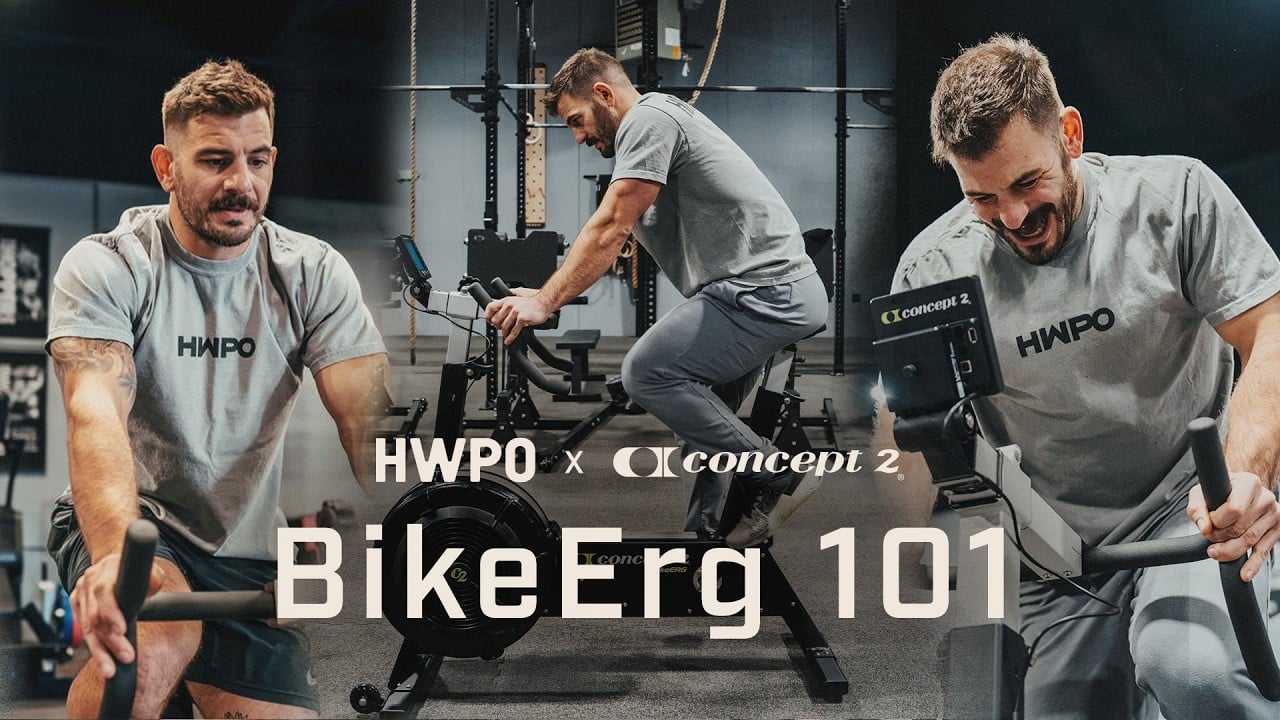
In a recent training video, Fraser revealed why the Concept 2 Bike Erg has become his go-to tool—especially for those training for HYROX or looking to preserve their joints while building serious endurance.
Whether dodging brutal Northeast winters or simply looking to reduce wear and tear on knees and ankles, Fraser’s approach offers practical insights for athletes at every level.
Jump to:
Why Fraser Chooses Bike Over Running
Fraser doesn’t mince words about his equipment preferences. When doing HYROX intervals in the gym, he typically jumps on the Concept 2 bike instead of running.
The reasoning is straightforward: taking mileage and wear off joints while maintaining conditioning intensity. For someone living in the Northeast, Fraser points out that running outside during winter months simply isn’t practical or enjoyable.
The bike offers a legitimate alternative that doesn’t compromise training quality.
Setting Up Your Bike Erg Properly
Most people overlook proper bike setup, but Fraser emphasizes getting dimensions right from the start.
Seat Height: The Critical Adjustment
Fraser sets his seat height at 10 using the adjustment handle. This creates a slight cushion in his knee at the bottom of each stroke, preventing overreach toward the pedal.
At the bottom of my stroke, it leaves a little bit of a cushion, little bit of a cushion in my knee, and I’m not like overreaching my toes down to get to the pedal.
He’s essentially simulating proper road bike dimensions—a detail many athletes ignore.
Fan Damper Settings Explained
The damper runs from 1 to 10, but understanding what each setting does changes everything.
Setting 10 provides maximum resistance—slower movement but more meters per revolution. Setting 1 offers minimal resistance, requiring high RPM (revolutions per minute) to generate output.
Fraser’s personal preference? He starts at a 6, sometimes pushing to 7.
Typically the bike is where I’m going to have the heaviest damper between all three machines. I usually have this starting at a six, maybe even going up to a seven, but that’s more just my personal preference and my build. I’m very quad dominant, so my quads are the strongest part about me.
HYROX-Specific Training Recommendations
For athletes specifically training for HYROX, Fraser offers tactical advice based on running cadence.
Typical runners maintain 160 to 180 foot strikes per minute at race pace. To replicate this on the bike, Fraser suggests finding a damper setting where you hit approximately 85 to 90 RPM.
This cadence matching helps maintain neuromuscular patterns specific to HYROX demands.
Fraser’s Advanced Conditioning Protocol
Beyond basic endurance work, Fraser has developed a sophisticated interval approach that mimics HYROX station transitions.
The Damper Flip Method
This protocol alternates between extreme damper settings to build both strength-endurance and metabolic flexibility.
- Minute 1: Damper 10, standing position, maximum quad engagement
- Minute 2: Damper 1, seated position, extremely high RPM focus
- Repeat: Continue alternating for desired interval duration
The genius lies not in raw output but in transition speed. Fraser pretends he’s coming off a brutal sled push—legs burning, breathing heavy—and must immediately hit running cadence.
I pretend like I’m coming off that sled push where it’s a really slow cadence, really heavy. You’re going to be breathing heavy and your legs are going to be coughing when you come off it. And it’s trying to replicate starting that run and getting right to cadence and having your body be used to it so it can start flushing out lactic acid as you’re still completing work.
Why This Works
Training body systems to clear lactate while maintaining work output creates massive competitive advantage. Most athletes rest during transitions; Fraser trains his body to recover under load.
Zone 2 Cardio: Fraser’s Secret Weapon
During his competitive career, Fraser performed nearly all Zone 2 training exclusively on the Bike Erg.
Sessions lasted 60 to 90 minutes, often completed in his living room while watching television. The bike’s compact size and easy mobility made consistency achievable even with demanding training schedules.
Zone 2 work builds aerobic base without taxing joints or requiring mental focus—perfect for recovery days or volume accumulation.
Extreme Conditioning Applications
Beyond steady-state work, Fraser pushes the Bike Erg to its limits with high-intensity intervals.
His preferred brutal protocol: one minute on, one minute off, maximum intensity.
This approach demonstrates the equipment’s versatility—capable of supporting both gentle aerobic development and savage anaerobic capacity work.
Durability and Reliability
Fraser calls the Bike Erg “Mr. Consistent” for good reason.
I’ve put this machine through more abuse than any other one and I’ve never had a failure, never had a problem. It’s like the old Mr. consistent, just shows up and is ready to do the work.
For athletes investing in home equipment, reliability matters. Fraser’s endorsement carries weight—this machine survived years of elite-level punishment without mechanical issues.
Practical Implementation Strategy
Incorporating Fraser’s Bike Erg philosophy requires thoughtful programming rather than random substitution.
For HYROX athletes: Replace one weekly run with bike intervals at 85-90 RPM, matching race pace heart rate zones.
For general conditioning: Add 2-3 weekly Zone 2 sessions of 45-60 minutes at comfortable damper setting (4-6).
For advanced athletes: Implement Fraser’s damper flip protocol once weekly, starting with 5-10 rounds and building volume.
The Bike Erg isn’t just a running replacement—it’s a complete conditioning platform capable of developing every energy system athletes need. Fraser’s approach proves that with proper setup and intelligent programming, this single piece of equipment can anchor an entire endurance development strategy while preserving joint health for long-term athletic development.