A supplement promising to “clean up” damaged mitochondria has sparked debate between two health professionals with vastly different perspectives on what constitutes sufficient evidence.
Dr. Eric Westman, a physician with clinical experience treating patients, recently responded to content from Dr. Rhonda Patrick, a PhD biochemist and popular health influencer, regarding urolithin A—a compound marketed under the brand name Mitopure.
The exchange highlights a crucial question: when does promising research translate into something worth recommending to patients?
And more importantly, who gets to decide?
Jump to:
What Exactly Is Urolithin A?
Dr. Patrick explains that urolithin A is a gut-derived compound produced when specific bacteria ferment ellagitannins—polyphenols found primarily in pomegranates and walnuts.
The catch? Only about 50% of people possess enough of these bacteria to produce urolithin A naturally from food sources.

If you want something simple that actually works, this is one of the most effective tools I’ve used to build strength, conditioning, and endurance without needing a full gym setup.
- Full-body training with one weight using swings, squats, and presses
- Solid cast iron build that feels stable and lasts for years
- Comfortable grip that makes high-rep workouts easier to handle
It’s kind of a coin toss whether or not you’re going to be making this beneficial compound from eating pomegranate, for example.
This variability has led supplement companies to create direct urolithin A products, bypassing the need for gut bacteria conversion entirely.
The Mitophagy Mechanism
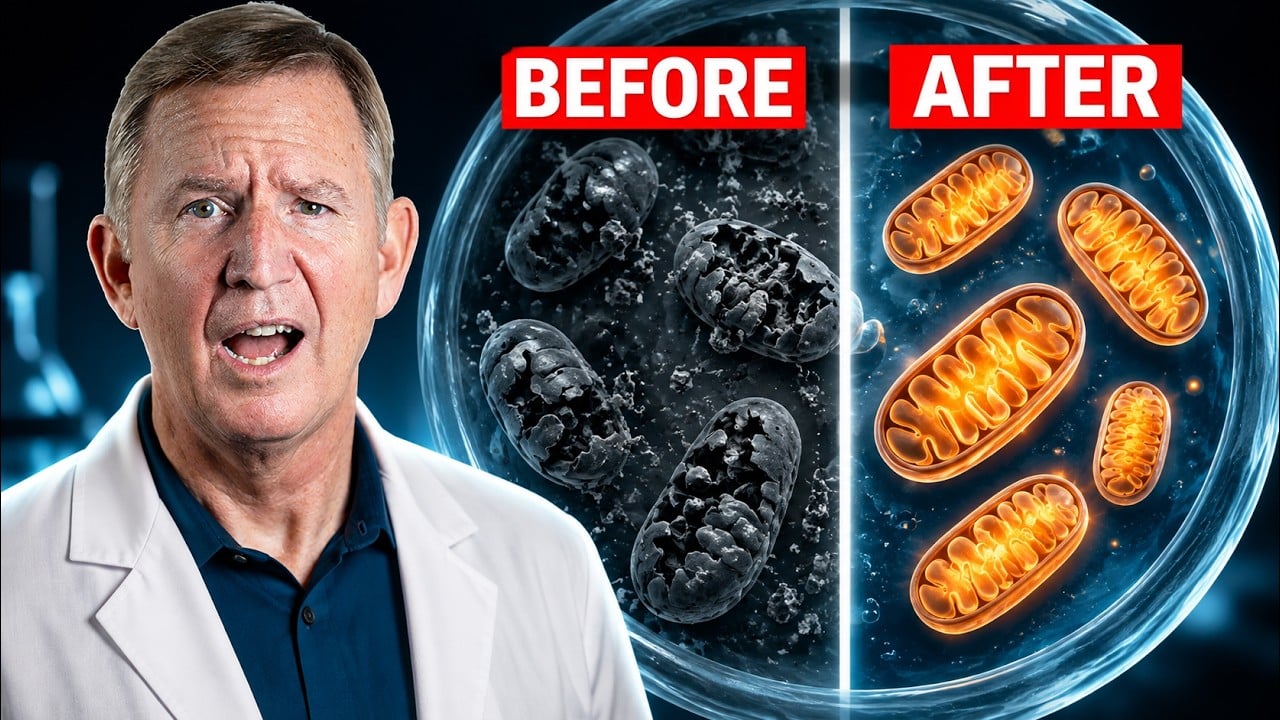
Dr. Patrick describes urolithin A as a “pretty powerful signaling molecule” capable of activating mitophagy—a cellular process similar to autophagy but specifically targeting mitochondria.
Mitochondria serve as cellular powerhouses, producing energy needed for virtually every bodily function. Over time, these organelles accumulate damage.
Mitophagy is cleaning up all the mitochondria within your cells. Anything that can clean up parts of damaged mitochondria, whole damaged mitochondria, anything like that is very beneficial for a rejuvenating effect.
According to Dr. Patrick, urolithin A has demonstrated this effect in both animal and human studies, with clinical endpoints including improved exercise performance, VO2 max, muscle hypertrophy, and delayed immunosenescence.
The Clinical Evidence Gap
This is where Dr. Westman raises significant concerns about the current state of research.
He points out a critical distinction between clinical studies and the large-scale randomized controlled trials typically required for FDA drug approval.
If you want something simple that actually works, this is one of the most effective tools I’ve used to build strength, conditioning, and endurance without needing a full gym setup.
- Full-body training with one weight using swings, squats, and presses
- Solid cast iron build that feels stable and lasts for years
- Comfortable grip that makes high-rep workouts easier to handle
Just to say that there’s clinical evidence and that there are randomized control trials, doesn’t really mean to me that it’s ready for prime time, ready for me to prescribe in a clinical setting to my patients who I don’t want to harm.
Dr. Westman explains that randomization is merely a bias-reducing procedure applicable to studies of any size—it doesn’t automatically indicate robust, comprehensive testing.
More importantly, measuring mitochondrial biomarkers differs substantially from tracking meaningful health outcomes like disease incidence, quality of life, or longevity.
Biomarkers Versus Real-World Outcomes
The physician emphasizes that history is littered with compounds that improved biomarkers but failed to deliver actual health benefits—or worse, caused unexpected harm when scaled to larger populations.
These biomarkers really don’t tell you the whole story about whether you have vascular disease, whether you’re going to get cancer. There were studies done because the biomarkers looked great and then the outcome wasn’t improved or it might even have been worse.
Testing on thousands of people over years helps identify rare but serious side effects that smaller studies might miss entirely.
Who Should Consider Urolithin A?
Dr. Patrick personally supplements with 500-1,000 mg of Mitopure daily, taken with food to improve bioavailability.
She sees no reason to cycle the supplement, as it doesn’t downregulate endogenous pathways but rather activates beneficial cellular processes.
If you want something simple that actually works, this is one of the most effective tools I’ve used to build strength, conditioning, and endurance without needing a full gym setup.
- Full-body training with one weight using swings, squats, and presses
- Solid cast iron build that feels stable and lasts for years
- Comfortable grip that makes high-rep workouts easier to handle
This is simply a signaling molecule that is activating a very important rejuvenation process inside cells by rejuvenating the mitochondria.
She particularly emphasizes combining urolithin A with high-intensity interval training, which stimulates production of new mitochondria while the supplement helps clear damaged ones.
Context Matters Enormously
Dr. Westman stresses that individual context determines whether experimental supplements make sense.
Dr. Patrick is a healthy individual engaged in vigorous exercise. Most clinical patients face different circumstances entirely.
Most of my patients cannot exercise, let alone do high-intensity exercise. So, we’re talking about a different clinical group.
Patients with diabetes, obesity, metabolic syndrome, or polycystic ovary syndrome require careful consideration of medication interactions and condition-specific effects—data that often doesn’t exist for newer supplements.
The Influencer Factor
Dr. Westman raises an intriguing point about understanding influencer risk tolerance.
Someone who races cars recreationally likely has different risk assessment than someone who exclusively recommends extensively-tested interventions.
If you want something simple that actually works, this is one of the most effective tools I’ve used to build strength, conditioning, and endurance without needing a full gym setup.
- Full-body training with one weight using swings, squats, and presses
- Solid cast iron build that feels stable and lasts for years
- Comfortable grip that makes high-rep workouts easier to handle
Additionally, financial relationships matter. Dr. Patrick explicitly states she has no affiliation with Mitopure’s manufacturer, which increases credibility.
However, Dr. Westman notes that influencers promoting products they sell or profit from face lower barriers to recommendation.
The Cost Consideration
Urolithin A supplements aren’t cheap. Dr. Patrick acknowledges the cost factor multiple times.
She suggests that 500 mg daily provides benefits documented in studies, though some research used 1,000 mg doses—particularly studies examining immune system rejuvenation in older adults.
For those on tight budgets, this becomes a significant decision point when weighing uncertain benefits against guaranteed expenses.
The Broader Implications
Dr. Westman’s fundamental position centers on a conservative clinical approach: when proper nutrition is optimized, supplementation becomes less necessary except in specific circumstances.
If you want something simple that actually works, this is one of the most effective tools I’ve used to build strength, conditioning, and endurance without needing a full gym setup.
- Full-body training with one weight using swings, squats, and presses
- Solid cast iron build that feels stable and lasts for years
- Comfortable grip that makes high-rep workouts easier to handle
I think when you get the food right, unless there’s some perturbation for some other reason, maybe a medication, food can give you everything you need.
He expresses concern about increasingly reductionistic thinking—researchers focusing on mitochondrial health rather than whole-person wellness.
While mitochondrial science holds tremendous promise, translating cellular mechanisms into practical health recommendations requires extensive validation.
Making Your Decision
Both experts offer valuable perspectives from different vantage points.
Dr. Patrick represents cutting-edge nutritional biochemistry and personal optimization for already-healthy individuals pursuing performance enhancement.
Dr. Westman represents clinical medicine’s cautious approach, prioritizing patient safety and demanding robust outcome data before recommendations.
Consider these factors when evaluating urolithin A:
If you want something simple that actually works, this is one of the most effective tools I’ve used to build strength, conditioning, and endurance without needing a full gym setup.
- Full-body training with one weight using swings, squats, and presses
- Solid cast iron build that feels stable and lasts for years
- Comfortable grip that makes high-rep workouts easier to handle
- Current health status: Healthy athletes differ substantially from those managing chronic conditions
- Financial resources: Can you sustain long-term supplementation costs?
- Risk tolerance: Are you comfortable with emerging science, or do you prefer extensively-validated interventions?
- Exercise capacity: Can you engage in high-intensity training to maximize potential benefits?
- Medication interactions: Have you consulted healthcare providers about potential conflicts?
Dr. Westman’s conclusion acknowledges the solid science behind urolithin A research while maintaining that clinical application remains premature for most patients.
This one is not quite ready for clinical use in my opinion.
The mitochondrial optimization space represents exciting frontier research. Whether it’s ready for your medicine cabinet depends entirely on your individual circumstances, goals, and comfort with scientific uncertainty.