A viral wellness post promises three simple habits can clear arterial plaque and heal the blood vessel damage that causes it—claims attributed to cardiologists but backed by no specific names or studies.
The habits themselves—sauna sessions, high-dose soluble fiber, and stress management—aren’t fiction.
Each has legitimate cardiovascular research behind it.
But the framing that they directly “work on plaque” like a repair crew patching torn artery walls misrepresents both how atherosclerosis forms and what lifestyle interventions can realistically achieve.
Jump to:
What Arterial Plaque Actually Is
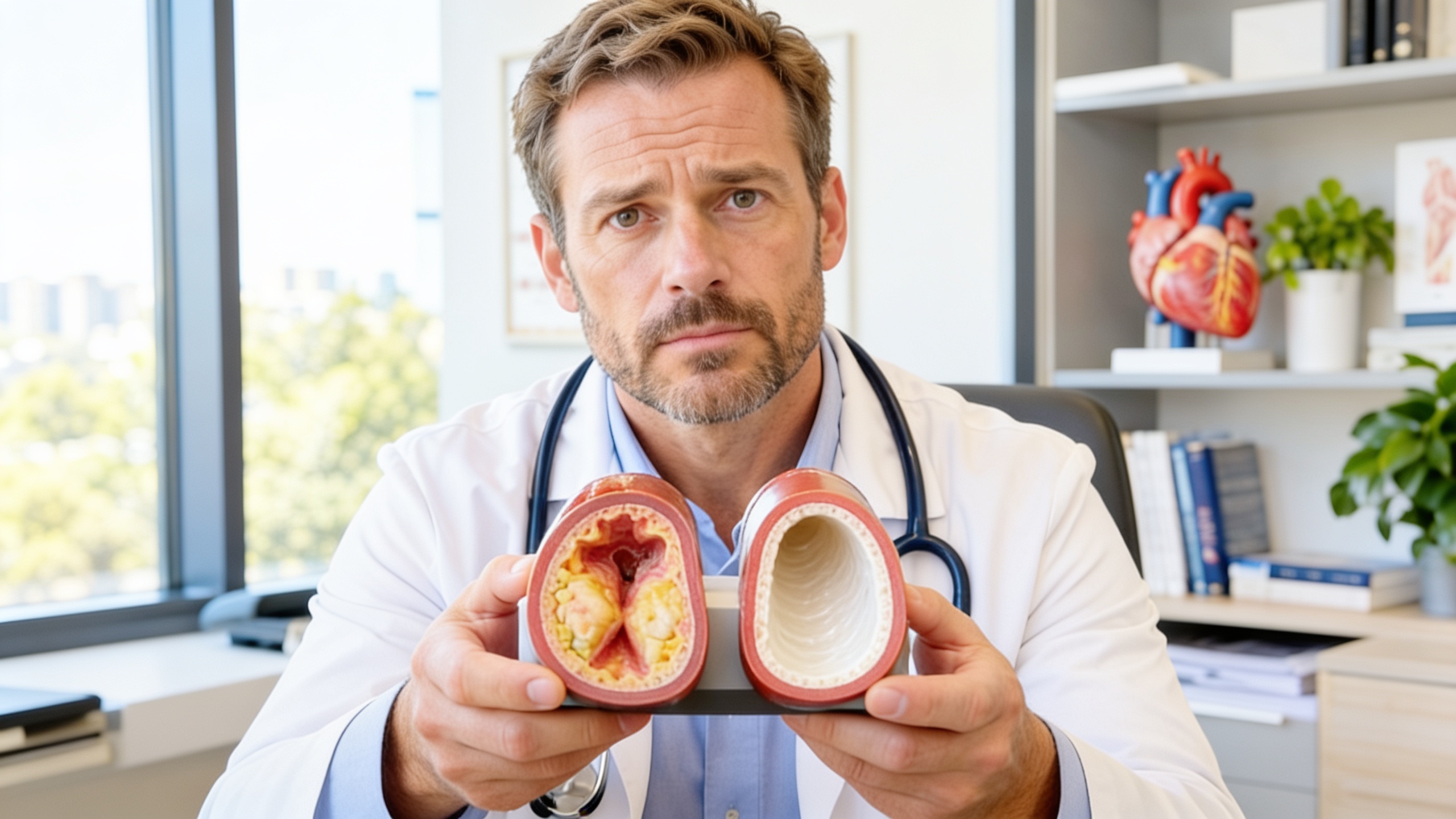
Atherosclerotic plaque doesn’t simply coat artery surfaces like rust on a pipe. It forms inside artery walls—a complex inflammatory buildup of cholesterol, immune cells, calcified deposits, and fibrous tissue.
The post’s “patch over a tear” analogy captures one piece of truth: endothelial injury is indeed an early trigger. Damaged endothelium—caused by high blood pressure, oxidized LDL cholesterol, smoking, or chronic inflammation—loses its protective capacity to produce nitric oxide, becomes sticky, and allows LDL particles and immune cells to infiltrate the vessel wall.
No products found.
Over time, those infiltrating particles form foam cells, which cluster into fatty streaks that eventually harden into calcified plaque.
Harvard Health Publishing and Healthline both emphasize that established arterial plaque, particularly calcified plaque, cannot be fully reversed by lifestyle measures alone. What lifestyle changes can accomplish is stabilizing existing plaque (making it less likely to rupture), slowing new buildup, and in select cases achieving modest regression—especially of soft, lipid-rich deposits.
That typically requires statins combined with diet, exercise, and stress management, not three habits in isolation.
Heat Therapy: Real Benefits, Overstated Claims
Sauna use and hot baths have been studied extensively in Finnish and Japanese populations, where regular heat exposure is culturally embedded.
These observational studies link frequent sauna bathing with reduced cardiovascular mortality and improved endothelial function, partly through enhanced nitric oxide release—a molecule critical for keeping blood vessels relaxed and healthy.
But observational is the operative word. These studies show associations, not causation. People who use saunas regularly may also exercise more, eat better, and have lower baseline stress—factors that independently protect heart health.
No products found.
No controlled trial has proven sauna sessions directly “clean” arteries or reverse existing plaque. The cardiovascular benefits are real but preventive, not restorative in the way the post implies.
Soluble Fiber: Mechanism Matters
The post recommends 30 grams of daily soluble fiber from oats and chia seeds, claiming it “traps oxidized cholesterol before it reaches your blood.”
That’s not how soluble fiber works.
Soluble fiber does lower LDL cholesterol, but the mechanism happens in the gut, not the bloodstream. It binds bile acids—digestive fluids made from cholesterol—and escorts them out of the body before they can be reabsorbed. To replace those lost bile acids, your liver pulls cholesterol from your blood, reducing circulating LDL levels over time.
It does not intercept oxidized LDL particles mid-circulation like a net catching debris.
The 30-gram soluble fiber target is also notably higher than standard guidelines. The FDA recommends at least 25 grams of total dietary fiber daily, with soluble fiber comprising a portion of that—not the entire amount.
No products found.
High soluble fiber intake is beneficial, but framing it as a plaque-trapping mechanism gives readers a false sense of precision and timing, as if eating oatmeal before a high-cholesterol meal provides some sort of digestive shield.
Chronic Stress and Blood Pressure: The Mechanical Link
This is the most straightforward claim in the post—and the most solidly backed.
Chronic stress elevates cortisol and adrenaline, which over time raise blood pressure. Sustained hypertension creates mechanical shear stress on endothelial cells, making artery walls more vulnerable to LDL infiltration and plaque initiation.
Stress management—through mindfulness, exercise, therapy, or simply better work-life balance—does protect cardiovascular health. But again, this is prevention and risk reduction, not active plaque reversal.
Lowering blood pressure stabilizes artery walls and slows disease progression. It doesn’t dissolve calcified deposits already embedded in vessel walls.
What Actually Works to Stabilize or Regress Plaque
The best-evidenced interventions for stabilizing or modestly regressing arterial plaque combine medication with lifestyle change.
No products found.
Statins remain the cornerstone. They lower LDL cholesterol aggressively and have anti-inflammatory effects that help stabilize vulnerable plaques. In some clinical studies, intensive statin therapy has achieved small reductions in plaque volume over months to years.
A Mediterranean-style diet—rich in vegetables, whole grains, legumes, fish, and olive oil—has been shown in randomized trials to reduce cardiovascular disease risk by approximately 30 percent.
Regular aerobic exercise improves endothelial function, raises HDL cholesterol, and lowers inflammation.
But even with all these interventions combined, complete reversal of calcified arterial plaque is not currently achievable through non-surgical means. A popular Reddit thread on r/askscience, upvoted nearly 7,500 times and drawing on expert commentary, notes that calcified plaque is “the real problem that the body cannot readily deal with” and that full reversal is not possible through diet or exercise alone.
The Authority Problem
The post attributes these recommendations to cardiologists, using the phrase “cardiologists have proven.”
No specific cardiologist is named. No study is cited. The account (@holistichealthplanet) is a wellness content page, not an identified or credentialed medical professional.
No products found.
This is a common template in health misinformation: attaching vague authority to a list of plausible-but-oversimplified tips, often as a lead-generation mechanism for a downloadable guide or affiliate product.
A cardiologist reviewing this post would likely validate all three habits as heart-protective but would strongly object to the framing that they “work on plaque” in a direct, cleaning sense. The distinction between risk reduction and plaque reversal is clinically critical.
What You Can Control
If you’re concerned about arterial health, these habits are worth adopting—not because they’ll scrub your arteries clean, but because they reduce cardiovascular risk over time.
- Consider sauna or hot bath sessions if you enjoy them and have no contraindications (like uncontrolled blood pressure or heart failure). Aim for 15–20 minutes several times per week.
- Increase soluble fiber gradually from oats, chia seeds, flaxseeds, legumes, and vegetables. Target at least 10–15 grams of soluble fiber daily as part of a balanced 25–30 gram total fiber intake.
- Prioritize stress management through whatever works for you: meditation, yoga, therapy, time in nature, or simply setting boundaries around work.
- Talk to your doctor about cholesterol screening, blood pressure monitoring, and whether statin therapy is appropriate for your risk profile.
- Adopt a Mediterranean-style eating pattern, which has the strongest evidence for cardiovascular protection.
These steps won’t erase decades of plaque buildup, but they will stabilize what’s there, slow progression, and reduce your risk of heart attack and stroke.
That’s not as catchy as “three habits to clean your arteries,” but it’s what the science actually supports.
Sources
- Harvard Health Publishing – Can we reduce vascular plaque buildup? https://www.health.harvard.edu/heart-health/can-we-reduce-vascular-plaque-buildup
- Healthline – Atherosclerosis reversal and lifestyle interventions
- Reddit r/askscience – Expert commentary on plaque reversal