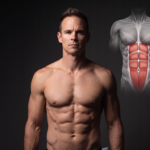
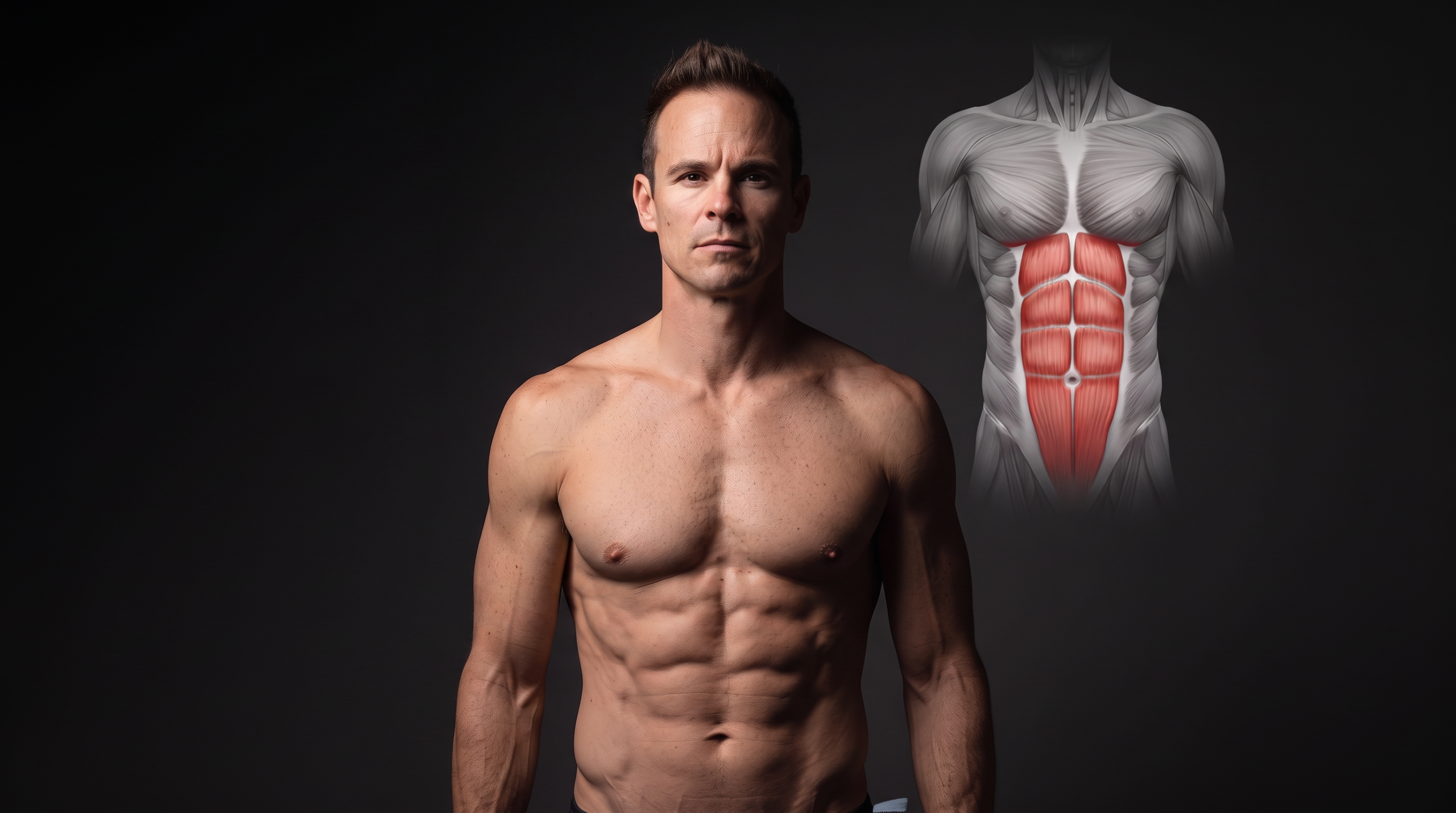
Building visible abs requires more than endless crunches and planks.
When fitness expert Jeremy Ethier set out to scientifically test 30 of the most popular ab exercises, he discovered that many of the movements people rely on are actually holding them back.
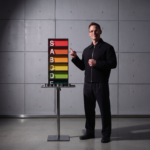
Using EMG sensors to measure muscle activation in the upper abs, lower abs, and hip flexors, Ethier ranked every exercise from S-tier (super) to F-tier (fail).
The results reveal which movements truly build a well-developed core—and which are a complete waste of your time.
Jump to:
- Why Most Popular Ab Exercises Fall Short
- The Problem With Sit-Ups and Traditional Crunches
- One Simple Addition Makes Crunches Far More Effective
- The Assisted Lat Pulldown Crunch: A Game-Changer for Beginners
- Why Lying Leg Raises Miss the Mark
- The Captain’s Chair Leg Raise: A Solid Upper-Mid Tier Option
- Why Planks Are Overrated for Building Abs
- Dragon Flags: Legendary but Limited
- The Garhammer Hold: Underrated Isometric Excellence
- Garhammer Raises: An S-Tier Lower Ab Builder
- Reverse Crunches: The Beginner-Friendly Lower Ab Essential
- Cable Crunches: Overhyped But Still Solid
- The Face-Away Lat Pulldown Cable Crunch: The Ultimate Upper Ab Exercise
- The Exercises That Failed the Test
- The Ab Roller: Fun but Flawed
- The Final Verdict: Best Ab Exercises for Beginners and Advanced Lifters
- But Exercise Alone Won’t Reveal Your Abs
Why Most Popular Ab Exercises Fall Short
Ethier explains that for an ab exercise to be truly effective, it must check three critical boxes.
First, it must be easy to progressively overload. Your abs are muscles just like your biceps or chest, and they need increasing resistance over time to grow.
Second, the exercise must provide a deep stretch with tension in that stretched position. Recent research suggests this creates a powerful growth signal.
Third, your hip flexors shouldn’t be doing most of the work. Many so-called ab exercises secretly recruit the hip flexors far more than the abdominal muscles themselves.
The Problem With Sit-Ups and Traditional Crunches
Sit-ups landed in D-tier for good reason.
While the EMG data showed high upper ab activation during the first half of the movement, the hip flexors took over during the last half to pull the body up. This means your abs aren’t actually doing most of the work.
Regular floor crunches performed better by focusing purely on spinal flexion—bringing the rib cage down toward the pelvis in a C-shape. This dramatically reduced hip flexor involvement while increasing ab activation.
However, the floor still prevents a deep stretch at the bottom, limiting their effectiveness. That earned them a C-tier ranking.
One Simple Addition Makes Crunches Far More Effective
Adding a rolled towel or ab mat under the lower back instantly upgrades the crunch.
Regular sit-ups, they don’t fully stretch your abs. So you don’t go through a full range of motion.
With the mat creating space, the abs can achieve a much deeper stretch at the bottom of each rep. This simple modification transformed the exercise into an A-tier movement.
The only drawbacks? People tend to cheat by swinging their arms or jutting their neck forward, which can lead to strain.
The Assisted Lat Pulldown Crunch: A Game-Changer for Beginners
Crunches performed on a lat pulldown machine scored remarkably well. The pad locks the knees in place, creating more stability and minimizing hip flexor involvement.
Plus, without the floor limiting you, the abs can stretch fully at the bottom of the movement.
But there’s a catch—they’re extremely difficult. Even Ethier could only manage eight clean reps before his form broke down. His training partner Dennis couldn’t complete a single unassisted rep.
The solution? Adding a cable for assistance, which works like an assisted pull-up machine. The cable provides an upward pull, helping control the descent and assisting on the way back up.
This modification allowed Dennis to bang out a set of 10 reps, earning it the first S-tier ranking of the experiment.
Why Lying Leg Raises Miss the Mark
Most people turn to lying leg raises for lower ab development. Unfortunately, they fall into the same trap as sit-ups.
The EMG data revealed the highest hip flexor activation of any exercise tested up to that point. While the abs do stabilize the body, the hip flexors are doing the heavy lifting to pull the legs up.
Add in the fact that the floor prevents a full ab stretch, and lying leg raises earned a D-tier ranking.
Hanging Leg Raises: Better, But Still Flawed
Hanging knee raises didn’t solve the problem. Hip flexors remained the primary muscle pulling the knees up, landing them in D-tier as well.
Straightening the legs into an L-shape only made things worse. The longer lever increased the difficulty for the hip flexors by 40%, with minimal additional ab activation.
However, performing leg raises with a C-shaped form—curling the pelvis at the top—changed the equation. This shifted some work to the abs, particularly the upper fibers, though the exercise remained unstable and prone to swinging.
That earned the C-shape variation a B-tier ranking.
The Captain’s Chair Leg Raise: A Solid Upper-Mid Tier Option
The captain’s chair removes the grip strength issue that plagues hanging exercises. Resting your forearms on pads and using a back pad for stability allows you to focus entirely on the movement.
As long as you let the abs fully stretch at the bottom and curl the pelvis into a C-shape, you’ll get similar benefits to hanging variations—without hogging a squat rack.
This earned an A-tier ranking, making it a reliable choice for targeting the lower abs.
Why Planks Are Overrated for Building Abs
Planks are everywhere in fitness routines, but they scored poorly for muscle building.
They don’t provide a deep stretch or take the abs through a full range of motion. Instead, the abs contract isometrically to prevent the lower back from sagging.
Progressive overload is also difficult unless you have someone to add weight to your back. And for most people, shoulder fatigue kicks in long before the core gives out.
That landed standard planks in F-tier.
The RKC Plank: A Significant Upgrade
The RKC plank variation nearly tripled ab activation compared to a regular plank. By positioning the forearms farther forward, squeezing the quads and glutes, and pulling the elbows down, the core demand skyrockets.
However, it’s tricky to coordinate, especially for beginners, and still carries many of the same downsides as regular planks. That placed it in C-tier.
Dragon Flags: Legendary but Limited
Made famous by Bruce Lee, the dragon flag is one of the most demanding core exercises imaginable.
It produced the highest upper and lower ab activation of any exercise tested up to that point. However, that’s not because it does anything unique—it’s simply so difficult that the abs must contract near-maximally to keep the body rigid.
Ethier could only manage two to three clean reps before his form broke down. And crucially, the abs aren’t taken through a deep stretch or full range of motion.
While excellent for building core strength, it landed in B-tier for pure ab development.
The Garhammer Hold: Underrated Isometric Excellence
This obscure exercise involves hanging the hips off the end of a bench, tucking the knees in, and lowering the legs as far as possible without touching the floor—then holding.
Even though there’s no movement, there’s tremendous tension on the abs in the stretched position. Some emerging research suggests isometric holds in a stretched position may build similar muscle to full range-of-motion reps.
The EMG data showed ab activation increased progressively the longer the hold lasted, much like approaching failure during a traditional set.
Notably, this was the first exercise where lower abs were more activated than upper abs. Ethier could hold for 20 to 30 seconds without weight, while Dennis managed just five seconds.
It earned an A-tier ranking, just shy of the top due to the lack of full range of motion and less straightforward progression tracking.
Garhammer Raises: An S-Tier Lower Ab Builder
Instead of holding the Garhammer position, what if you raise up and down?
This dynamic version checks all three boxes for an elite ab exercise:
- Deep stretch at the bottom
- Easy to progressively overload with ankle weights or a dumbbell between the feet
- Minimal hip flexor involvement when performed correctly
The lower-to-upper abs activation ratio was the best recorded so far, making it an outstanding choice for lower ab development.
That earned Garhammer raises a well-deserved S-tier ranking—and Ethier’s pick for advanced trainees targeting the lower abs.
Reverse Crunches: The Beginner-Friendly Lower Ab Essential
Reverse crunches offer a more accessible alternative to Garhammer raises.
You keep the knees in a 90-degree position and focus on pushing the tailbone up while curling the pelvis into a C-shape.
You started at 1 inch, now you’re at 12 inches.
Dennis initially could only lift his pelvis an inch or two. After incorporating reverse crunches into his routine every other day for 30 days, MRI scans showed his abs had grown by 20%.
You can instantly make the exercise harder by extending the legs farther out. The only limitation? The bench prevents a deep stretch at the bottom, placing standard reverse crunches in A-tier.
The S-Tier Upgrade: Add an Ab Mat
Placing an ab mat or rolled towel under the lower back solves the stretch problem. Now the spine has more room to extend at the bottom, fully stretching the abs.
With that simple addition, reverse crunches with an ab mat earned an S-tier ranking and became Ethier’s top pick for beginners targeting the lower abs.
Cable Crunches: Overhyped But Still Solid
Many consider cable crunches the single best ab exercise. They do live up to much of the hype—when performed correctly.
The key is locking the hips at 90 degrees, fully extending the spine, then rounding it into a C-shape. As you get stronger, simply select a heavier weight.
The downsides? There’s not much tension at the top when the abs are stretched. And because the hips aren’t locked in place, most people cheat by swinging them around.
That placed standard cable crunches in A-tier.
Face-Away Cable Crunches: The S-Tier Version
Facing away from the cable machine transforms the exercise.
Now it becomes significantly harder at the top when the abs are stretched. You can rest your butt against the pole to lock the hips in place, eliminating the ability to cheat.
The bar is kind of pushing my butt and I can’t move. I can push my hips back so it’s stable.
Both the kneeling and standing face-away versions earned S-tier rankings, with Ethier preferring the standing variation for its superior stability.
The Face-Away Lat Pulldown Cable Crunch: The Ultimate Upper Ab Exercise
Performing the face-away cable crunch on a lat pulldown machine adds another layer of stability.
Raising the seat pad provides perfect lower back support, locking the hips in place. The dual pads keep the body completely stable, allowing you to focus entirely on the abs.
It’s so stable because it has two pads here. You feel your body is actually completely locked. I can’t move around from both sides.
This earned a spot in S-tier and became Ethier’s top pick for both beginners and advanced lifters targeting the upper abs.
The Exercises That Failed the Test
Several popular movements fell flat:
- Bicycle crunches: Low ab activation for advanced lifters, no way to progressively overload, and no deep stretch. D-tier.
- V-ups: Far too much hip flexor involvement. D-tier.
- Butterfly kicks: Almost entirely hip flexors with minimal ab activation. F-tier.
- Mountain climbers: More cardio than ab training. F-tier.
The Ab Roller: Fun but Flawed
The ab roller forces the abs to contract isometrically to prevent the hips from falling. The farther you roll out, the harder it gets.
But progression is limited—you can only roll out so far. Advancing to the feet-elevated version is a massive jump in difficulty that even Ethier couldn’t complete for a full rep.
While it’s fun and demanding, the ab roller landed in C-tier.
The Final Verdict: Best Ab Exercises for Beginners and Advanced Lifters
After testing 30 exercises with EMG sensors and ranking them scientifically, Ethier identified the two best movements for each level.
For Beginners
- Upper abs: Face-away lat pulldown cable crunch
- Lower abs: Reverse crunches with an ab mat
For Advanced Lifters
- Upper abs: Face-away lat pulldown cable crunch (same as beginners)
- Lower abs: Garhammer raises
These exercises check all three critical boxes: deep stretch, easy progressive overload, and minimal hip flexor takeover.
But Exercise Alone Won’t Reveal Your Abs
You can perform a million reps of the best ab exercises, but visible abs won’t appear without proper nutrition.
Building the muscle is only half the equation. Reducing body fat through a well-structured diet is equally essential.
Combining these science-backed exercises with consistent training and smart eating habits creates the foundation for a truly well-developed core.
Focus on the fundamentals: progressive overload, full range of motion with a deep stretch, and exercises that truly target the abs instead of the hip flexors.
Skip the gimmicks, ignore the trends, and stick with what the data proves actually works.