History was made in the French Alps last weekend, and it had nothing to do with who crossed the finish line first.
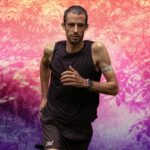
Julien Veysseyre, a 39-year-old French athlete running on a prosthetic leg, became the first amputee ever to complete the Ultra-Trail du Mont-Blanc — one of the most grueling endurance races on the planet.
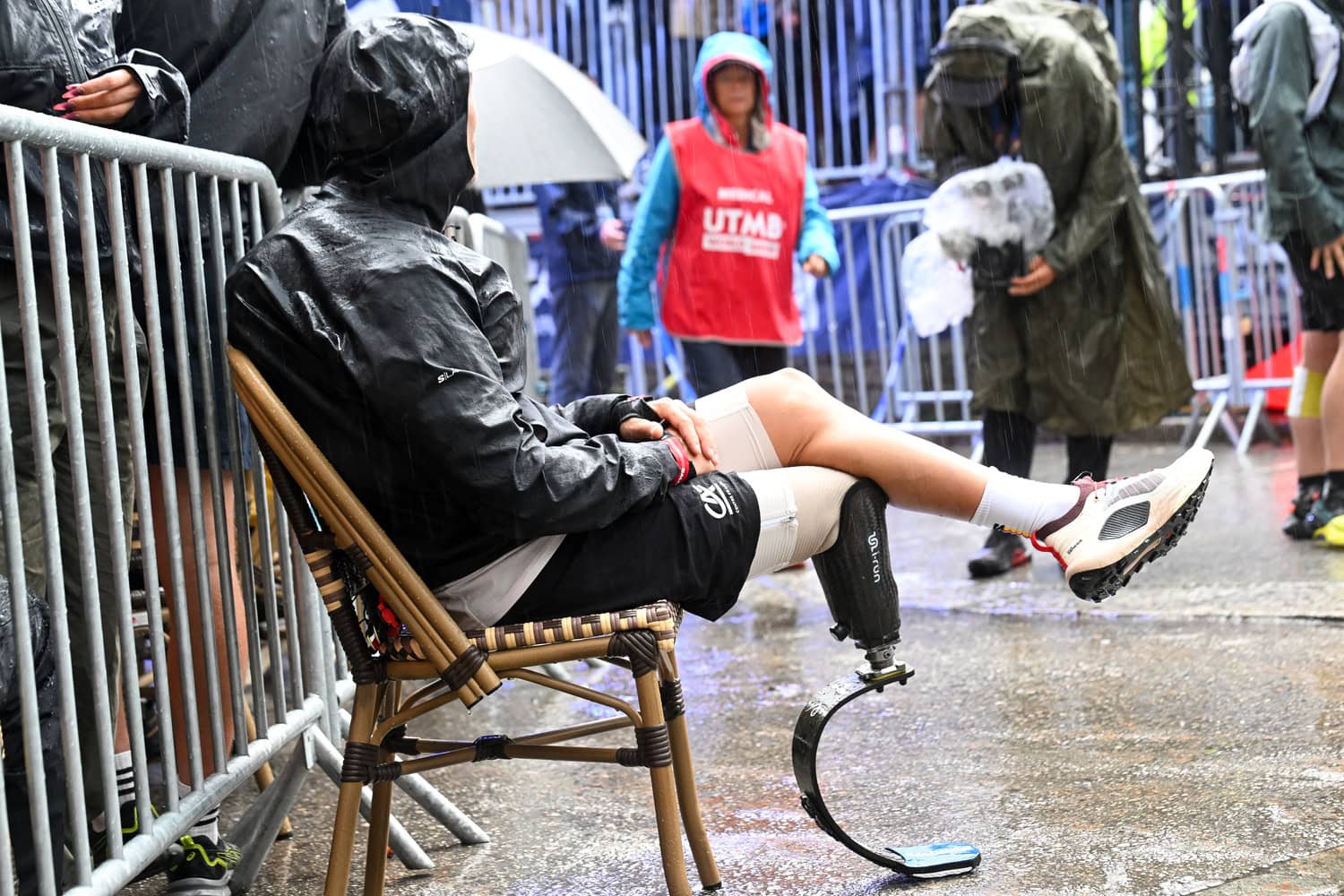
What unfolded over 44 hours and 16 minutes across 173 kilometers of brutal Alpine terrain is the kind of story that stops you mid-scroll.
And the moment that nearly ended it all came less than halfway through.
Jump to:
A Race That Almost Ended at Kilometer 80
Veysseyre stepped off from Chamonix’s Place du Triangle de l’Amitié at 7:45 p.m. on Friday alongside roughly 2,400 other runners — the start delayed two hours due to thunderstorm risks.
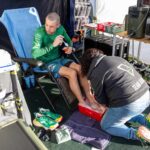
By the time he reached Courmayeur, Italy, at approximately the 80-kilometer mark, his body was failing him.

If you want something simple that actually works, this is one of the most effective tools I’ve used to build strength, conditioning, and endurance without needing a full gym setup.
- Full-body training with one weight using swings, squats, and presses
- Solid cast iron build that feels stable and lasts for years
- Comfortable grip that makes high-rep workouts easier to handle
His sound foot had become a source of serious pain. The prosthesis was creating intense discomfort where it met his residual limb. His ranking had slipped to 2,099th out of the field.
I could barely run any more. It was every man for himself. I got to Courmayeur and in my head I was 98 percent certain I was not going back out.
He went back out.
The Remarkable Turnaround Nobody Saw Coming
What happened after Courmayeur is almost impossible to believe.
Veysseyre clawed back more than 600 positions across the second half of the course — moving from 2,099th to 1,475th at the finish line, steadily climbing the rankings checkpoint by checkpoint.
He was 1,539th into Champex-Lac. Then 1,433rd at Trient. Then 1,412th at Vallorcine. Every single checkpoint told the same story — this man was not stopping.
Five guides rotated with him across two nights of mountain running, each carrying — among other essentials — a second prosthetic leg, swapped in and out depending on the terrain beneath his feet.
If you want something simple that actually works, this is one of the most effective tools I’ve used to build strength, conditioning, and endurance without needing a full gym setup.
- Full-body training with one weight using swings, squats, and presses
- Solid cast iron build that feels stable and lasts for years
- Comfortable grip that makes high-rep workouts easier to handle
According to reporting by AFP, Veysseyre was moving for nearly the entire race. Out of 44-plus hours on course, he stopped for just one hour and 59 minutes total — including two longer breaks of 37 and 40 minutes, one each night.
The Physical Reality of Running on a Blade
To understand what Veysseyre endured, the science is staggering.
A 2018 paper published in Scientific Reports found that people with a below-knee amputation use 10 to 30 percent more metabolic energy simply to walk compared to those without one. Running on a blade compounds that — adding socket friction and a gait pattern that places dramatically heavier loads on the remaining natural leg.
Veysseyre did this for 44 hours. Across 173.6 kilometers. With nearly 9,700 meters of climbing — roughly 31,800 feet of elevation gain — through the Alps.
The UTMB runs no para classification, meaning he was filed in the standard 35–39 men’s age category alongside every other competitor. No special division. No separate timing. The same race, the same rules, the same cutoffs.
He had approximately two hours and 25 minutes to spare before the final cutoff of 6:30 p.m. on Sunday.
If you want something simple that actually works, this is one of the most effective tools I’ve used to build strength, conditioning, and endurance without needing a full gym setup.
- Full-body training with one weight using swings, squats, and presses
- Solid cast iron build that feels stable and lasts for years
- Comfortable grip that makes high-rep workouts easier to handle
From Workplace Accident to World-Class Athlete
Veysseyre’s road to Chamonix is as extraordinary as the race itself.
At just 18 years old, a workplace accident cost him his right leg below the knee. Decades later, he found endurance sport through triathlon — and excelled at it, claiming a para cross-triathlon world title in 2023.
That title caught the attention of Salomon, who brought him onto their para team. He now races wearing bib 1416 under their banner.
Last August, he finished the CCC — the UTMB’s shorter sibling at 100.5 kilometers — in 21 hours, 55 minutes, placing 877th. He said at that point that the UTMB was always the real goal.
To get there, he made a bold call in the spring: he left his career in human resources to dedicate himself entirely to training and advocacy.
When Veysseyre came through the arch in Chamonix shortly after 4 p.m. on Sunday, he wasn’t alone.
If you want something simple that actually works, this is one of the most effective tools I’ve used to build strength, conditioning, and endurance without needing a full gym setup.
- Full-body training with one weight using swings, squats, and presses
- Solid cast iron build that feels stable and lasts for years
- Comfortable grip that makes high-rep workouts easier to handle
His two sons ran the final stretch alongside him — a moment that will be difficult to top in terms of sheer emotional weight this year in sport.
Standing on the Shoulders of Other Pioneers
Amputee runners have broken barriers before. Amy Palmiero-Winters, who lost her left leg below the knee following a motorcycle crash, became the first amputee to finish the Western States 100 back in 2010, and the first woman with an amputation to complete Badwater the following year.
But the UTMB had never been done. Until Sunday.
Veysseyre’s next challenge is already locked in — La Mascareignes on the island of La Réunion, a 74-kilometer race with 3,800 meters of climbing, starting at 1 a.m. on October 16.
He’s also pushing for something bigger than podiums. Veysseyre has been vocal about wanting trail racing to develop its own dedicated para categories, pointing to triathlon — where he says the classification system already functions well — as the model the sport should follow.
One finish line crossed. One much larger conversation just beginning.
If you want something simple that actually works, this is one of the most effective tools I’ve used to build strength, conditioning, and endurance without needing a full gym setup.
- Full-body training with one weight using swings, squats, and presses
- Solid cast iron build that feels stable and lasts for years
- Comfortable grip that makes high-rep workouts easier to handle