Jump to:
- Making History — But Not the First Amputee to Conquer Ultra Distance
- A Bigger Mission Beyond the Finish Line
- Making History — But Not the First Amputee to Conquer Ultra Distance
- A Bigger Mission Beyond the Finish Line
- A Finish Line 21 Years in the Making
- Nearly 100 Kilometers In — and Nearly Done
- The Comeback Nobody Saw Coming
- Making History — But Not the First Amputee to Conquer Ultra Distance
- A Bigger Mission Beyond the Finish Line
Making History — But Not the First Amputee to Conquer Ultra Distance
Amputee runners have left their mark on ultra-endurance racing before. American athlete Amy Palmiero-Winters — who lost her left leg below the knee in a motorcycle crash — became the first amputee to finish the Western States 100 in 2010, and completed the Badwater ultramarathon the following year in 41 hours and 26 minutes.
But the UTMB had never been conquered by an amputee. Until Sunday.
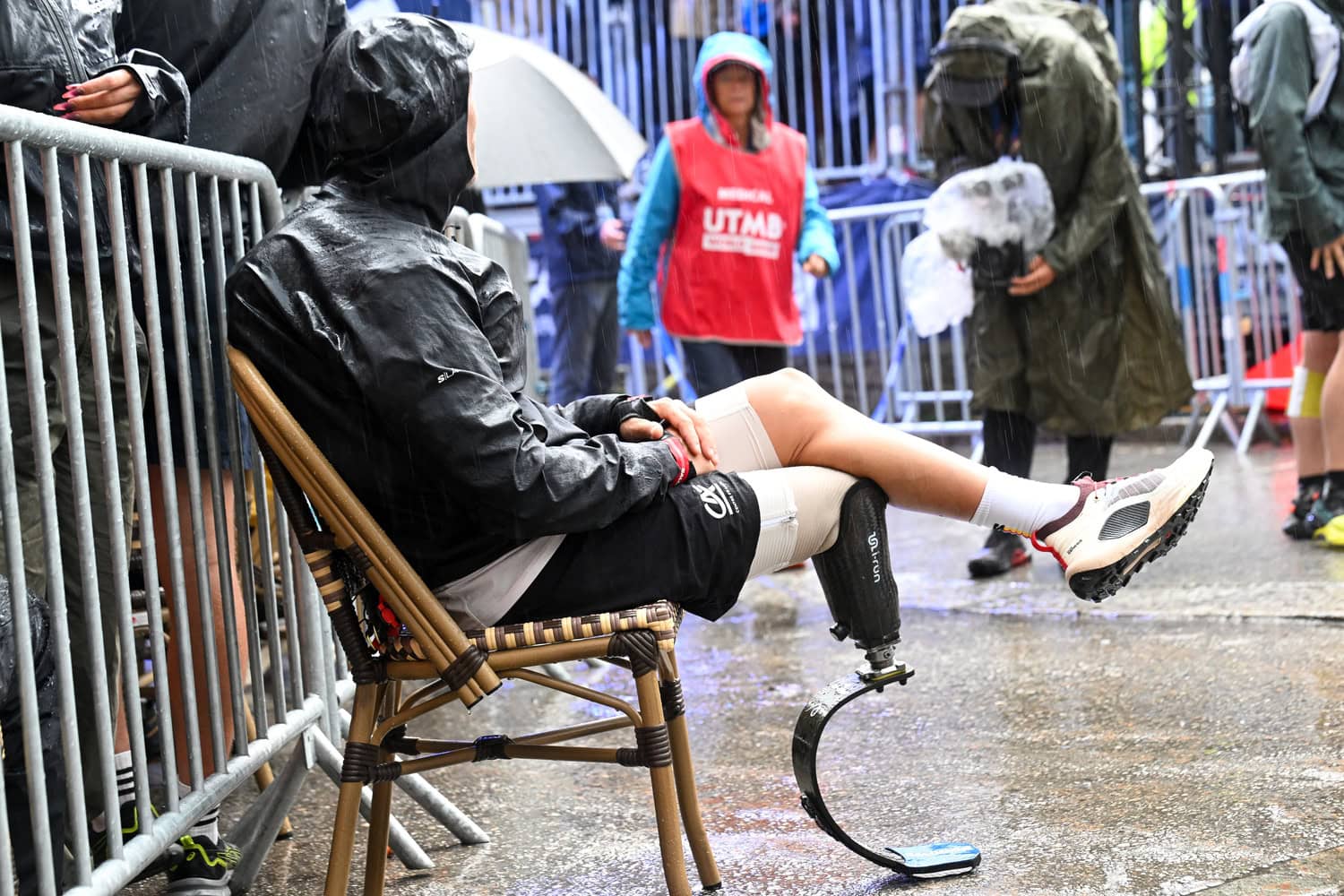
Because UTMB runs no para classification, Veysseyre’s result is filed under the standard 35-39 men’s age category — placing him among the general field with no separate recognition of what he was doing differently from every other runner out there.
That’s a point he’s not shy about wanting to change.
A Bigger Mission Beyond the Finish Line
Veysseyre left his career in human resources earlier this year to focus entirely on training and advocacy — speaking publicly about para athletics and pushing for trail racing to develop dedicated para categories of its own.
He points to triathlon as the model that already works, and he wants mountain ultra-running to catch up.

If you want something simple that actually works, this is one of the most effective tools I’ve used to build strength, conditioning, and endurance without needing a full gym setup.
- Full-body training with one weight using swings, squats, and presses
- Solid cast iron build that feels stable and lasts for years
- Comfortable grip that makes high-rep workouts easier to handle
His two sons ran the final stretch into Chamonix with him on Sunday — a moment that, by any measure, transcended sport.
And he’s not slowing down. Reports indicate Veysseyre is headed to La Réunion next for La Mascareignes — a 74-kilometer race with 3,800 meters of climbing, starting at 1 a.m. on October 16.
Forty-four hours in the Alps, and the man is already planning his next mountain.
The Science Behind What This Actually Cost Him
The physical toll of what Veysseyre accomplished is staggering when you look at the numbers. Research published in a 2018 Scientific Reports paper found that people with a below-knee amputation expend 10 to 30 percent more metabolic energy walking than those without one.
Running on a blade compounds that further — adding socket friction and a gait pattern that places significantly greater load on the non-amputated side.
Veysseyre was out on the course for 44 hours and 16 minutes, stopping for a total of just one hour and 59 minutes across the entire effort — including two longer breaks of 37 and 40 minutes, one on each night.
If you want something simple that actually works, this is one of the most effective tools I’ve used to build strength, conditioning, and endurance without needing a full gym setup.
- Full-body training with one weight using swings, squats, and presses
- Solid cast iron build that feels stable and lasts for years
- Comfortable grip that makes high-rep workouts easier to handle
Nearly two full days in the mountains. On a prosthetic leg. With a painful sound foot.
Making History — But Not the First Amputee to Conquer Ultra Distance
Amputee runners have left their mark on ultra-endurance racing before. American athlete Amy Palmiero-Winters — who lost her left leg below the knee in a motorcycle crash — became the first amputee to finish the Western States 100 in 2010, and completed the Badwater ultramarathon the following year in 41 hours and 26 minutes.
But the UTMB had never been conquered by an amputee. Until Sunday.
Because UTMB runs no para classification, Veysseyre’s result is filed under the standard 35-39 men’s age category — placing him among the general field with no separate recognition of what he was doing differently from every other runner out there.
That’s a point he’s not shy about wanting to change.
A Bigger Mission Beyond the Finish Line
Veysseyre left his career in human resources earlier this year to focus entirely on training and advocacy — speaking publicly about para athletics and pushing for trail racing to develop dedicated para categories of its own.
If you want something simple that actually works, this is one of the most effective tools I’ve used to build strength, conditioning, and endurance without needing a full gym setup.
- Full-body training with one weight using swings, squats, and presses
- Solid cast iron build that feels stable and lasts for years
- Comfortable grip that makes high-rep workouts easier to handle
He points to triathlon as the model that already works, and he wants mountain ultra-running to catch up.
His two sons ran the final stretch into Chamonix with him on Sunday — a moment that, by any measure, transcended sport.
And he’s not slowing down. Reports indicate Veysseyre is headed to La Réunion next for La Mascareignes — a 74-kilometer race with 3,800 meters of climbing, starting at 1 a.m. on October 16.
Forty-four hours in the Alps, and the man is already planning his next mountain.
One of the most extraordinary stories in endurance sports just unfolded in the French Alps — and most of the world hasn’t heard it yet.
On a sun-drenched Sunday afternoon in Chamonix, 39-year-old Frenchman Julien Veysseyre crossed the finish line of the Ultra-Trail du Mont-Blanc, becoming the first amputee in history to complete the legendary 173.6-kilometer race.
If you want something simple that actually works, this is one of the most effective tools I’ve used to build strength, conditioning, and endurance without needing a full gym setup.
- Full-body training with one weight using swings, squats, and presses
- Solid cast iron build that feels stable and lasts for years
- Comfortable grip that makes high-rep workouts easier to handle
He did it on a prosthetic leg, across two brutal nights in the mountains, after nearly quitting at the halfway point.
What happened between that moment of near-surrender and his triumphant finish is the kind of story that makes you rethink everything you believe about human limits.
A Finish Line 21 Years in the Making
Veysseyre lost his right leg below the knee at just 18 years old, following a workplace accident that would have derailed most people permanently.
It didn’t derail him. It just rerouted him.
He found his way into endurance sport through triathlon, eventually claiming a para cross-triathlon world title in 2023 — a result that caught the attention of Salomon, who brought him onto their para team. Last August, he finished the CCC, a 100.5-kilometer mountain race with nearly 5,800 meters of climbing, in just under 22 hours.
Even then, he made no secret of what the CCC really was: a stepping stone.
If you want something simple that actually works, this is one of the most effective tools I’ve used to build strength, conditioning, and endurance without needing a full gym setup.
- Full-body training with one weight using swings, squats, and presses
- Solid cast iron build that feels stable and lasts for years
- Comfortable grip that makes high-rep workouts easier to handle
The UTMB was always the destination.
Nearly 100 Kilometers In — and Nearly Done
The 2025 UTMB was already a dramatic edition before Veysseyre’s story took center stage. Around 2,400 runners departed Chamonix two hours late on Friday evening after organizers delayed the start due to thunderstorm risk, also trimming the route slightly to 173.6 kilometers and approximately 9,700 meters of climbing.
Veysseyre set off with everyone else, running on a painful unaffected foot and managing significant discomfort where his prosthesis connected with his residual limb.
By Courmayeur — roughly 80 kilometers into the race — things had become almost unbearable.
I could barely run any more. It was every man for himself. I got to Courmayeur and in my head I was 98 percent certain I was not going back out.
He had also slipped from 1,341st place after the first checkpoint down to 2,099th by that point — a brutal numerical reminder of how much the terrain was costing him.
Then he went back out anyway.
If you want something simple that actually works, this is one of the most effective tools I’ve used to build strength, conditioning, and endurance without needing a full gym setup.
- Full-body training with one weight using swings, squats, and presses
- Solid cast iron build that feels stable and lasts for years
- Comfortable grip that makes high-rep workouts easier to handle
The Comeback Nobody Saw Coming
What followed was nothing short of remarkable. From Courmayeur to the finish line, Veysseyre gained more than 600 places in the field — climbing from 2,099th all the way to 1,475th by the time he crossed the arch at 4 p.m. Sunday.
His checkpoint progression tells the story clearly: 1,539th into Champex-Lac, 1,433rd at Trient, 1,412th at Vallorcine, and 1,475th at the line.
He wasn’t just surviving the second half. He was racing it.
Five guides rotated alongside him across the two nights, carrying a spare prosthetic leg that was swapped in as the terrain shifted beneath them. That logistical detail alone speaks to the level of preparation and team effort behind what looked, from the outside, like one man’s solo feat.
The Science Behind What This Actually Cost Him
The physical toll of what Veysseyre accomplished is staggering when you look at the numbers. Research published in a 2018 Scientific Reports paper found that people with a below-knee amputation expend 10 to 30 percent more metabolic energy walking than those without one.
Running on a blade compounds that further — adding socket friction and a gait pattern that places significantly greater load on the non-amputated side.
If you want something simple that actually works, this is one of the most effective tools I’ve used to build strength, conditioning, and endurance without needing a full gym setup.
- Full-body training with one weight using swings, squats, and presses
- Solid cast iron build that feels stable and lasts for years
- Comfortable grip that makes high-rep workouts easier to handle
Veysseyre was out on the course for 44 hours and 16 minutes, stopping for a total of just one hour and 59 minutes across the entire effort — including two longer breaks of 37 and 40 minutes, one on each night.
Nearly two full days in the mountains. On a prosthetic leg. With a painful sound foot.
Making History — But Not the First Amputee to Conquer Ultra Distance
Amputee runners have left their mark on ultra-endurance racing before. American athlete Amy Palmiero-Winters — who lost her left leg below the knee in a motorcycle crash — became the first amputee to finish the Western States 100 in 2010, and completed the Badwater ultramarathon the following year in 41 hours and 26 minutes.
But the UTMB had never been conquered by an amputee. Until Sunday.
Because UTMB runs no para classification, Veysseyre’s result is filed under the standard 35-39 men’s age category — placing him among the general field with no separate recognition of what he was doing differently from every other runner out there.
That’s a point he’s not shy about wanting to change.
If you want something simple that actually works, this is one of the most effective tools I’ve used to build strength, conditioning, and endurance without needing a full gym setup.
- Full-body training with one weight using swings, squats, and presses
- Solid cast iron build that feels stable and lasts for years
- Comfortable grip that makes high-rep workouts easier to handle
A Bigger Mission Beyond the Finish Line
Veysseyre left his career in human resources earlier this year to focus entirely on training and advocacy — speaking publicly about para athletics and pushing for trail racing to develop dedicated para categories of its own.
He points to triathlon as the model that already works, and he wants mountain ultra-running to catch up.
His two sons ran the final stretch into Chamonix with him on Sunday — a moment that, by any measure, transcended sport.
And he’s not slowing down. Reports indicate Veysseyre is headed to La Réunion next for La Mascareignes — a 74-kilometer race with 3,800 meters of climbing, starting at 1 a.m. on October 16.
Forty-four hours in the Alps, and the man is already planning his next mountain.