Mitochondria—the microscopic powerhouses inside nearly every cell—don’t just keep your body running. They determine how well you age, how much energy you feel, and whether you’re protected against a long list of chronic diseases.
Dr. John Kaiser, a physician with nearly four decades of experience treating complex chronic conditions, has made mitochondrial health the cornerstone of his practice.
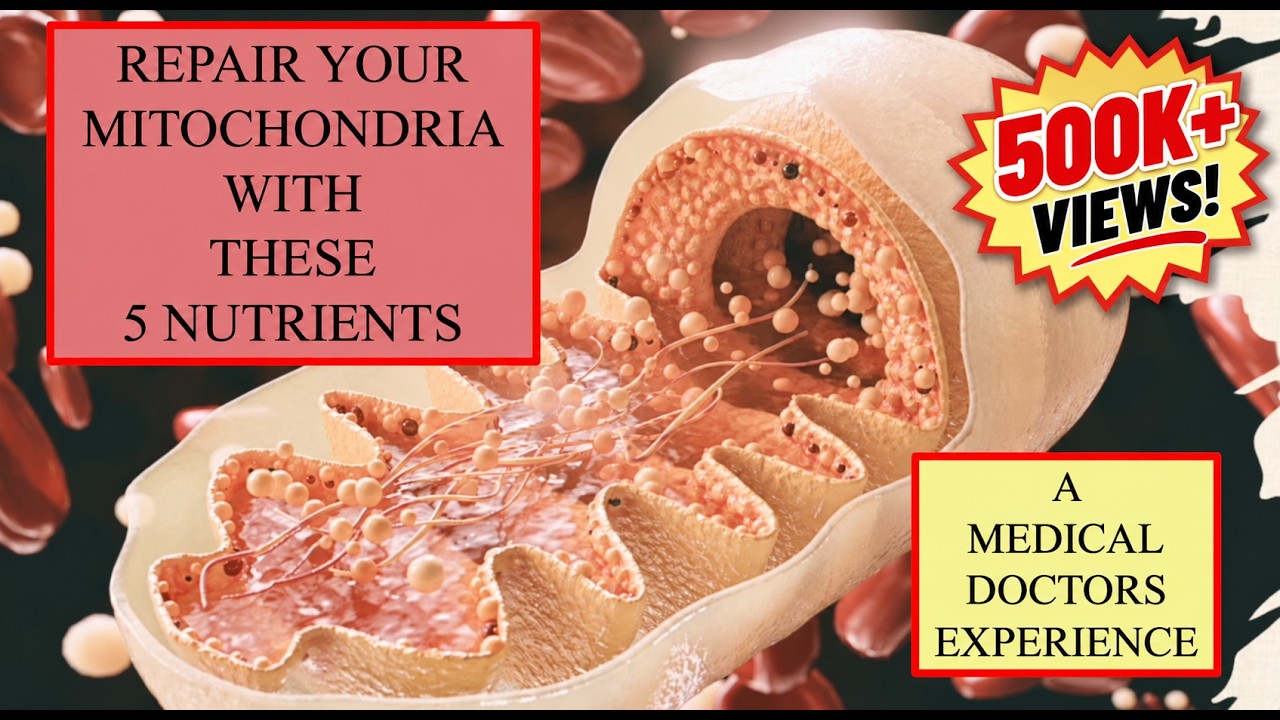
In a recent video, he outlined the five essential nutrients he prescribes to support mitochondrial function and repair—and explained why protecting these cellular engines matters far more than most people realize.
What follows is a breakdown of his protocol, the science behind it, and what the research actually shows.
Jump to:
Why Mitochondrial Health Matters
Most people are born with healthy mitochondria. But life takes a toll.
Viral infections, chronic stress, environmental toxins, and trauma accumulate over time, gradually degrading mitochondrial function. Eventually, energy production falters—and something breaks.
When this happens, there isn’t enough energy being produced by the mitochondria and something breaks. This can include cancer, neurodegenerative diseases, autoimmune conditions and the like.
Dr. Kaiser also describes a category he calls acquired mitochondrial diseases—conditions that strike earlier in life, including chronic fatigue syndrome, fibromyalgia, long COVID, and early-onset autoimmune diseases.
All share a common thread: mitochondrial dysfunction.
The Five Key Nutrients for Mitochondrial Support
Dr. Kaiser’s protocol centers on five nutrients, each chosen for its role in energy production, detoxification, or cellular repair. Here’s how each one works—and what the evidence says.
1. N-Acetylcysteine (NAC) – 600 mg Once or Twice Daily
NAC is a precursor to glutathione, one of the body’s most powerful antioxidants. Glutathione is essential for detoxification and protecting mitochondria from oxidative stress.
Glutathione is important because it’s used to make glutathione peroxidase. This is a very complex enzyme that the body uses for detoxification.
NAC is also used clinically to treat acetaminophen overdose, where it helps restore liver mitochondrial function damaged by the drug.
Studies confirm NAC’s role in boosting glutathione levels and reducing oxidative damage, particularly in conditions involving mitochondrial stress.
2. Acetyl-L-Carnitine – 500 mg Once or Twice Daily
This amino acid derivative helps shuttle fatty acids into mitochondria, where they’re burned for energy. And burning fat is efficient—gram for gram, it yields double the energy of glucose or protein.
Acetyl L-carnitine has been shown in double-blind placebo-controlled trials in elderly individuals to reduce physical and mental fatigue.
A 2007 study published in the American Journal of Clinical Nutrition found that acetyl-L-carnitine supplementation improved both physical and mental fatigue in centenarians. A second trial in the Archives of Gerontology and Geriatrics replicated these results.
3. Alpha-Lipoic Acid – 200 mg Once or Twice Daily
Alpha-lipoic acid (ALA) is a versatile antioxidant that recharges other antioxidants, including vitamins C and E. It also complements acetyl-L-carnitine.
Research by Dr. Bruce Ames and colleagues showed that combining ALA with acetyl-L-carnitine in aging rats restored youthful mitochondrial function, improved coat appearance, and enhanced brain and liver performance.
This is another study of the combination which showed increased numbers of mitochondria and increased numbers of brain mitochondria that were preserved in this placebo-controlled trial in rats.
While animal studies are promising, human trials are more limited. ALA has shown benefits in diabetic neuropathy and oxidative stress reduction, but large-scale longevity data in humans is still emerging.
4. Coenzyme Q10 (CoQ10) – 200 mg Once or Twice Daily
CoQ10, also called ubiquinone, shuttles electrons along the mitochondrial membrane—a critical step in energy production. It’s especially abundant in tissues with high energy demands, like the heart.
In one study, patients scheduled for open-heart surgery took CoQ10 or placebo for two weeks beforehand. Heart muscle biopsies showed that those who took CoQ10 had better contractility and resilience.
CoQ10 supplementation is well-supported for heart health, particularly in heart failure and statin-induced myopathy, where statin drugs deplete natural CoQ10 levels.
5. Vitamin C – 1,000 mg Once or Twice Daily
Dr. Kaiser calls vitamin C “the granddaddy of all antioxidants.” It protects cells from oxidative damage, supports immune function, and aids tissue repair.
While vitamin C alone doesn’t directly fuel mitochondria, it works synergistically with other antioxidants to reduce oxidative stress—a major contributor to mitochondrial decline.
The Synergy Factor: Why These Nutrients Work Better Together
Dr. Kaiser emphasizes that these five nutrients are most effective when combined with foundational vitamins and minerals—B vitamins, magnesium, zinc, selenium, and vitamin D.
These five key mitochondrial nutrients work better when also given with just the kind of vitamins and minerals you find in a high-potency multivitamin.
These co-factors support enzymatic reactions that allow mitochondrial nutrients to do their job more efficiently.
The Clinical Evidence: A Double-Blind Trial in HIV Patients
Dr. Kaiser developed this protocol in the 1980s and 90s, when early HIV medications caused severe mitochondrial toxicity. He tested the formula in a multi-center, double-blind, placebo-controlled trial involving HIV-positive patients with mitochondrial damage.
The results, published in the Journal of Acquired Immune Deficiency Syndromes in 2006, showed a significant increase in CD4 immune cell counts—a key marker of immune strength—in those taking the supplement combination.
This formula basically gave their immune systems a big shot in the arm of energy, improved their mitochondrial function, and increased the CD4 count.
The placebo group showed no change. It’s worth noting that this trial was conducted in a specific population with drug-induced mitochondrial damage, so results may not fully generalize to other conditions.
How to Take the Protocol
Dr. Kaiser adjusts dosing based on severity:
- Once daily: For prevention or mild conditions
- Twice daily: To help reverse serious medical conditions
He notes that while the protocol may sound like a lot of pills, some companies manufacture formulations that combine these ingredients. He mentions Orthomolecular Products Mitocore and Integrative Therapeutics KPAX Moutri as options, clarifying he has no financial ties to either.
Who Should Consider Mitochondrial Support?
According to Dr. Kaiser, mitochondrial support is especially important for anyone dealing with:
- Chronic fatigue syndrome
- Fibromyalgia
- Long COVID
- Autoimmune diseases
- Neurodegenerative conditions
- Cancer recovery
- Age-related decline
Even for those without diagnosed conditions, protecting mitochondrial health may be a proactive step toward longevity and sustained energy.
Final Takeaways
Mitochondrial health isn’t just about preventing disease—it’s about optimizing how your body produces and uses energy at the cellular level.
Dr. Kaiser’s five-nutrient protocol—NAC, acetyl-L-carnitine, alpha-lipoic acid, CoQ10, and vitamin C—offers a science-backed approach rooted in decades of clinical experience and supported by peer-reviewed research.
While individual nutrients have varying levels of evidence, the combination approach—especially when paired with essential vitamins and minerals—appears to offer synergistic benefits that go beyond what any single supplement can achieve.
As always, consult with a healthcare provider before starting any new supplement regimen, particularly if you have underlying health conditions or take medications.
Sources
- American Journal of Clinical Nutrition (2007) – Acetyl-L-carnitine and fatigue in centenarians
- Archives of Gerontology and Geriatrics – Acetyl-L-carnitine supplementation
- Journal of Acquired Immune Deficiency Syndromes (2006) – Mitochondrial nutrient formula in HIV patients
- Studies by Dr. Bruce Ames on acetyl-L-carnitine and alpha-lipoic acid in aging