Staying in peak physical condition isn’t just about hitting the gym hard for a few months before summer.
It’s about building a lifestyle that lasts decades—not just days.
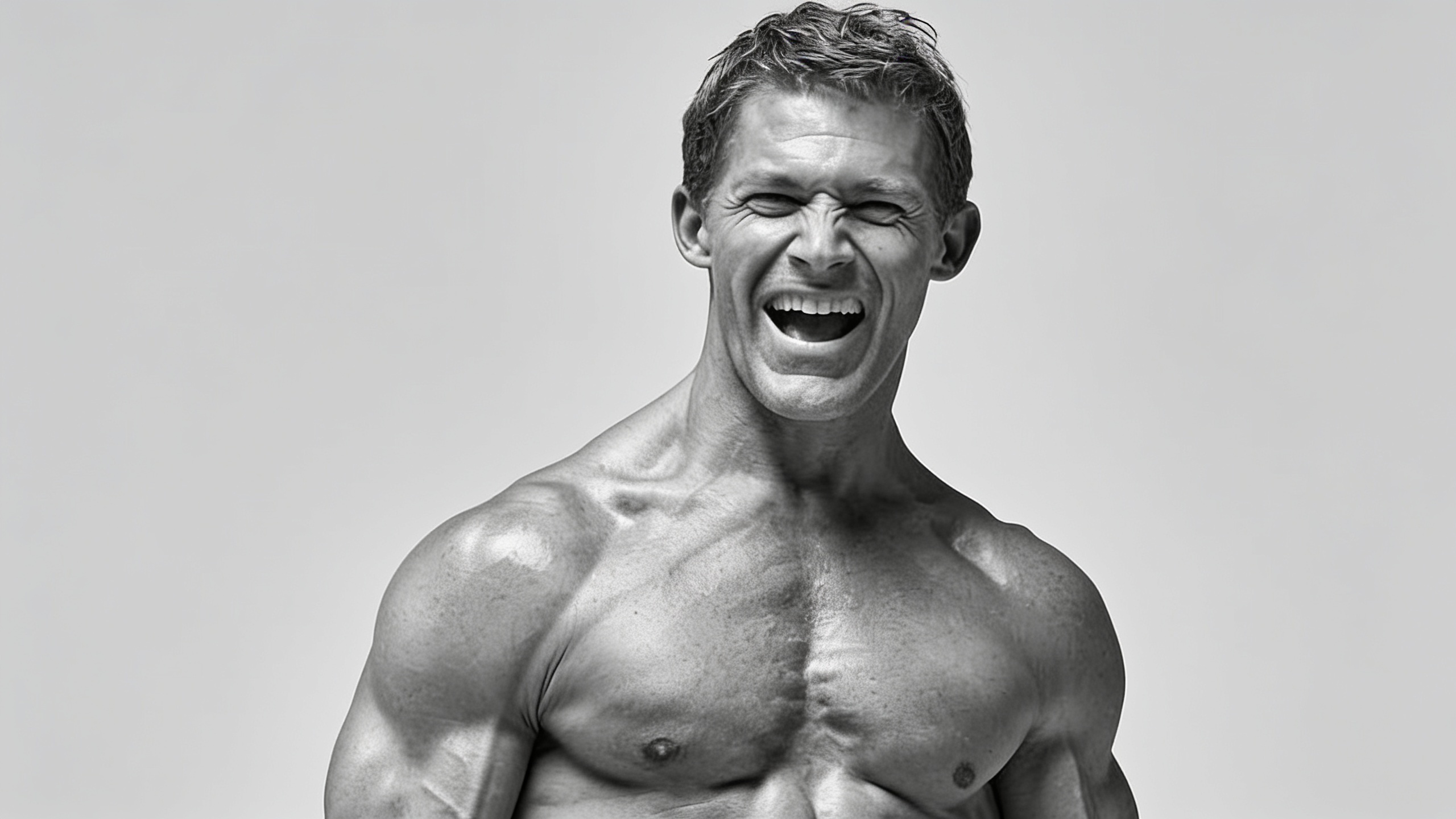
Men’s Health UK recently spotlighted an individual who has maintained a photo-shoot-ready physique for more than four decades, proving that age doesn’t have to mean decline.
What does it really take to stay shredded, strong, and magazine-cover worthy from your twenties into your sixties and beyond?
Jump to:
Why Four Decades of Fitness Is So Rare
Maintaining a lean, muscular physique for over 40 years isn’t common—and for good reason.
Most men experience a gradual decline in testosterone starting around age 30, losing approximately 1–2% per year. This hormonal shift makes building and retaining muscle progressively harder as the years roll on.
Add in the natural slowdown of metabolism, increased injury risk, and life’s mounting responsibilities, and it’s easy to see why so few men stay in top shape across multiple decades.
But research published in the Journal of Strength and Conditioning Research shows that older trained athletes can maintain significantly more muscle mass and lower body fat than their untrained peers—if they stay consistent.
Training: Consistency Beats Intensity Over Time
Decades of physique maintenance don’t happen by accident.
They require a training approach that prioritizes consistency and smart progressive overload over chasing short-term intensity highs.
Research consistently identifies resistance training 3–5 times per week as the cornerstone habit for long-term muscle retention in aging individuals. This frequency keeps protein synthesis elevated, preserves satellite cell activity, and combats sarcopenia—the age-related loss of muscle mass that begins as early as your thirties.
But here’s where decades-long athletes separate themselves: they adapt.
Training volume and intensity must evolve with age to prevent overuse injuries while maintaining results. What worked in your twenties—high-volume splits, frequent max-effort sets, minimal rest days—might wreck your joints and connective tissues in your fifties.
How Training Evolves Across Decades
- Focus shifts from pure hypertrophy to strength and mobility: Maintaining muscle becomes easier than building new mass, so emphasis moves toward movement quality and joint health.
- Recovery becomes non-negotiable: Sleep quality, stress management, and dedicated mobility work prevent injury and keep performance high.
- Lower training frequency with higher intent: Fewer sessions per week, but each one is purposeful and well-executed.
- Deload weeks are scheduled, not optional: Planned recovery phases prevent burnout and chronic overtraining.
Long-term fitness isn’t about going harder forever—it’s about going smarter.
Nutrition: Protein and Precision Are Non-Negotiable
You can’t out-train a bad diet—especially not for 40 years.
Staying photo-shoot ready across decades demands precise nutritional strategies that support muscle retention, manage body fat, and fuel recovery.
Protein intake is the foundation. Studies in Nutrients and similar journals recommend 1.6–2.2 grams of protein per kilogram of body weight per day for older trained athletes to maximize muscle protein synthesis and offset age-related declines.
For a 180-pound man, that’s roughly 130–180 grams daily—spread across multiple meals to keep synthesis elevated throughout the day.
But protein alone isn’t enough.
Caloric Periodization: The Secret to Year-Round Leanness
Long-term fitness pros don’t maintain single-digit body fat by accident.
They use caloric periodization—strategically cycling calories and macronutrients throughout the year to stay lean without constantly dieting.
This approach involves short phases of moderate caloric surplus to support training and recovery, followed by brief periods of deficit to shed any accumulated body fat. It’s sustainable, prevents metabolic adaptation, and avoids the psychological burnout of endless restriction.
- Maintenance phases: Eating at caloric balance most of the year keeps metabolism healthy and energy high.
- Mini-cuts: Short 4–6 week deficit phases drop body fat without sacrificing muscle.
- Micronutrient focus: Anti-inflammatory foods, omega-3s, and antioxidants support joint health and recovery as training age increases.
Precision, not perfection, drives long-term results.
Hormones: Managing What You Can Control
Declining testosterone is inevitable for men as they age.
But smart lifestyle choices can slow the decline and optimize what remains.
Resistance training itself is one of the most powerful natural testosterone boosters available. Compound movements—squats, deadlifts, presses—stimulate hormonal release and preserve muscle mass even as endogenous production drops.
Sleep quality matters just as much. Poor sleep tanks testosterone, increases cortisol, and sabotages recovery. Men who prioritize 7–9 hours of quality sleep consistently see better body composition outcomes than those who don’t.
Stress management, adequate dietary fat intake (especially from sources like fish, nuts, and avocados), and maintaining healthy body fat levels all play supporting roles in hormonal health.
You can’t stop the clock, but you can slow it down.
Motivation: The Mental Game of Long-Term Fitness
Physical strategies are critical, but mindset is what separates those who maintain fitness for decades from those who flame out after a few years.
Staying motivated for 40+ years requires shifting from extrinsic goals—like looking good for a vacation—to intrinsic ones rooted in identity and lifestyle.
Long-term fitness isn’t something you do. It’s something you are.
Building routines that feel sustainable, finding training styles you genuinely enjoy, and viewing setbacks as temporary rather than catastrophic all contribute to longevity in the gym.
Discipline beats motivation every time—but discipline is easier when your habits align with your values.
Key Takeaways for Decades of Fitness Success
Maintaining a photo-shoot-ready physique for more than 40 years isn’t reserved for genetic outliers or professional athletes.
It’s the result of applying evidence-based principles consistently across decades.
- Train 3–5 times per week with resistance: Consistency and progressive overload preserve muscle as you age.
- Prioritize protein: Aim for 1.6–2.2g per kg of body weight daily to support muscle retention.
- Use caloric periodization: Strategic cycling of calories keeps you lean without constant dieting.
- Adapt your training over time: What worked at 25 won’t work at 55—prioritize recovery, mobility, and smart programming.
- Manage hormones naturally: Sleep, stress management, and resistance training optimize testosterone and recovery.
- Build an identity around fitness: Long-term success comes from making training a core part of who you are, not just what you do.
Staying in shape for four decades isn’t about perfection—it’s about persistence, adaptation, and making fitness a lifelong practice rather than a short-term goal.