What happens when you put four women with vastly different combat backgrounds through the most common attacks women face?
An MMA fighter, a self-defense expert, a judo black belt, and a scientist stepped up to compete in the ultimate women’s self-defense championship.
Their performances revealed surprising truths about what actually works when violence becomes reality.
And the results might completely change how you think about defending yourself.
Jump to:
The Self-Defense Expert Who Fights Through Pain
Xenia Rodos brought a unique approach to the competition. The 33-year-old from Holland trains in “school of self-protection street tactics,” a system built on principles tested under real stress.
We don’t call it a system, that’s the first thing. We call it principles, and that’s the principles that stand keep standing on the real fight stress, constant offensive forward pressure, and a lot of gross motor skills, things that tested on the real stress that stays.
Her philosophy centers on relentless aggression and forward momentum—concepts that would be tested immediately.

If you want something simple that actually works, this is one of the most effective tools I’ve used to build strength, conditioning, and endurance without needing a full gym setup.
- Full-body training with one weight using swings, squats, and presses
- Solid cast iron build that feels stable and lasts for years
- Comfortable grip that makes high-rep workouts easier to handle
Aggression That Impressed Difficult Judges
From the first surprise attack, Xenia demonstrated what separated her from previous contestants. She held up against a much larger attacker significantly better than the MMA fighter and scientist who competed before her.
One judge awarded her an eight, noting her ability to use the attacker’s energy against him. Another gave her six points, commenting on her fighter mindset and hammer fist strikes that could slow down an attacker enough to escape.
But Xenia’s performance came at a cost. During one challenge, she re-injured an old knee problem. The pain was visible, the injury significant.
She refused to stop.
Violence Isn’t Beautiful—It’s Survival
Despite battling her injury, Xenia pushed through scenario after scenario. In one challenge, she immediately took initiative and started fighting, earning praise from both judges.
Nothing is beautiful in violence, so don’t think beautiful things.
Her philosophy matched her performance. When facing being pulled by attackers, she received a nine for going with the momentum and taking the fight to them. One judge believed without the protective helmet, the attacker wouldn’t want to continue.
If you want something simple that actually works, this is one of the most effective tools I’ve used to build strength, conditioning, and endurance without needing a full gym setup.
- Full-body training with one weight using swings, squats, and presses
- Solid cast iron build that feels stable and lasts for years
- Comfortable grip that makes high-rep workouts easier to handle
Fighting bigger opponents for three consecutive rounds took its toll. Exhaustion crept in. Her injured knee limited movement during ground scenarios.
But Xenia adapted with creative—and unconventional—tactics.
When Desperation Meets Innovation
In the ground pin scenario, Xenia found herself in a horrible position.
All of a sudden his ass was in my face and had the kicking on on back of his head, but it didn’t do anything. And I remember putting my finger in his ass. But he didn’t respond. That’s what he deserved.
Despite the exhaustion and injury, her kicks from the ground earned recognition. One judge gave her seven points, noting that without a helmet, those head kicks could have had huge impact.
The other judge was less convinced, awarding six points. Being underneath someone larger meant relying solely on strikes—a strategy with diminishing returns.
Xenia’s aggressive style earned respect from unexpected quarters. The MMA fighter admitted she needed to learn from this approach of immediate attack and damage rather than feeling out opponents first.
If you want something simple that actually works, this is one of the most effective tools I’ve used to build strength, conditioning, and endurance without needing a full gym setup.
- Full-body training with one weight using swings, squats, and presses
- Solid cast iron build that feels stable and lasts for years
- Comfortable grip that makes high-rep workouts easier to handle
The Judo Black Belt Who Adapted Beyond Tradition
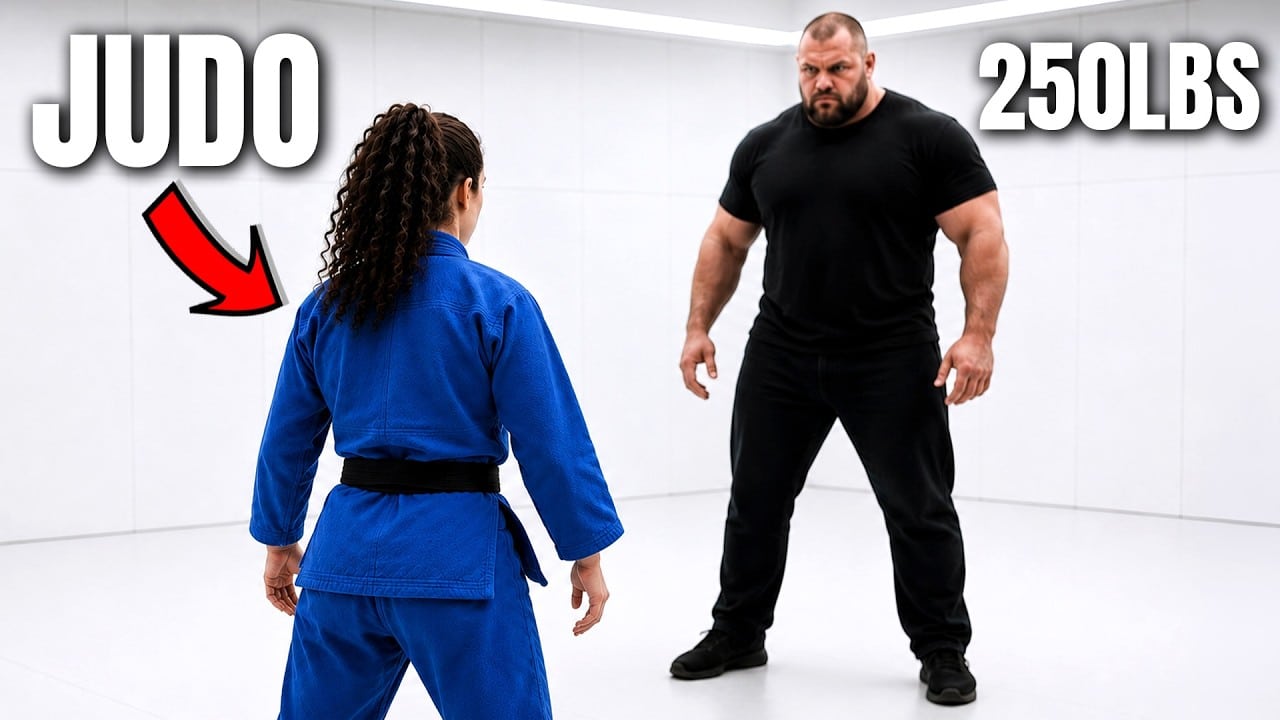
April entered as the final contestant, bringing decades of traditional martial arts training. Starting judo at age four, she’d become a senior national champion, four-time collegiate national champion, and world university team member.
But judo’s rule-based competition framework was about to face street-style attacks with no referee to stop things.
When Throws Don’t Work As Planned
April’s first round revealed the limitations of traditional martial arts. She went straight for judo throws—entertaining for judges but ultimately compromising her position.
She received a six from one judge and only four from another, who noted she fought well but took several bad hits to the face. Her chance of survival seemed low.
It’s intense. Would suck if I wasn’t wearing the face mask, so I got to protect my face a little bit better.
What happened next surprised everyone. April, who had never trained striking in judo or anywhere else, adapted mid-competition and delivered powerful strikes.
Her willingness to abandon what wasn’t working impressed fellow competitors. They watched her shift from grappling to striking damage, recognizing the effectiveness of her adaptation.
If you want something simple that actually works, this is one of the most effective tools I’ve used to build strength, conditioning, and endurance without needing a full gym setup.
- Full-body training with one weight using swings, squats, and presses
- Solid cast iron build that feels stable and lasts for years
- Comfortable grip that makes high-rep workouts easier to handle
Unexpected Applications of Traditional Training
April discovered creative ways to apply judo principles outside competition rules. When an attacker grabbed her hair, her neck muscles—strengthened through years of resisting pulls in training—refused to give in.
We used to literally do drills. I’ll grab the double lapel and the whole minute they’re trying to pull you down and all you can do is stay there.
She controlled heads, delivered groin strikes when openings appeared, and maintained composure under pressure. One judge awarded nine points, noting she performed well “not because of judo, but because she is kind of badass.”
Yet framing techniques that initially worked eventually led her into dangerous positions. Her scores dropped to fives when she absorbed too many facial strikes.
The Ground Fight That Tested Everything
The hardest scenario—a ground pin against a 110-kilogram opponent—pushed April to her limits. She came close to escaping but didn’t quite make it.
Throughout the ordeal, she maintained remarkable composure. One judge noted she kept smiling and enjoying the moment despite the impossible odds.
April considered unconventional tactics but struggled with angles and access. Judges suggested the closest targets were available but required different approaches than traditional techniques allowed.
If you want something simple that actually works, this is one of the most effective tools I’ve used to build strength, conditioning, and endurance without needing a full gym setup.
- Full-body training with one weight using swings, squats, and presses
- Solid cast iron build that feels stable and lasts for years
- Comfortable grip that makes high-rep workouts easier to handle
Her final scenario showcased impressive technical skill—she threw the attacker and secured an armbar. But judges remained divided. Eight points for the impressive finish, but only three from another who felt she lost the standup fight for too long before the takedown.
What These Performances Reveal About Real Self-Defense
Aggression and initiative matter more than perfect technique. Xenia’s relentless forward pressure consistently scored higher than technically perfect movements that hesitated.
Adaptability separates survivors from victims. April abandoned her judo throws when they didn’t work and successfully employed strikes she’d never formally trained.
Fighting through adversity reveals true capability. Xenia competed with a re-injured knee. April faced opponents twice her weight. Neither quit.
Traditional training provides unexpected advantages. April’s neck strength from years of judo drilling proved invaluable against hair grabs—an attack judo never addresses.
Key Takeaways For Women’s Self-Defense
- Immediate action beats hesitation: Both top performers attacked first rather than defending passively
- Gross motor skills under stress: Complex techniques degraded under pressure while simple strikes remained effective
- Escaping is winning: Creating distance and running scored higher than continued engagement
- Mental resilience matters: Maintaining composure under attack allowed better decision-making
- Strike vulnerable targets: Eyes, groin, and head shots proved most effective for smaller defenders
- Control the head: Controlling an attacker’s head limited their ability to generate power
The Championship Standings
With two challenges remaining, the competition stood remarkably close. April finished with 35 points total—just two points behind Lindsay, the MMA fighter.
If you want something simple that actually works, this is one of the most effective tools I’ve used to build strength, conditioning, and endurance without needing a full gym setup.
- Full-body training with one weight using swings, squats, and presses
- Solid cast iron build that feels stable and lasts for years
- Comfortable grip that makes high-rep workouts easier to handle
Xenia’s aggressive approach and willingness to fight through injury had impressed judges throughout. The scientist remained in contention despite lacking formal combat training.
Any contestant could still claim the championship belt. The final challenges would determine who became the ultimate women’s self-defense champion—and what approach truly works when violence becomes unavoidable reality.
These women demonstrated that real self-defense isn’t about looking good or performing perfect techniques. It’s about surviving through whatever means necessary, adapting when plans fail, and refusing to give up regardless of pain or fear.