Legendary three-time Mr. Olympia Frank Zane recently sat down for an in-depth conversation that offers a masterclass in bodybuilding philosophy.
His insights challenge nearly everything modern competitors believe about building a championship physique.
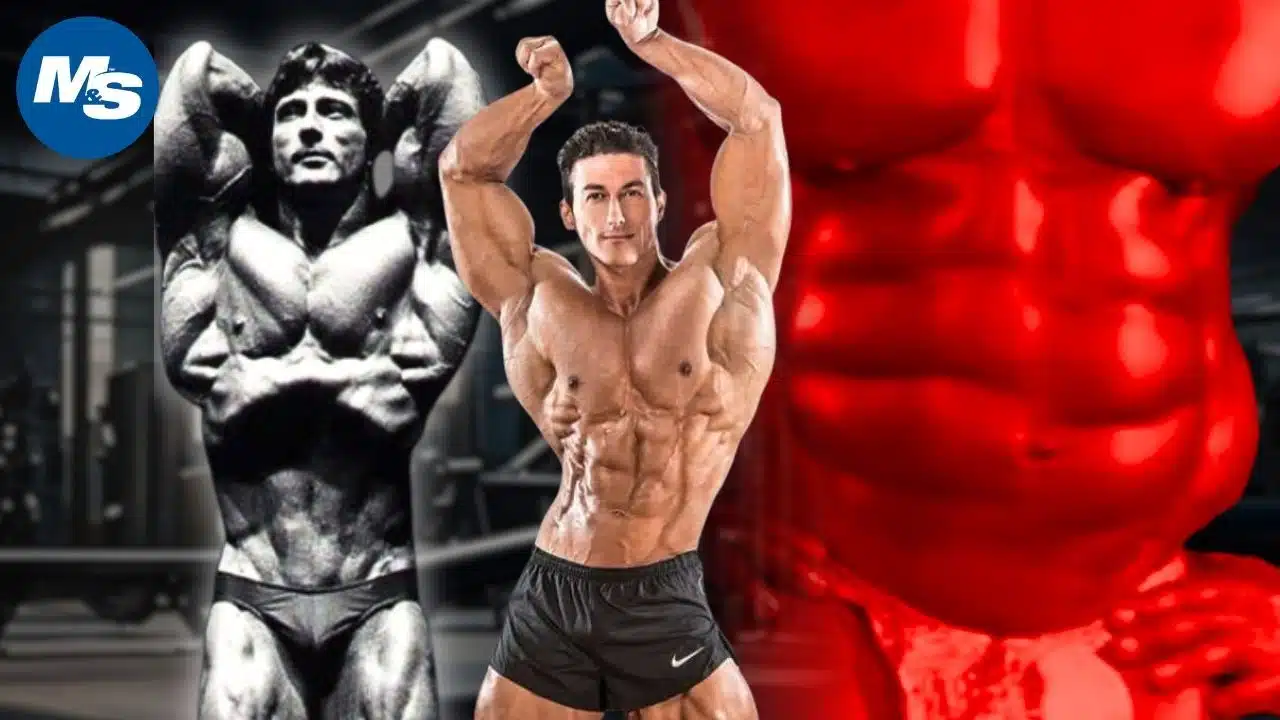
The discussion, led by classic physique competitor Sadiq, reveals why Zane’s approach to training, nutrition, and mental preparation remains remarkably relevant decades after his competitive retirement.
What emerges is a blueprint for sustainable excellence that prioritizes aesthetics over sheer mass.
Jump to:
- The Cardinal Sin of Bodybuilding
- Mind-Muscle Connection: Simpler Than You Think
- Training Philosophy: Quality Over Marathon Sessions
- Nutrition: Stay Hungry Longer
- The Chemist: Supplement Protocol
- Life Beyond Iron: The Multidimensional Champion
- Competitive Mindset: Cycles of Selfishness
- Contest Preparation: Posing Over Pumping
- Posing Practice: The Overlooked Essential
- Mental Control: Shutting Down Internal Dialogue
- Bodybuilding’s Evolution: Three Archetypes
- Character Armor to Character Completion
- Staying Lean Year-Round
The Cardinal Sin of Bodybuilding
Zane’s most emphatic advice cuts against the grain of modern bodybuilding culture.
Best advice I can give people is don’t bulk up. And you know, it’s I know that now, but in spite of that in my career I bulked up three times and each time it was a big mistake.
Despite knowing better, Zane made this error repeatedly throughout his career. His first bulk happened while teaching in New Jersey, ballooning to 220 pounds with a 38-inch waist and 28-inch thighs.
When he moved to Florida and dropped to 190 pounds, his physique transformed completely. The second mistake came before the 1972 Mr. Universe when he bulked to 208 pounds just five weeks out.
I took photos and I saw how bad I looked. It was only 5 weeks before the Mr. Universe. And I went to emergency training mode.
He won despite the panic, but the experience should have taught him permanently. His final bulking mistake came in 1982 when pressure from Joe Weider and others convinced him to compete at 200 pounds for the Olympia.
The result? Ruined lines and a second-place finish when he might have won at his natural weight.
Mind-Muscle Connection: Simpler Than You Think
Modern bodybuilders obsess over perfect form, scapular retraction, and optimal foot positioning. Zane sees this differently.
I think that the mind-muscle connection is already made, you know, basically it’s a simple thing. It’s like learning to drive a standard transmission, you have to learn how to do it, coordinate the clutch and shifting and all that. But you know, after you know how to do that, it’s automatic.
His approach emphasizes sensation over technical perfection. After completing an exercise, he focuses on feeling the pump, then stretches to enhance that sensation.
The problem with excessive information, according to Zane, is paralysis by analysis.
There’s too much information out there. It’s sort of like they’re coming from textbook to gym. It’s more about discovering what gives you a pump.
If blood engorges the intended muscle, you’ve done the exercise correctly. Everything else is overthinking.
Training Philosophy: Quality Over Marathon Sessions
The Golden Era training schedule sounds almost leisurely compared to modern protocols. Zane and his contemporaries would train for 90 minutes to two hours, grab lunch, hit the beach, then return for another session in the late afternoon.
This wasn’t laziness—it was strategic recovery that allowed for both physical and mental rejuvenation between sessions.
The gym atmosphere at Gold’s Venice in the early 1970s fostered excellence through selectivity rather than overcrowding.
There are fewer people doing it then and so we were more selective, you know, like everybody wanted to come to California and train at Gold’s Gym in the early 1970s and it was great the people we had. They were all, you know, at a pretty high level. And the atmosphere was wonderful.
As bodybuilding grew more popular, the quality of training environments declined as “want to be’s” filled spaces previously occupied by serious competitors.
Nutrition: Stay Hungry Longer
Zane’s nutritional approach contradicts the every-two-hours feeding schedule that dominates bodybuilding dogma.
I found myself doing certain things, and one of them was not eating that much. I was stretching out the space between meals and not really eating until I’m hungry. And so my motto became stay hungry longer.
His reasoning is physiologically sound. When hungry, the body burns through glucose first, then glycogen stored in muscles and liver, finally accessing body fat for fuel—a process that continues for roughly eight hours before any muscle catabolism begins.
The fear of losing muscle from infrequent eating is largely unfounded.
While Arnold Schwarzenegger famously claimed the secret to nutrition was eating massive quantities regardless of food quality, Zane took the opposite approach. His macronutrient targets remained consistent: one gram of protein per pound of bodyweight, half a gram of carbohydrates, and moderate healthy fats.
At 200 pounds, this meant 200 grams of protein and just 100 grams of carbs daily, with carbohydrates strategically timed before workouts to fuel training and maximize pumps.
The Chemist: Supplement Protocol
Zane earned his nickname “The Chemist” not from steroid abuse but from meticulous supplement experimentation. As a chemistry major for two years in college, he applied scientific methodology to his preparation.
His 1976 contest prep reached legendary extremes.
I had very disciplined the last month before that contest. I was taking seven feedings a day and each feeding was swallowing 100 capsules. Amino acids, liver extract, oils, lecithin, B complex, vitamin C, and I got amazing shape.
That’s 700 capsules daily—a protocol he acknowledges as extreme but effective for that particular goal. As conditioning improved approaching contests, supplement intake increased while food decreased, creating the definition he became famous for.
Life Beyond Iron: The Multidimensional Champion
Modern bodybuilders often define themselves entirely by training, eating, and sleeping. Zane’s life tells a different story.
He meditates extensively, sometimes for hours daily, using techniques that research suggests provide recuperative benefits equivalent to twice the duration of sleep. His morning routine includes hour-long dog walks covering two miles, followed by 50-60 sit-ups.
Archery provides mental training in focus and precision. Music offers another outlet—he plays harmonica, guitar, chromatic harmonica, bass harmonica, and even crafts bamboo flutes that he plays during meditation sessions.
If I’ve just eaten I’ll play flute. If I’m hungry I might play harmonica cuz, you know, the hungrier you are the better you seem to play and it prevents you from eating.
His writing career continues prolifically, with recent publications including a 436-page comprehensive manual and an upcoming 31-day posing guide.
Competitive Mindset: Cycles of Selfishness
Championship-level bodybuilding demands extreme self-focus that can destroy relationships. Zane managed this through deliberate periodization of his entire life.
I think I handled it by having a cycle that I went to every year where I would peak in the autumn. The 3 months before that were really into it and very selfish cuz the training’s what mattered. After I’d reached my peak I would go into maintenance and I would do all the other stuff that I missed out on doing.
This approach allowed his marriage to survive 52 years. His wife Christine competed herself in the late 1960s and early 1970s, which fostered understanding of competitive demands.
For modern competitors struggling with relationships, Zane offers practical advice: bring your partner into the gym, show them how training can benefit them, and dedicate specific post-competition periods exclusively to the relationship.
Contest Preparation: Posing Over Pumping
Zane’s pre-competition protocols differed dramatically from backstage chaos many competitors experience today.
His contest morning began at 6:00 AM with three soft-boiled or poached eggs, eight ounces of calves liver, and a baked yam. After digestion, he consumed amino acids with a slice of yam every 45 minutes leading up to prejudging.
I remember guys like Sergio Oliva when he was competing. He worked out and he got like 2 hours workout backstage and he’d go out all blown up and then as he stood there just deflate.
Zane took the opposite approach—minimal backstage pumping, sometimes even napping in a corner to stay relaxed. His philosophy was simple: if you don’t have it by showtime, last-minute pump work won’t create it.
His exam-taking experience from earning degrees at three universities translated directly to contest performance.
Posing Practice: The Overlooked Essential
Modern competitors obsess over training and nutrition while neglecting what judges actually see—posing.
Practice the prejudging. I would go out and get a tan when the sun was low on the horizon standing for an hour 15 minutes in each position. And I would always stand with my abs flexed and my quads tensed. But I was relaxed doing it.
Learning to display muscularity while appearing relaxed—without grimacing or heavy breathing—separates good posers from great ones. The final two weeks before competition should emphasize posing over weight training.
Posing itself provides intense muscular work; competitors who neglect practice often experience severe soreness from mandatory rounds.
Mental Control: Shutting Down Internal Dialogue
Zane’s most esoteric but potentially valuable techniques involve manipulating consciousness itself.
If you ever want to stop talking to yourself, you know, let’s say you’re worrying, all you have to do is just close your eyes and cross your eyes and look right here. And while your eyes are crossed, you will not talk to yourself.
This technique also develops peripheral vision. Ancient samurai sword fighters reportedly fought with crossed eyes because this position maximizes peripheral awareness while sacrificing sharp focus—allowing detection of movement from all angles.
His walking meditation with a pink pearl attached to a baseball cap created such profound mental stillness that 20 minutes produced blissful states by completely silencing mental chatter.
Bodybuilding’s Evolution: Three Archetypes
Zane identifies three distinct physique archetypes that emerged in 1970s bodybuilding, each representing a classical ideal.
Arnold Schwarzenegger embodied size with aesthetics—big muscles with a small waist, blending mass with flow. Franco Columbo represented the Farnese Hercules—shorter, thicker, densely muscled. Zane himself mirrored Michelangelo’s David—the standard of classical sculpture with perfect proportions and lines.
From 1976 to 1984, Mr. Olympia winners weighed under 200 pounds: Columbo, Zane’s three-year reign, Chris Dickerson, and Samir Bannout. Then Lee Haney signaled the shift.
When I saw Haney placed ahead of me in the Olympia third place, I knew it was all over. I said, here come the monsters. They’re back.
Dorian Yates continued the trend, then Ronnie Coleman pushed mass to new extremes. The judging philosophy changed after 1988 when drug testing caused competitors to appear less impressive.
They complained to Wayne who ran the show. They said, “Wayne, we don’t mind paying 200 bucks for a seat up front, but when we do, we want to see freaky muscle.”
Character Armor to Character Completion
Zane’s most philosophical insight concerns why people bodybuild and when that purpose must evolve.
When you start out, basically you’re working on building up your ego. You’re putting on a suit of armor. But that’s your shield. That’s bodybuilding as character armor. You building layer after layer and the you is deep down inside.
Young bodybuilders armor themselves with muscle against fear and vulnerability. But at maturity—age 41 for Zane—this purpose must transform.
His fourth-place finish at the 1983 Olympia provided the omen he needed to recognize this transition. Despite incredible conditioning, he lacked the size judges wanted, signaling the end of his competitive career.
Now it’s bodybuilding as character completion, developing my character through helping other people, which I think you have to give it up in the end. You take what you’ve learned and you use it to help other people because that’s really what it’s all about.
The satisfaction of seeing students succeed now equals or exceeds his competitive achievements.
Staying Lean Year-Round
Perhaps Zane’s most actionable advice concerns off-season body composition.
What happens in the off-season? Typically, somebody will train down for a contest and get defined and since they’ve sacrificed so much, they can’t wait to start pigging out and they balloon back up maybe 30 lb. Big mistake. If you could stay lean in the off-season and keep abdominals, then you could build muscle on top of that.
Three pounds of muscle gained annually—the size of a large steak—strategically distributed creates dramatic physique improvements without the metabolic damage and stretched waistlines that accompany aggressive bulking phases.
The obsession with immediate results through excessive food and drug protocols reflects immaturity that sabotages long-term development.