CrossFit may be known for its blend of strength, skill, and endurance — but behind the leaderboard is a layer of athlete psychology rarely glimpsed from the outside.
In a recent conversation, five-time CrossFit Games champion Mat Fraser shed light on the few competitors who not only pushed him physically, but also kept him mentally dialed in during competition.
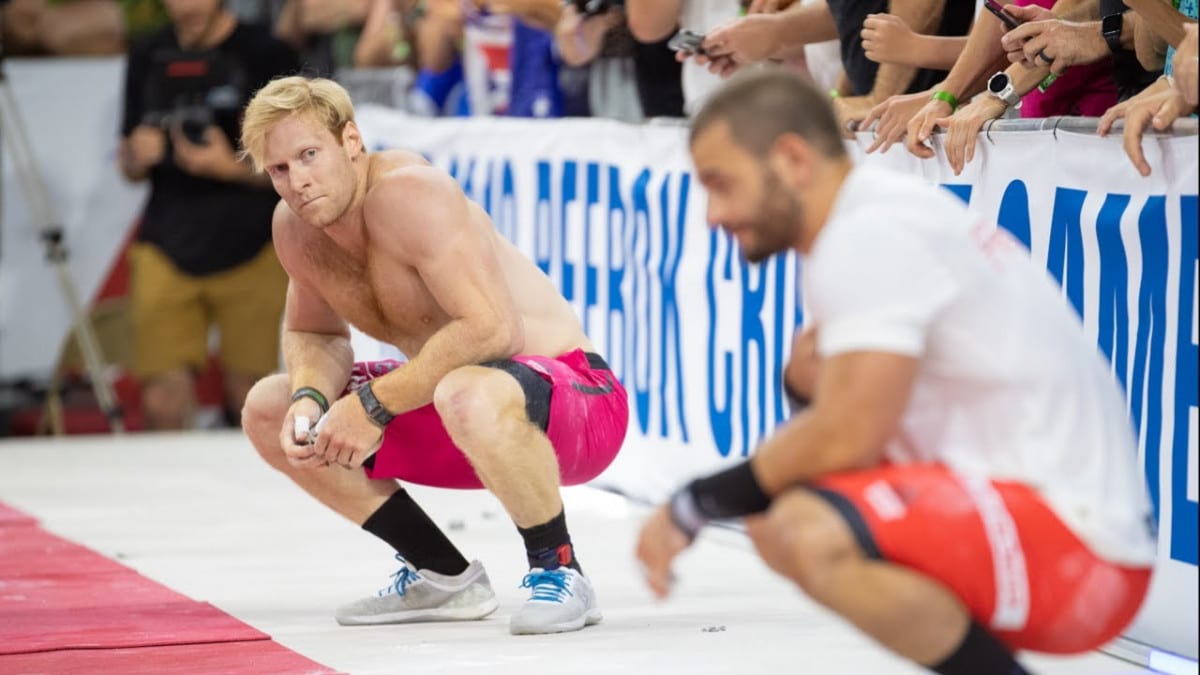
From powerhouse athletes like Patrick Vellner to overlooked threats like Adrian Mundwiler, Fraser revealed the names that made him think twice before each event started.
He also explored a surprising shift in the sport’s physical archetype — from compact athletes like himself to towering competitors now dominating the field.
Here’s what Fraser had to say about fear, respect, and how today’s new CrossFit stars measure up.
Jump to:
The One Name Always on His Radar
When asked if anyone ever truly intimidated him in competition, Fraser didn’t hesitate.

If you want something simple that actually works, this is one of the most effective tools I’ve used to build strength, conditioning, and endurance without needing a full gym setup.
- Full-body training with one weight using swings, squats, and presses
- Solid cast iron build that feels stable and lasts for years
- Comfortable grip that makes high-rep workouts easier to handle
“The obvious one was Vellner,” he said.
Patrick Vellner, a Canadian CrossFit veteran and perennial podium finisher, was someone Fraser respected deeply — especially due to his build and athletic fluidity.
“He’s so physically gifted… gorilla arms, short torso — if I could choose a body type, it’s that one.”
Their rivalry wasn’t born out of animosity, but mutual respect. Fraser recalled the rare occasion they trained together: he was out of shape and got demolished in an Open workout.
It was one of those grueling 20-minute AMRAPs designed to test aerobic engines. Fraser, ever honest, admitted he got pummeled.
“We were doing it face to face, and I just watched him pull away and disappear.”
If you want something simple that actually works, this is one of the most effective tools I’ve used to build strength, conditioning, and endurance without needing a full gym setup.
- Full-body training with one weight using swings, squats, and presses
- Solid cast iron build that feels stable and lasts for years
- Comfortable grip that makes high-rep workouts easier to handle
The Post-Workout Perspective Shift
Fraser expected some light teasing after the loss — but Vellner surprised him with a more reflective comment.
“He was upset. I asked him why, and he said, ‘Because I know in two weeks you’re going to kick my ass.'”
That comment stuck with Fraser — it underscored the psychological chess match at the elite level. Vellner wasn’t gloating; he was strategizing. He knew Fraser’s off-season “dad bod” wasn’t permanent.
In fact, both used to joke in the off-season about who could gain more body fat; Fraser admits, “I typically won.”
The Underrated Giants: Alex Anderson and Adrian Mundwiler
Beyond Vellner, there were other names that made Fraser take notice — even if they didn’t end up as household names in the sport.
Two stood out: Alex Anderson and Adrian Mundwiler.
If you want something simple that actually works, this is one of the most effective tools I’ve used to build strength, conditioning, and endurance without needing a full gym setup.
- Full-body training with one weight using swings, squats, and presses
- Solid cast iron build that feels stable and lasts for years
- Comfortable grip that makes high-rep workouts easier to handle
“If you just took their one-off stats… they were nuts.”
- Mundwiler could snatch 315 pounds.
- He cleaned in the high 370s or even 380s.
- He was impressive at gymnastics and barbell cycling alike.
Fraser described Mundwiler’s physique as “built like a brick,” and ranked him among the top in terms of sheer threat level.
The catch? Fitness isn’t just about raw capacity.
“It doesn’t matter how good your stats are — you need the whole package.”
Consistency, pacing, and composure under fatigue can’t be measured in one-rep maxes alone. That’s what separated the very good from the Games champions.
“When Did This Become a Tall Guy Sport?”
Fraser, who stands at a modest height (5’7”), also touched on one of the most surprising shifts in CrossFit lately: the rise of tall athletes.
If you want something simple that actually works, this is one of the most effective tools I’ve used to build strength, conditioning, and endurance without needing a full gym setup.
- Full-body training with one weight using swings, squats, and presses
- Solid cast iron build that feels stable and lasts for years
- Comfortable grip that makes high-rep workouts easier to handle
During a recent event, Fraser found himself in a chat circle with Hopper, Dallin Pepper, and James Sprague — all of whom are 6’2” or taller.
“I felt like a kindergartener.”
He reminisced about past perceptions that taller athletes would naturally fall behind in gymnastics or conditioning. But that barrier’s been broken.
Several athletes now combine size with elite-level movement efficiency.
“You look at James Sprague — he’s huge, but he moves. He f*cking does it.”
The 15-Foot Lunge Revelation
Fraser pointed to a workout during the Rogue Invitational where lunges became an unintentional measuring stick.
If you want something simple that actually works, this is one of the most effective tools I’ve used to build strength, conditioning, and endurance without needing a full gym setup.
- Full-body training with one weight using swings, squats, and presses
- Solid cast iron build that feels stable and lasts for years
- Comfortable grip that makes high-rep workouts easier to handle
He mentioned completing 15 feet of lunges in about five steps — which felt normal for someone his height.
When he asked Sprague how he handled the same distance, the answer floored him.
“He did it in three… and had room to spare.”
Fraser couldn’t help but laugh, acknowledging that he couldn’t even dream of mimicking that stride.
Reflections on Legacy and the New Generation
When asked if any current athletes remind him of himself, Fraser hesitated.
While some newer competitors carry similar grit or raw horsepower, he avoids making direct comparisons, partly because of how the sport continues evolving.
If you want something simple that actually works, this is one of the most effective tools I’ve used to build strength, conditioning, and endurance without needing a full gym setup.
- Full-body training with one weight using swings, squats, and presses
- Solid cast iron build that feels stable and lasts for years
- Comfortable grip that makes high-rep workouts easier to handle
“It kind of backfired a little bit,” he joked, hinting at the pitfalls of over-analyzing prospects too early.
That said, he appreciates the diversity in builds, approaches, and success stories emerging now.
Whether it’s Colten Mertens defying size expectations or towering athletes dominating endurance events, today’s CrossFit proves there’s no single blueprint for greatness.
Takeaway: You Can’t See Fear on the Leaderboard
Fraser’s honesty offers an unmatched lens into elite competition — one where behind each score is a mental narrative of respect, rivalry, and strategic awareness.
Despite being arguably the most successful individual male in CrossFit history, Fraser never claimed to be fearless.
In fact, fear — or rather, acute awareness of another athlete’s capabilities — often sharpened his performance.
If you want something simple that actually works, this is one of the most effective tools I’ve used to build strength, conditioning, and endurance without needing a full gym setup.
- Full-body training with one weight using swings, squats, and presses
- Solid cast iron build that feels stable and lasts for years
- Comfortable grip that makes high-rep workouts easier to handle
“You need the whole package,” he reminds us. Power, pacing, mindset. All of it.
And that insight may be exactly what sets champions like Fraser apart—not just lifting a certain number, but knowing when to amplify urgency and when to stay composed.