Joint pain doesn’t have to be permanent.
New research reveals that damaged cartilage can actually regenerate and thicken—even in people with osteoarthritis.
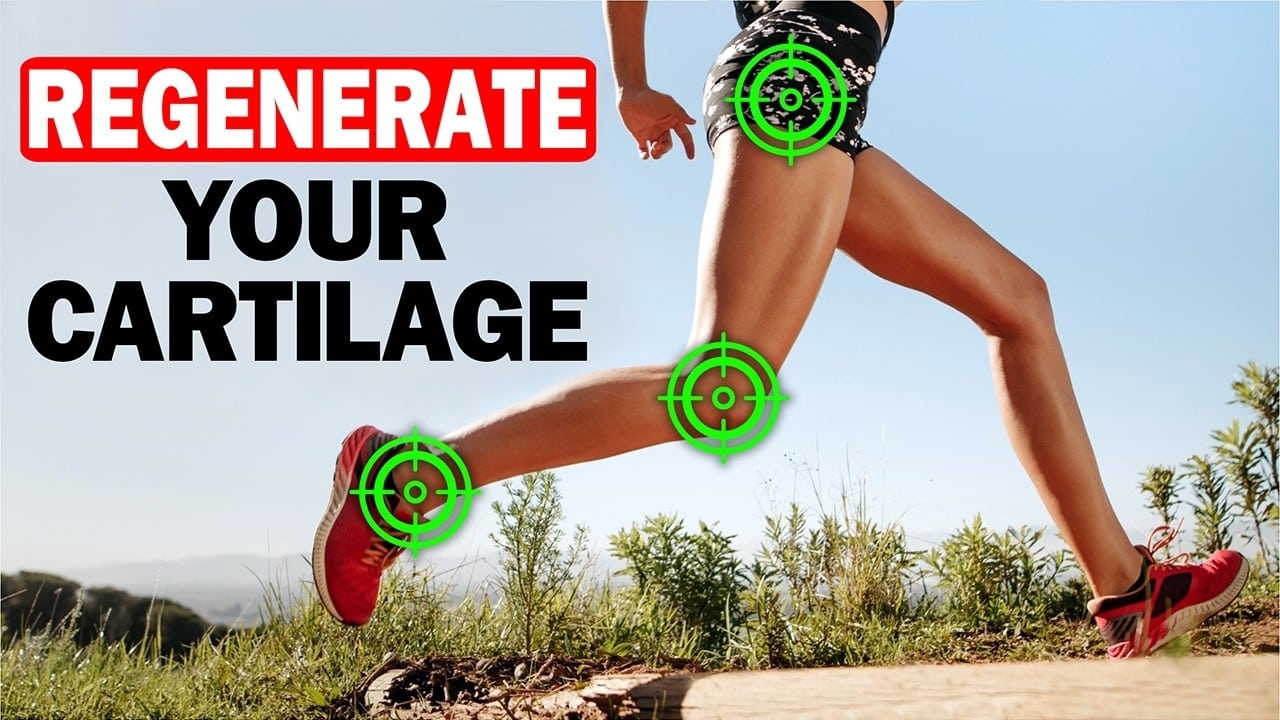
The secret lies in using specific exercises performed in a very particular way.
In a recent video, a physical therapy expert explained how the right movement patterns can rebuild cartilage thickness and reduce pain in knees, hips, and ankles.
Jump to:
Your Cartilage Can Actually Get Thicker
Most people assume cartilage loss is irreversible. They accept joint pain as inevitable aging.
But science tells a different story. Just like muscles grow stronger under progressive load, and bones become denser with resistance training, cartilage responds similarly to strategic stress.
Research demonstrates that even damaged, thinning cartilage can improve in quality and thickness when exposed to gradually increasing loads through proper exercise.
The difference? How you apply that load matters enormously.
The Best Exercises for Cartilage Regeneration
Thin or damaged cartilage doesn’t respond well to pounding or impact. Instead, it thrives on consistent pressure combined with gliding motion.
Think cyclic movement where joint angles vary smoothly and repeatedly.
Top Three Cartilage-Building Activities
- Cycling: Low-impact, smooth rotation perfect for knee cartilage
- Cross-trainer/elliptical: Gentle gliding motion that protects joints while loading cartilage
- Rowing: Controlled movement engaging hips, knees, and ankles without jarring impact
These exercises provide exactly what damaged cartilage needs: consistent, cyclical pressure without trauma.
Critical Guidelines for Success
Speed matters tremendously. Going too fast prevents cartilage from absorbing fluid properly.
For cycling or cross-trainer work, maintain approximately 60 cycles per minute. Rowing should stay around 20 rows per minute—slower than most people naturally move.
Duration is equally important. Aim for 10-15 minutes daily. Going longer doesn’t allow adequate recovery time between sessions.
Pain management follows simple rules: some discomfort is acceptable, but keep intensity below three out of ten on a pain scale. Any swelling signals you’ve pushed too hard.
The Progressive Loading Strategy
Starting correctly determines long-term success. Begin extremely gently during the first few days to test tolerance.
Over subsequent months—not weeks—slowly introduce additional low-impact activities.
Progression Timeline
Phase One (Weeks 1-4): Stick exclusively to cycling, rowing, or cross-trainer at prescribed speeds and durations.
Phase Two (Months 2-3): Add brisk walking on flat, even surfaces. Introduce bodyweight strength training with controlled movements.
Phase Three (Months 4-6): Consider very light impact jogging—slow pace, short distances. Maximum session length remains 15 minutes.
Phase Four (6+ months): Gentle running on smooth, even surfaces becomes possible for those who’ve progressed successfully.
Patience isn’t optional here. Rushing this timeline typically results in setbacks that erase previous gains.
Running Doesn’t Destroy Cartilage (Usually)
Common wisdom suggests running inevitably damages joints. Systematic reviews paint a completely different picture.
Exercise, including running, actually protects cartilage and correlates with reduced osteoarthritis rates and less knee pain overall.
Running can even benefit people already diagnosed with osteoarthritis—provided they follow gradual loading principles.
The Exceptions That Prove The Rule
Not all running is created equal. Several types genuinely do damage cartilage:
- Sports involving direction changes (football, tennis, basketball)
- Excessive distances (marathons, half-marathons)
- Cross-country running on irregular terrain
- Heavy weightlifting with poor form or excessive load
These activities create unpredictable forces or overwhelming stress that damaged cartilage cannot adapt to safely.
The Science Behind Cartilage Regeneration
Understanding the mechanism makes the method make sense.
When cartilage experiences slowly elevated loading, it responds by increasing production of glucosaminoglycans—specialized molecules that absorb fluid like microscopic sponges.
As glucosaminoglycan content rises, cartilage literally thickens and improves in quality. The tissue becomes more resilient and better cushioned.
This process requires time and consistency. Sporadic exercise doesn’t trigger the same adaptive response.
Supplements That May Support Cartilage Health
Research suggests two supplements might provide additional benefit: chondroitin and glucosamine.
Both appear to protect chondrocytes—specialized cells within cartilage that produce glucosaminoglycans and maintain structural integrity.
While exercise remains the primary intervention, supplementation may offer complementary support for some individuals.
Building Long-Term Joint Health
Cartilage regeneration isn’t quick or dramatic. Results accumulate slowly over months of consistent effort.
If you’re patient and you keep moving with moderate levels of the right type of exercises, you can be active for years to come.
That statement captures the essence of this approach. Patient, moderate, consistent movement creates conditions where damaged tissue can heal.
Most people cycle between doing nothing (because movement hurts) and overdoing it (because they feel temporarily better). Both extremes prevent healing.
The middle path—strategic, measured loading following specific guidelines—offers genuine hope for rebuilding joint health rather than simply managing decline.
Joint pain from cartilage loss doesn’t have to define your future. With the right exercises performed correctly, damaged cartilage can regenerate, thicken, and restore comfortable movement for years ahead.