Before gyms, before barbells, before supplements, ancient Greeks were already sculpting bodies that became the blueprint for physical perfection.
They didn’t count macros or track calories.
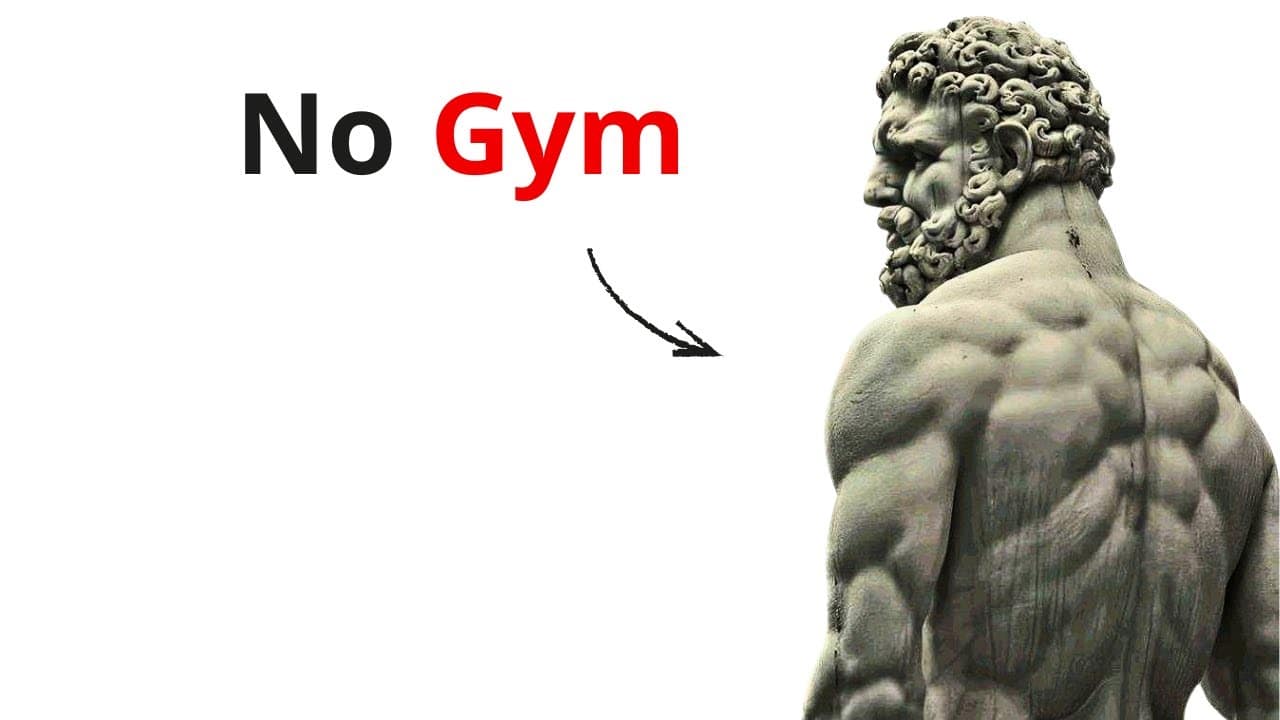
They didn’t even have metal weights for most of their history.
Yet somehow they built physiques so ideal that artists still reference them today—and what they discovered 2,000 years ago still rivals modern sports science.
Jump to:
- Training Naked in Temples of Strength
- War Made Fitness Non-Negotiable
- What Greek Training Actually Looked Like
- Calisthenics: Beautiful Strength
- Wrestling: The One Exercise to Rule Them All
- Lifting Stones, Not Iron
- Mind and Muscle Were One
- Recovery Was Sacred
- The Golden Mean: Nothing in Excess
- Five Lessons From Ancient Greece
- Strength That Lasts Millennia
Training Naked in Temples of Strength
Greeks believed strength wasn’t just physical—it was moral. To them, a perfect citizen was both philosopher and warrior.
A man untrained in the gymnasium wasn’t just weak. He was unbalanced, incomplete.
The word gymnasium comes from gymnos, meaning naked. Training was done in the nude, not out of vanity, but as tribute to the gods. Every body was sacred, a vessel of beauty and discipline.
Every city-state had public gymnasia. These weren’t gyms in our modern sense—they were temples, part training ground, part school, part social hub.
Men wrestled, boxed, sprinted, and lifted. Between sessions, they studied geometry and debated ethics.
They called this pursuit arete—excellence in all things. Physical training was the foundation of that excellence.
War Made Fitness Non-Negotiable
In ancient Greece, fitness wasn’t optional. War was constant, and citizens could be called to arms at any moment.
Training wasn’t about beach muscles. It was about survival.
A Spartan soldier needed to sprint in armor, leap over walls, wrestle enemies to the ground. An Athenian rower needed endurance to power warships for hours across open sea.
Every athletic event mirrored military skill. Running, throwing, grappling—these weren’t sports. They were preparation.
The Olympic Games were born from this warrior ethos. Winning meant glory not just for the athlete, but for his entire city-state. And training behind those victories was grueling.
What Greek Training Actually Looked Like
Greek athletes didn’t split body parts by day or follow hypertrophy charts. Their sessions revolved around movements—full-body, compound, functional work.
A typical morning began with calisthenics: push-ups, squats, lunges, handstands. Then came dynamic drills—jumping, sprinting, bounding to develop explosive power.
Next, they practiced wrestling or pankration, a brutal mix of boxing and grappling so violent it was often fought to unconsciousness. Every match built functional strength, power that transferred directly to combat.
To build endurance and grip, they performed loaded carries using halteres—stone or bronze weights shaped like dumbbells. They would leap with them, run with them, perform curls and presses with them.
If you’ve ever done farmer’s carries, that’s straight from ancient Greece.
After training, athletes massaged their muscles with olive oil, scraped off sweat and dirt with metal tools called strigils, then bathed in cold water to recover.
They were centuries ahead of their time.
Calisthenics: Beautiful Strength
The word calisthenics comes directly from Greek: kalos (beautiful) and sthenos (strength). It literally means beautiful strength.
That’s exactly what Greeks built. They believed control over your body came before control over external weights.
Athletes performed push-ups, dips, squats, leg raises, gymnastic holds. They hung from rings or ropes, developing balance and stability. They trained entire kinetic chains—not muscles in isolation.
Modern science now confirms what Greeks already knew: multi-joint movements recruit more muscle fibers, build coordination, and create athletic—not artificial—strength.
They didn’t chase the pump. They chased perfection of movement.
Wrestling: The One Exercise to Rule Them All
If you could only do one exercise to get fit like a Greek, it would be wrestling.
Wrestling trained everything: legs, core, grip, mental toughness. Philosopher Plato—whose name actually means “broad-shouldered”—was a champion wrestler before founding his academy.
In ancient gymnasia, wrestling wasn’t brute force. It was art. Matches were filled with technique, balance, leverage.
And here’s the secret: constant grappling created dense muscle, the kind built from resisting a living, unpredictable opponent. It’s the same reason wrestlers and judokas today develop such thick, powerful physiques—even without heavy lifting.
To Greeks, strength wasn’t measured in numbers. It was measured in mastery.
Lifting Stones, Not Iron
Before barbells, Greeks lifted stones. They hoisted massive boulders from the ground, carried them on shoulders, threw them for distance.
In Olympia, archaeologists discovered carved stones—some weighing over 300 pounds—with inscriptions like:
Bybon lifted me above his head with one hand.
These stones were both challenge and legacy—a record of strength carved in stone, literally.
The principle behind this training still holds up today. Lifting odd, unbalanced objects builds stabilizer muscles and real-world power that gym machines can’t replicate.
Farmer’s carries, sandbag lifts, atlas stones—all of it has roots in ancient Greece.
Mind and Muscle Were One
Greeks didn’t train just to look strong. They trained to be strong, inside and out.
Philosophers like Socrates and Aristotle saw the body as servant of the mind. Socrates famously said:
It is a disgrace for a man to grow old without seeing the beauty and strength of which his body is capable.
Training wasn’t separate from thought. It was part of education. The same men who lifted stones by morning debated ethics by night.
That’s what set Greeks apart. They saw fitness as self-mastery—physical excellence feeding into intellectual excellence.
Today, we split the two. We lift for looks, not wisdom. We train the body but neglect the spirit.
Greeks never made that mistake.
Recovery Was Sacred
Even Greek recovery habits were ahead of their time. After training, athletes went through massage, hot-cold bathing, stretching, and rhythmic breathing.
They used herbal tonics and aromatic oils for muscle relaxation.
Diet was simple but powerful: whole grains, olives, cheese, figs, fish, and wine in moderation. Protein came from meat and legumes. Carbohydrates from barley and fruit.
They didn’t count calories. They trusted balance and intuition.
Modern nutrition science would later rediscover the same principle: consistency beats obsession.
The Golden Mean: Nothing in Excess
Greek training followed the golden mean—nothing in excess. You trained hard, but never to ruin form or health. You rested enough, but never out of laziness.
Everything was about balance: harmony between strength and grace, effort and recovery.
They valued form over fatigue, mastery over muscle. An athlete who moved with control was admired more than one who merely looked strong.
Even in their art, statues of athletes captured that balance—calm faces over tense muscles, serenity in effort.
That’s what Greek strength really was: composed power.
Five Lessons From Ancient Greece
So what can we learn from Greeks today?
- You don’t need machines to build real strength. Your body is the machine. Calisthenics, carries, wrestling, and sprints remain timeless tools.
- Train movement, not muscles. Greeks built athletic, coordinated physiques because they trained holistically, not in isolation.
- Recovery is part of training. Massage, stretching, and rest were baked into their routines. They trained hard and recovered harder.
- Discipline beats complexity. They didn’t change programs every week. They mastered a few fundamentals over a lifetime.
- Mind and body are one. Strong body without discipline or focus isn’t strength. It’s just motion.
Strength That Lasts Millennia
Greeks built strength that lasted millennia—not just in muscle, but in philosophy. Their methods remind us that training isn’t about chasing numbers or aesthetics.
It’s about cultivating power, precision, and purpose.
They didn’t have gyms, supplements, or fancy shoes. But they had what modern lifters often lack: balance, patience, and intent.
When you do push-ups, you’re echoing their movements. When you sprint, when you wrestle, when you carry something heavy—you’re training like they did.
Their secret wasn’t in the tools. It was in the mindset.
Train with purpose. Recover with discipline. Pursue arete—excellence in all things.
Because 2,000 years later, the strongest bodies ever built were built without gyms.