Strength training has undergone a radical transformation in recent decades, but not all changes have been for the better.
According to renowned strength coach Pavel Tsatsouline, modern bodybuilding culture may have actually derailed how people think about building functional strength and endurance.
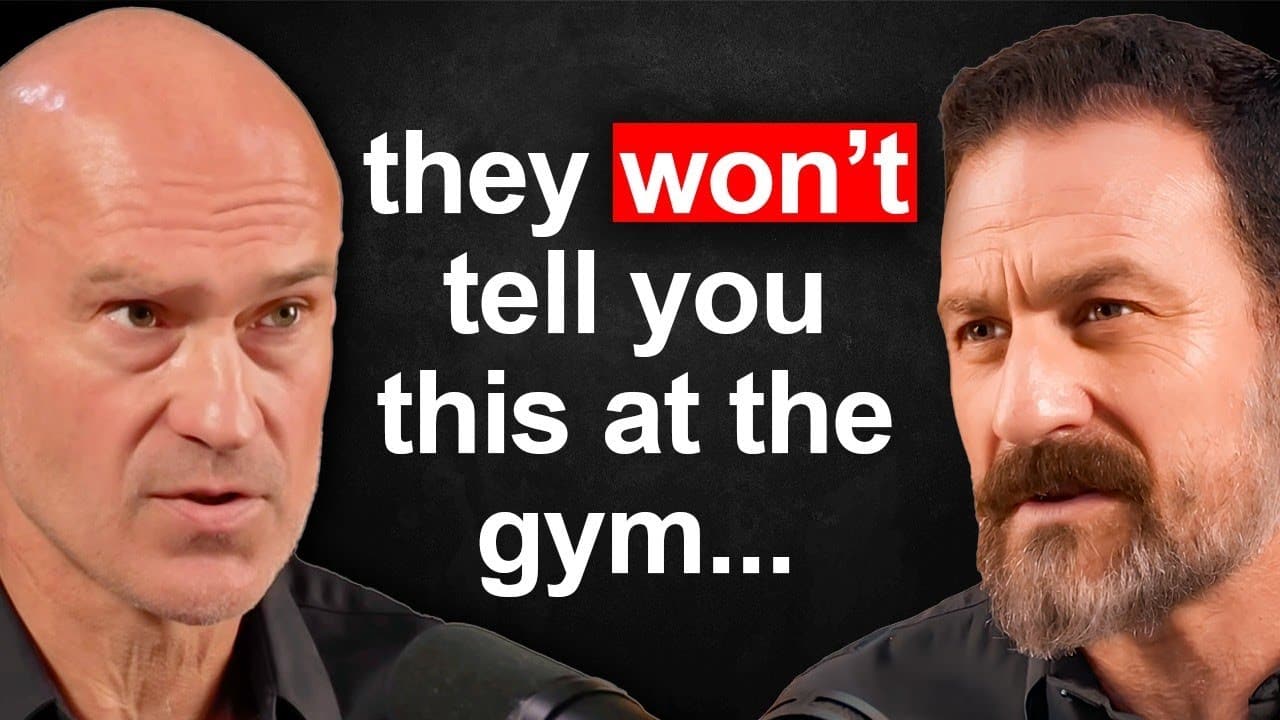
In a recent conversation with neuroscientist Dr. Andrew Huberman, Tsatsouline revealed a training method that simultaneously builds muscle, increases strength, and boosts cardiovascular fitness—without the confusion of typical gym routines.
The insights challenge conventional wisdom about how adults should train for longevity and real-world performance.
Jump to:
The Bodybuilding Problem Nobody Talks About
Huberman didn’t mince words when discussing how bodybuilding has influenced gym culture. He suggested that the sport’s approach has “done equal harm and good” by promoting aesthetics over functional strength and athletic performance.
Tsatsouline offered important historical context. Classic bodybuilders weren’t just about appearance—they were legitimately strong.
If you look at bodybuilding historically, guys were strong. I’ve had the honor of knowing some golden age era bodybuilders like Franco Columbu and Dave Draper and Clarence Bass and these guys were formidable. They were not just pretty boys. They were absolutely extremely strong.
Something shifted in bodybuilding culture where strength became secondary to muscle size and definition. Modern bodybuilders often train muscles in isolation with higher repetition ranges, abandoning heavy compound movements that build real-world strength.
But bodybuilding isn’t the only culprit.
The Functional Training Circus
Tsatsouline reserved particular criticism for what he calls “circus trick” training—exercises performed on unstable surfaces with excessive variety and no coherent progression.
I would take the bros of the ’90s with a big bench press and the chicken legs to these guys who stand on balls and juggle oranges and whatever the hell they’re doing.
The problem stems from misunderstanding neuroplasticity. Trainers throw endless exercise variations at clients believing variety equals progress, but this approach prevents mastery of fundamental movement patterns.
Too many choices create paralysis. Without constraints and consistent practice, people never develop true strength as a skill.
The Sweet Spot: Training in the 3-6 Rep Range
For those seeking both muscle and strength, Tsatsouline provided clear direction: focus on low-to-moderate repetition ranges with heavy weights.
For strength, you should stick in the one to six repetition range. You shouldn’t do a lot of singles and doubles. Threes and fours should predominate, but fours and especially fives and sixes, this is where you get both hypertrophy and strength. That’s that beautiful combination.
Sets of five repetitions have deep roots in American powerlifting tradition. This approach builds muscle mass while simultaneously developing maximal strength—without unnecessary complexity.
Training with fives delivers both aesthetics and performance. You won’t just look strong—you’ll actually be strong enough to handle real-world physical demands.
Rethinking Endurance Training
Endurance isn’t one-size-fits-all. Tsatsouline distinguished between different types based on activity demands and physiological adaptations.
Steady-state exercise like hiking, cycling, or jogging at conversational pace primarily develops slow-twitch muscle fibers. These activities increase heart stroke volume and build aerobic capacity efficiently and safely.
However, this type of endurance doesn’t necessarily transfer to high-intensity activities. Marathon runners who transition to MMA often find themselves unexpectedly exhausted despite excellent aerobic conditioning.
Different sports require different energy systems. Fighting, sprinting, and explosive movements demand glycolytic capacity that steady-state cardio doesn’t develop.
The Training Method That Does It All
Tsatsouline revealed one specific protocol that delivers cardiovascular benefits while building muscle—a rare combination that sidesteps the typical strength-endurance interference effect.
There’s one type of training that delivers great benefits to your cardiorespiratory system and even builds muscle in the same time. In track it is called glycolytic power repeats but pretty much like 30 seconds of hard exercise followed by approximately 5 minutes of rest and you repeat it several times.
This protocol pushes heart rate to approximately 85-90% of maximum during work intervals, then allows complete recovery during extended rest periods.
How to Implement Glycolytic Power Repeats
Exercise selection matters. Research studies typically used cycling sprints, but Tsatsouline has successfully applied this method with kettlebells for over two decades.
His preferred approach: heavy kettlebell snatches performed explosively for 20-25 repetitions, followed by light jogging until heart rate recovers, then 5-10 minutes of complete rest before the next set.
Uphill sprints work excellently. Track sprints carry higher injury risk due to explosive acceleration demands.
Key protocol elements:
- Work interval: 30-40 seconds of maximum effort
- Active recovery: Light movement until heart rate drops
- Rest period: 5-10 minutes between sets
- Total sets: Five or more repetitions
- Intensity: High enough to elevate heart rate to 85-90% max
Why This Method Works So Well
Glycolytic power repeats create simultaneous adaptations across multiple systems—something most training protocols cannot achieve.
Central cardiovascular improvements occur as heart rate elevates significantly during work intervals. Walking off the effort after each set allows safe recovery while still challenging aerobic capacity.
Peripheral adaptations happen within muscles themselves, enhancing local endurance capacity and metabolic efficiency.
Most remarkably, muscle hypertrophy occurs despite the cardiovascular focus. The high-intensity effort combined with sufficient rest between sets provides an anabolic stimulus typically associated with pure strength training.
So you’re going to get cardiovascular endurance, you’re going to have get peripheral adaptations, endurance in the muscle, and you’re also building muscle at the same time.
Practical Application for Longevity
Huberman emphasized that strength training has finally gained mainstream recognition for healthy aging. Adults increasingly understand muscle mass and strength as essential health markers, not just athletic qualities.
Real-world strength means carrying luggage without exhaustion, hiking with family without constant rest stops, maintaining excellent posture throughout life.
Combining heavy strength work in the 3-6 rep range with glycolytic power repeats creates comprehensive fitness. You’ll build muscle, develop maximal strength, improve cardiovascular capacity, and enhance work capacity—all without spending hours in commercial gyms doing ineffective exercises.
Simplicity wins. Master fundamental movements with appropriate loading, train consistently within proven protocols, and prioritize recovery between intense efforts.
Skip the circus tricks, abandon bodybuilding isolation routines, and focus on what actually builds functional strength for long, healthy, capable lives.