Andrew Huberman, the Stanford neuroscientist and popular podcast host, recently opened up his Los Angeles studio—the same space where Jean-Michel Basquiat once worked—to give Men’s Health an inside look at his training philosophy, eating habits, and supplement routine.
What’s striking isn’t just what he eats and how he trains.
It’s that he’s been doing essentially the same thing for over 30 years.
And at 51, he says he’s pain-free, stronger than ever, and has no plans to stop.
Jump to:
- The “Cucumber Boy” Who Never Changed His Diet
- The Caffeine Strategy That Prevents Afternoon Crashes
- Intermittent Fasting Without the Hype
- The Foods Huberman Avoids (and Why)
- The Supplement Stack (and What He Skips)
- The 30-Year Training Program That Still Works
- The Gym Equipment That Changed Everything
- Training for Cognitive Performance, Not Just Aesthetics
- Pain-Free at 51: The Little Things That Matter
- The Takeaway: Consistency Beats Perfection
The “Cucumber Boy” Who Never Changed His Diet
Huberman’s approach to nutrition is refreshingly simple. He’s been eating the same way since he was 16 years old—high-quality protein, plenty of fruits and vegetables, healthy fats like olive oil and butter, and starches when his training demands it.
In college, people kind of referred to me as Cucumber Boy cuz I was always sitting in class and like in between classes like munching on a cucumber.
He still eats two to three Persian cucumbers every day. It’s not a fad or a hack—it’s just what works for him.
His fridge isn’t staged. There’s lean steak, chicken, Bulgarian yogurt, blueberries, fresh eggs from a friend’s chickens, and yes, the occasional chocolate croissant.
What’s Actually in Huberman’s Fridge
- Protein sources: Grass-fed steak, chicken, eggs, whey protein
- Fermented foods: Bulgarian yogurt, sauerkraut, pomegranate vinegar
- Fruits and vegetables: Blueberries, Persian cucumbers, potatoes
- Starches: Spelt bread, rye bread, sourdough, oatmeal, rice
- Fats: Olive oil, butter, Parmesan cheese
- Secret weapon: Pure aloe (for vocal health)
He’s an omnivore who adjusts starch intake based on training volume. More training? More carbs. Less training? Fewer carbs. It’s intuitive, not dogmatic.
The Caffeine Strategy That Prevents Afternoon Crashes
Huberman is known for his deep dives into neuroscience, and his caffeine protocol reflects that understanding. He starts every morning with water before reaching for caffeine.
His go-to? Organic, zero-sugar cold brew yerba mate—he’s half Argentine, so it’s cultural as much as functional.
I always hydrate with water before I drink any caffeine. Then I get up, go to the restroom, come downstairs from my loft, drink yerba first thing if I’m going to work out first thing in the morning. Otherwise, I delay my caffeine about 60 to 90 minutes.
That delay is key. Delaying caffeine intake by even 30 to 90 minutes after waking helps prevent the dreaded afternoon crash. It takes a few days to adjust, but Huberman says it’s worth it.
Exception: If he’s training first thing, he drinks caffeine immediately. Performance trumps protocol.
Intermittent Fasting Without the Hype
Huberman doesn’t follow a strict intermittent fasting regimen, but he naturally ends up eating his first meal around 10:30 a.m. to noon. He prefers training fasted in the morning—whether it’s resistance training or running.
But he’s not rigid about it.
Some mornings if I wake up and I’m really hungry, I’ll have a couple scoops of whey protein, some pistachios, and then I’ll train. So, I’m not super strict about that.
His first meal is often a protein shake with whey protein, ice, and peanut butter. Simple, effective, and easy to digest.
The One Food He Eats Every Single Day
Low-sugar fermented foods are non-negotiable for Huberman. He points to research from Stanford colleague Justin Sonnenburg showing that these foods reduce inflammation throughout the body—what scientists call the “inflammatome.”
For Huberman, that means Bulgarian yogurt daily, plus sauerkraut and pomegranate vinegar in water. He avoids apple cider vinegar—it’s too harsh for him.
The Foods Huberman Avoids (and Why)
He’s clear about what to skip: fried foods and highly processed foods. Not oatmeal or rice—those require preparation, not processing. He’s talking about the stuff that comes in crinkly packages.
Highly processed foods lead to higher caloric intake. They change your relationship to taste, in particular sweetness and saltiness and fatty foods, and they make you crave more of those things.
Eating too many processed foods makes whole foods taste bland. But the reverse is also true—eat more whole foods, and they start tasting better and better.
He also has a long list of personal dislikes: herring, sardines, anything smoked (including salmon and barbecue sauce), and tannic tea. He wants his food and drink to have what he calls “a velvet flow.”
Huberman’s Ideal Burger (Perfected Over 51 Years)
When it comes to comfort food, Huberman has strong opinions. His ideal burger? Double cheeseburger, no lettuce, no tomato, maybe a few pickles (not sweet), and the bun can’t be too thick.
Whoever came up with this idea to put the salad inside of the burger is diabolical, but I’m not buying it. I love lettuce and tomato in a salad, but put that on the side. Don’t adulterate my cheeseburger.
He’s spent five decades perfecting this ratio. The lettuce and tomato? Served separately.
The Supplement Stack (and What He Skips)
Huberman has been taking AG1 (a greens powder) every day since 2012—long before he had a podcast or any sponsorship deals. He drinks two packets daily, one in the morning after his first meal, mixed with water and lemon juice.
He now uses AG1 Pro, which includes creatine and coenzyme Q10. He also takes a sleep supplement called AGZ, which combines everything he used to take separately before bed.
The Core Supplements Huberman Takes Daily
- AG1 (twice daily): For foundational vitamins, minerals, and probiotics
- Vitamin D with K2: Taken with food
- Omega-3s (Lovaza): Prescription-grade to avoid mercury contamination
- Creatine (10g daily): Dosed by body weight (he weighs 220 pounds)
- Digestive enzymes: Occasionally with meals
- AGZ: Sleep supplement before bed
Every four to five months, he does a 10-day creatine “washout” where he stops taking it. During this period, he urinates out three to 10 pounds of water weight.
His Take on TRT and Peptides
Huberman is transparent about starting testosterone replacement therapy (TRT) at age 45. But his dose is much lower than typical—just 15 mg every other day, compared to the standard 150 to 200 mg per week.
Unless you have a serious medical condition, if you’re younger than 40, certainly maybe even 45, get your behaviors right. Sleep, nutrition, all of that.
As for peptides like semaglutide (Ozempic) and tirzepatide (Mounjaro), he hasn’t tried them. He’s interested in retatrutide, which is coming soon, but emphasizes these are potent drugs with potent side effects.
He’s not experimenting with most peptides right now. His philosophy? Test things systematically over time, and only keep what truly works.
The 30-Year Training Program That Still Works
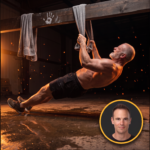
Huberman’s workout philosophy has remained essentially unchanged for three decades. He trains each muscle group directly once per week, then hits it indirectly a second time.
For example: legs one day, then four to five days later, he’s sprinting or using the Airdyne bike. That indirect work is enough stimulus to maintain strength and size until the next dedicated leg session.
My goal is always to have endurance, to be able to sprint for the plane without coughing up a lung, carry the most boxes on moving day up and down the stairs and not get hurt.
He’s kept a workout logbook since age 16. Every single session is logged—weight, reps, notes. Progressive overload is the name of the game: more weight or more reps on at least one set of each exercise every week.
Every 14 to 16 weeks, he takes a full week off from resistance training. He’ll do more running during that time, then repeat the cycle.
Weekly Training Split
- Legs: Belt squats, heavy loading
- Torso (push and pull): Chest, back, shoulders, arms
- High-intensity interval training: 8-minute sessions on Airdyne bike
- Sprinting or running: Working toward a sub-7-minute mile
- One rest day: After leg day
Total workout time? About 10 minutes of warm-up, an hour of real work, and some auxiliary movements or cool-down.
The Gym Equipment That Changed Everything
Huberman’s gym is a mix of conventional and vintage equipment—all of it functional, none of it for show. His favorite piece? The first-generation Nautilus pullover machine.
The pullover for the back is a great isolation exercise for the lats. Takes the arms completely out of the movement. You can go really heavy with that thing once you work up to it.
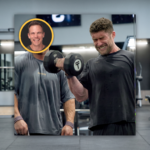
He’s also big on thick-bar training for grip strength. Thick-bar pull-ups, dips, and dumbbells with rotating handles force maximum grip engagement. Grip strength is correlated with longevity—not because it directly extends life, but because it reflects overall health and functional capacity.
Why Leg Day Became His Favorite
For years, Huberman loved bent-over rows. But over the past five years, leg day has taken the top spot. Heavy belt squats, specifically.
The belt squat allows him to load massive weight without stressing the shoulders or spine. There’s some initial discomfort as the straps press into the pelvis, but that fades with consistency.
You have to train your legs, folks. Don’t be that guy who skips leg day. Gals never skip leg day. They’re smart.
He’s had to strap on additional weight plates because he’s gotten so strong with the movement.
Training for Cognitive Performance, Not Just Aesthetics
Huberman trains early—ideally before 9 a.m.—because it sharpens his mind for the rest of the day. Exercise dramatically increases levels of dopamine, norepinephrine, and epinephrine (collectively called catecholamines), which boost focus and energy for hours afterward.
Training after 11 a.m. or noon? He notices he’s a bit sleepier in the hours that follow, as it coincides with his natural dip in wakefulness.
But he’s quick to clarify a common misconception.
Exercise does not make you smarter. You have to do something with your brain. Go to any gym and it proves the point. Just kidding, sort of.
Exercise maintains your brain and gives you the opportunity to learn. But you still have to put in the cognitive work—whether that’s learning a language, a new skill, or emotional intelligence.
Pain-Free at 51: The Little Things That Matter
Huberman wakes up every morning with zero pain. That wasn’t always the case. Even in his 30s, he dealt with nagging lower back and hip issues.
What changed? He started paying attention to the small stabilizing muscles and movements that support the big lifts. He credits experts like Bret Contreras and Jeff Cavaliere for helping him fine-tune his approach.
I get up in the morning, I have no pain. And for many years, even though I was in my 30s, I had pain. Like this nagging lower back thing on my right side or my hip.
He uses an inversion table to combat the postural effects of sitting for hours during podcast recordings and studying. He’s also been working deliberately on posture.
The result? He can lift heavier, run faster, and sit or stand for long periods without discomfort. He feels balanced.
Longevity Over Extremes
Huberman never wanted to be huge—no giant neck, massive arms, or extreme size. He wanted to be strong, lean, functional, and pain-free.
I’m not about the extremes and I plan to try and carry that theme forward into my 60s, 70s, 80s. I think I’ll make it to 100.
His training isn’t flashy. It’s sustainable, evidence-based, and built for the long haul.
The Takeaway: Consistency Beats Perfection
Andrew Huberman’s approach to health and fitness isn’t revolutionary. It’s the opposite—it’s boring, consistent, and effective.
He eats whole foods he’s been eating since he was a teenager. He trains the same way he has for 30 years. He logs every workout. He adjusts based on how he feels, but he doesn’t chase trends.
The result? At 51, he’s pain-free, strong, and sharp. And he plans to keep going for decades.
Sleep, nutrition, sunlight, training, social connection—those are the bedrock. Supplements and protocols are just the details.
Everything else is noise.