Karlos Nasar isn’t just the number one weightlifter in the world—he’s redefining what it means to train at the highest level.
The Bulgarian phenom, Olympic champion, and multi-time world record holder allows cameras inside his daily life in preparation for the 2024 World Championships.
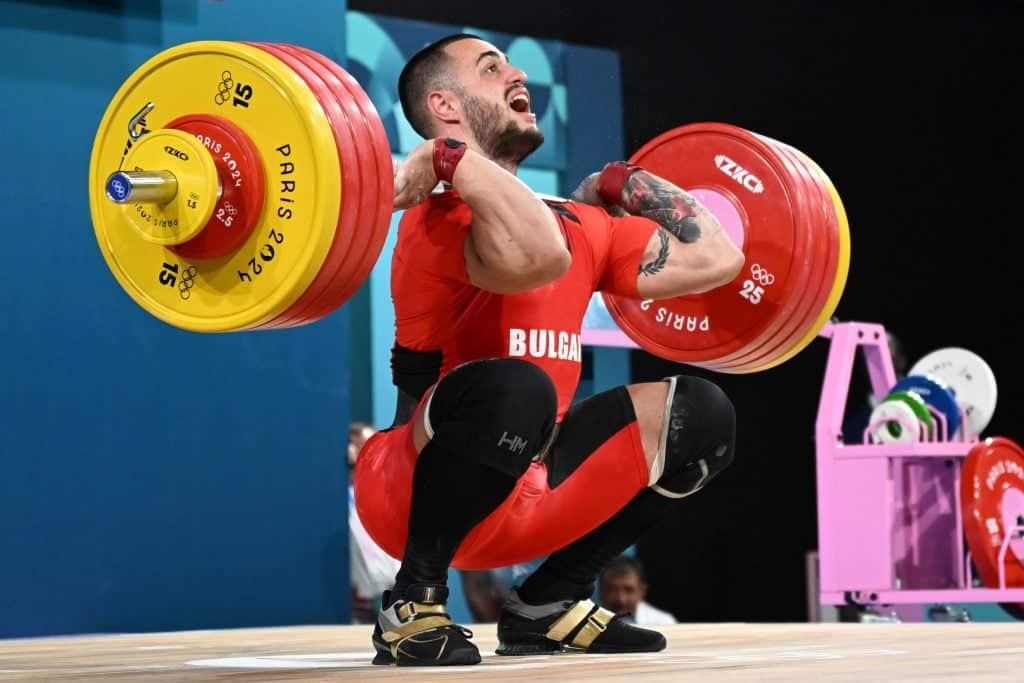
From brutal front squats to ice baths, deep tissue massages, and strategic exercise swaps, Nasar’s training reflects a sophisticated, time-tested approach forged through experience and mentorship.
But unlike many elite lifters, Karlos doesn’t just survive pain—he sidesteps it intelligently, staying adaptable while relentlessly pushing forward.
This article chronicles a full day of training with the world’s best—offering both inspiration and critical insight into what modern, elite-level weightlifting truly looks like.
Jump to:
Relentless Progress: How Nasar Approaches Training
Karlos Nasar’s path to dominance started at just 16, when he broke his first senior world record. By 17, he was a world champion. And at only 20 years old, he captured Olympic gold by a wider margin than any other lifter that year.
But behind his meteoric rise is a remarkably strategic, modestly adjusted version of an old-school system—a program built by his late coach, Ilan Iliev, that Karlos continues to follow religiously, despite Iliev’s tragic passing in 2022.
“I feel good. It’s nothing special for me,” Karlos says after a massive session the night before. “I’m ready for another hard workout.”
This mindset defines his training: no drama, just consistent execution.
Morning Session: Heat, Volume, and Quality Reps
Front Squats to Build the Foundation
The day begins with front squats, favored over back squats early in training because they’re generally less fatiguing. They allow for leg development without the systemic exhaustion heavier back squats demand.
On this day, Nasar works up to three sets of triples between 220–230 kg—the type of work that builds leg drive while keeping energy in reserve for later efforts.
Snatches from Blocks: Explosive Practice
Next, he transitions to snatches from blocks—targeting bar speed and aggression from the knee into the catch position. Although it’s not as competition-specific as full snatches, it’s the ideal stimulus to hone power two months out from the World Championships.
Karlos works up to a 160 kg attempt but stops after feeling pain—an important point. Rather than grind through, he pivots.
“If something hurts, stop doing it. Find something else and do that instead.” That’s the guiding philosophy Iliev taught him, and one Karlos follows obsessively.
Snatch Pulls: Precision Without the Overhead Strain
With shoulder pain limiting snatches, he switches to heavy snatch pulls—training the top half of the snatch without irritating the injury.
This flexibility not only allows continued progress, but it prevents overreaching into dangerous territory, which has cut short the careers of many lifters before him.
Recovery Between Sessions: Sleep, Food, and Therapy
Between AM and PM sessions, recovery becomes priority number one. Nasar’s midday routine includes:
- A quick massage to stimulate blood flow
- An ice bath to help with inflammation control
- A nutrient-dense, high-protein meal
- A 2-hour nap (Karlos aims for 10 hours of sleep each day)
- Coffee and light passive stretching before heading back
Massage plays a monumental role in Karlos’s system. He may get as many as four per day, before and after each workout. His trainer notes a clear improvement in muscle quality—soft, pliable, and resilient to deep pressure.
“It might not be measurable in research,” his friend and coach Lickov says. “But it relaxes him, helps focus, and keeps him consistent.”
Evening Session: Coaching Adjustments and Variations
Clean & Jerks: Volume with Focused Technique
For this session, Karlos completes a clean + 2 jerks variation, emphasizing adaptation for the jerk phase—a place he’s extremely consistent. In his career, he’s gone 37 for 44 in international clean & jerk attempts, four of those misses were at world record weights.
Notably, he never jerks from blocks or a rack. Every jerk in training comes after a clean, keeping his movement pattern tightly competition-specific.
Heavy Pulls and Pain Management
At 200 kg, his shoulder acts up again, so rather than push further, he shifts to heavy clean pulls and muscle snatches.
Why muscle snatches? It’s the snatch with the least strain on shoulder position while still delivering an overhead stimulus.
This adaptability sets him apart from traditional Bulgarian lifters, who were taught to train through pain, often to injury and burnout.
Back Squats: Keep Getting Strong
To end the day, Karlos squats again—this time it’s back squats. He typically squats twice daily, sometimes even three times. It’s central to his development, and one of the most consistent pillars of his success.
There’s a saying in weightlifting: beginners and the world’s top lifters agree on one thing—just get really strong. Karlos lives that idea fully.
Why the Program Works: Consistency + Adjustments
The program Iliev gave Karlos wasn’t a checklist, but a framework. It didn’t require maxing out daily or training through injury, like the notorious Bulgarian system crafted by Ivan Abadjiev.
Instead, it emphasized:
- Squats 1-2 times per day
- Snatch and clean & jerk variations tailored to the training phase
- Autoregulation—constantly feeling out energy levels and adjusting
- Mental strength without recklessness
Karlos trains hard—he always pushes. But when something doesn’t feel right, the plan already has the exit ramp built in. That mindset has helped him stay healthy, sane, and unbelievably strong.
Looking Ahead
Now training again for the 2025 World Championships in Norway, Karlos faces a new era of heavyweight battles with his Olympic rivals Miso Hona and Kianoush Rostami.
But as history shows, bet against Karlos Nasar at your own risk. “If you want peace,” he once said, “be prepared for war.”
By continuing to evolve his body and mind within a system designed to endure, Karlos may be not only the best lifter in the world now—but perhaps the best we’ve ever seen.