Aryna Sabalenka is reigning US Open champion. Currently ranked world number one in women’s tennis. And wearing a Whoop strap for over 1,199 consecutive days.
This isn’t just another gifted athlete—this is a fierce competitor who has mastered the art of balancing mental strength with physical resilience.
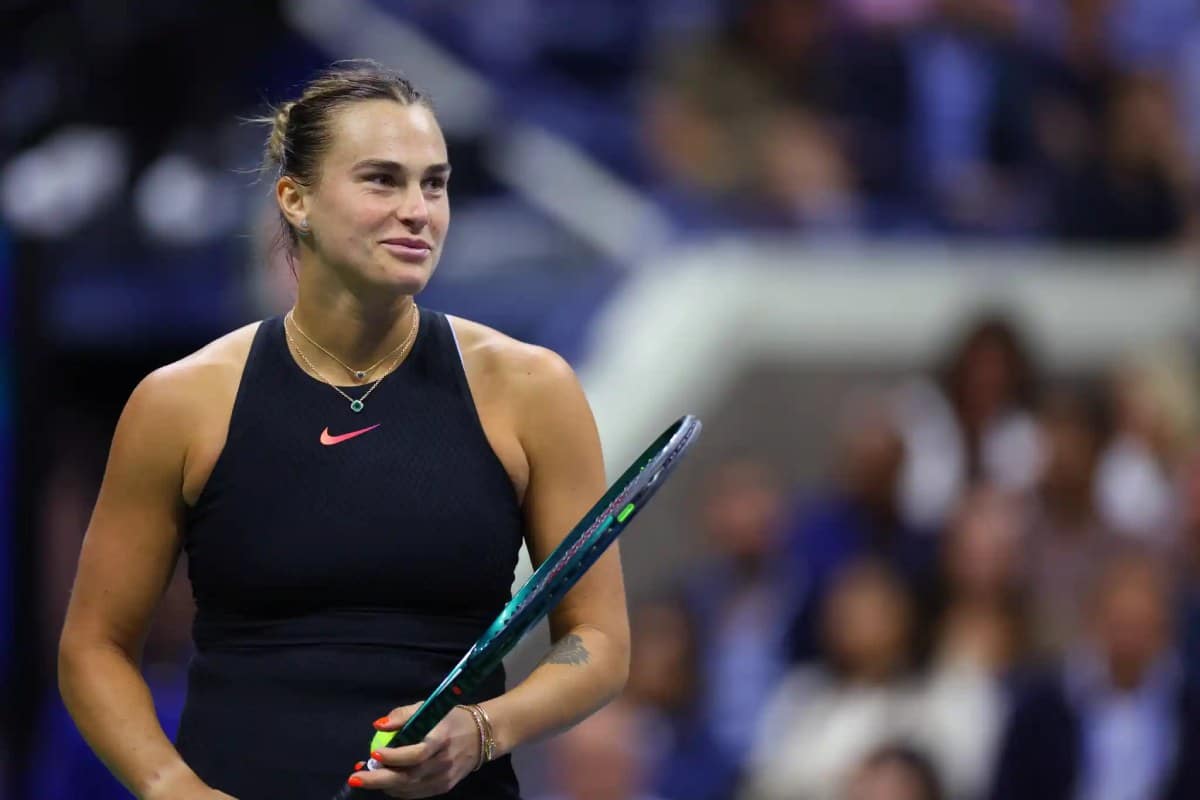
In a candid conversation on the Whoop podcast, she opened up about her mindset shift, emotional evolution, and the high-performance habits behind her game-breaking aggression and staying power.
From hitting forehands harder than many male pros to powering through Grand Slam finals with a 24% recovery score, she offers insights into building longevity—physically and mentally—in a demanding sport.
Here’s what we can learn from her journey.
Jump to:
- Shifting From Stress to Strength
- The Power of Playing Loose (and Aggressive)
- Data-Driven Recovery Habits
- A Wellness Routine Built for Travel
- The Importance of Fun and Emotional Balance
- Handling the Spotlight With Grace
- Designing the Ultimate Tennis Player
- Advice to Young Athletes
- What the Numbers Don’t Always Show
- Back at the US Open, the Stage Feels Like Home
Shifting From Stress to Strength
Her biggest transformation wasn’t technical—it was mental.
“I think the way I manage all of the stress, expectations, like the mental part of the game, I think I improved a lot in that,” she said.
She admitted early on, she fell into the trap that many young athletes do: believing they’re the only ones who feel nerves and pressure. With experience came the realization that everyone is stressed heading into a match. That knowledge helped her reframe the anxiety.
“Everyone experiences the same stress—you just have to understand that and stop trying to push it away. That only makes it worse.”
Now, she approaches the court with energy, big emotions—and less inner tension.
The Power of Playing Loose (and Aggressive)
Her game has actually always been aggressive. She laughed recounting how, even at six years old, she was trying to hit the ball “as hard as possible.” The accuracy came later.
“I just tried to bring it inside that square thing,” she joked about the lines on the court.
That raw power eventually translated into one of the most talked-about stats in tennis: her forehand has been recorded as more powerful than many male players, at least on certain occasions.
“It probably just happened once, and now everyone says that,” she said modestly. “But I can hit a few strong forehands.”
She owns her emotional style of play, embracing both the highs and the lows. “I would call my game very aggressive and I would call myself very emotional,” she said.
That plays into her ability to be disruptive and creative—like introducing perfectly placed drop shots that keep opponents guessing.
Data-Driven Recovery Habits
This athlete isn’t guessing when it comes to performance optimization—she’s wearing the data.
With a Whoop recovery streak of nearly 1,200 days, she uses the tool not as gospel, but as a guide. Even heading into the 2023 US Open final, her recovery score was a low 24%—solidly in the red.
“I wasn’t sad when I saw that,” she explained. “Your body always has some extra. I just said I’ll think about it later and give everything I’ve got.”
How She Bounces Back From Red Recoveries
- Prioritizes **7–9 hours of sleep** consistently
- Practices **mobility and active movement**, even on rest days
- Uses **breathing exercises** at night to lower heart rate after late matches
- Follows **optimal sleep hygiene**—cold, dark, and quiet rooms
- Relies on small rituals, like **skincare**, dining out, or even reading, to unwind
“Moving is healing,” she shared. “If I just lay on the couch, the next day my recovery is worse. When I keep moving and doing some mobility, my recovery is much higher.”
A Wellness Routine Built for Travel
It’s no secret that jet lag and new environments make athletic consistency hard. But she’s built habits to adapt faster to constant travel:
- Hydration is key—especially on planes
- Clean eating even in-transit helps regulate energy and immunity
- Even poor-quality plane naps are better than screen time
- She avoids alcohol, admitting it’s the one habit that instantly spikes her Whoop biological age
“My Whoop age was 19.6. After one vacation week with a few drinks, it jumped to 19.7,” she laughed. “So, no alcohol, I believe!”
The Importance of Fun and Emotional Balance
It’s not all grind and hustle—this athlete makes room for joy.
“I always want to enjoy the journey. Even the downs. As long as you feel something, it means you’re living.”
That joyful spirit is embedded in her team culture. From spur-of-the-moment (temporary) tattoos to laughter-filled workouts, she says keeping things light actually helps her stay focused and aggressive on the court.
How She Re-Centers During a Low Day
- Talking to her family
- Going for coffee with a view
- Reading light or inspirational books
- Avoiding social media comparisons
Her favorite recent read? Into the Magic Shop—a real-life story with ties to neuroscience—and a romantic novel called Maybe in Another Life.
Handling the Spotlight With Grace
With wins come critics—and she’s experienced her share of public scrutiny.
After a tough US Open loss to Coco, her post-match comments sparked backlash. But she took ownership, messaged Coco directly, and learned from the moment.
“I made all those comments even though I don’t really think that,” she explained. “Next time, I’ll take my time before speaking. It was a lesson.”
That humility was especially visible following Wimbledon, where she lost but managed to face the media with humor and composure: “I walked into the press room and said, ‘You guys want some spiciness? You’re not going to get it.’”
Designing the Ultimate Tennis Player
If she could build a tennis player using the best from across generations? She’d choose:
- Serve: Roger Federer – “Not the fastest, but most accurate.”
- Forehand: Jannik Sinner
- Backhand: Novak Djokovic
- Mental strength: Novak again – “He’s the best at that.”
And her favorite sports to watch live? Basketball and, surprisingly, soccer—especially after experiencing a World Cup final live.
Advice to Young Athletes
To any 17-year-old girl dreaming of becoming a pro, her message is clear:
“Do not listen to people from the outside. They don’t know anything. Focus on yourself and get better every day.”
What the Numbers Don’t Always Show
Even with a VO2 max of 55 and a stress-free sleep score, she knows data must be balanced with intuition.
“It’s just information,” she said. “There are days when your data looks perfect, but the day doesn’t go well. And days when the numbers are bad, but you feel great. It’s a learning process.”
Her lowest ever recovery?
1%—after a night of tequila or on the brink of getting sick. Either way, she used the data as a cue to course-correct, not panic.
Back at the US Open, the Stage Feels Like Home
She calls New York “hectic and crazy” in the best way. The energy, the crowd, and the atmosphere push her to stay on court as long as possible.
“Every person in New York is into tennis and you can feel that in the crowd,” she said. “It’s special. It really feels like home.”
There’s no perfect formula for greatness—but this champion has crafted something close.
Relentless work ethic. Emotional maturity. Sleep mastery. And just enough fun to keep it balanced.
She’s not just winning. She’s evolving. And she’s doing it on her own terms.