Tight hamstrings, stiff hips, slouched posture—these aren’t just annoyances.
They’re symptoms of modern life, and they’re stealing mobility one sedentary day at a time.
Losing range of motion happens as people age, but it doesn’t have to be permanent.
The solution lies in seven powerful flexibility exercises that combine stretching with strength, offering a way to reclaim movement and feel better for life.
Jump to:
Hamstrings: The Forgotten Problem Area
Most people can’t comfortably touch their toes. It’s shockingly rare to witness proper hamstring flexibility in adults, yet this limitation affects everything from walking to squatting.
These exercises target hamstring tightness through strategic stretching and strengthening, addressing the root cause rather than just symptom management.
Band-Assisted Hamstring Stretch: A Total Game-Changer
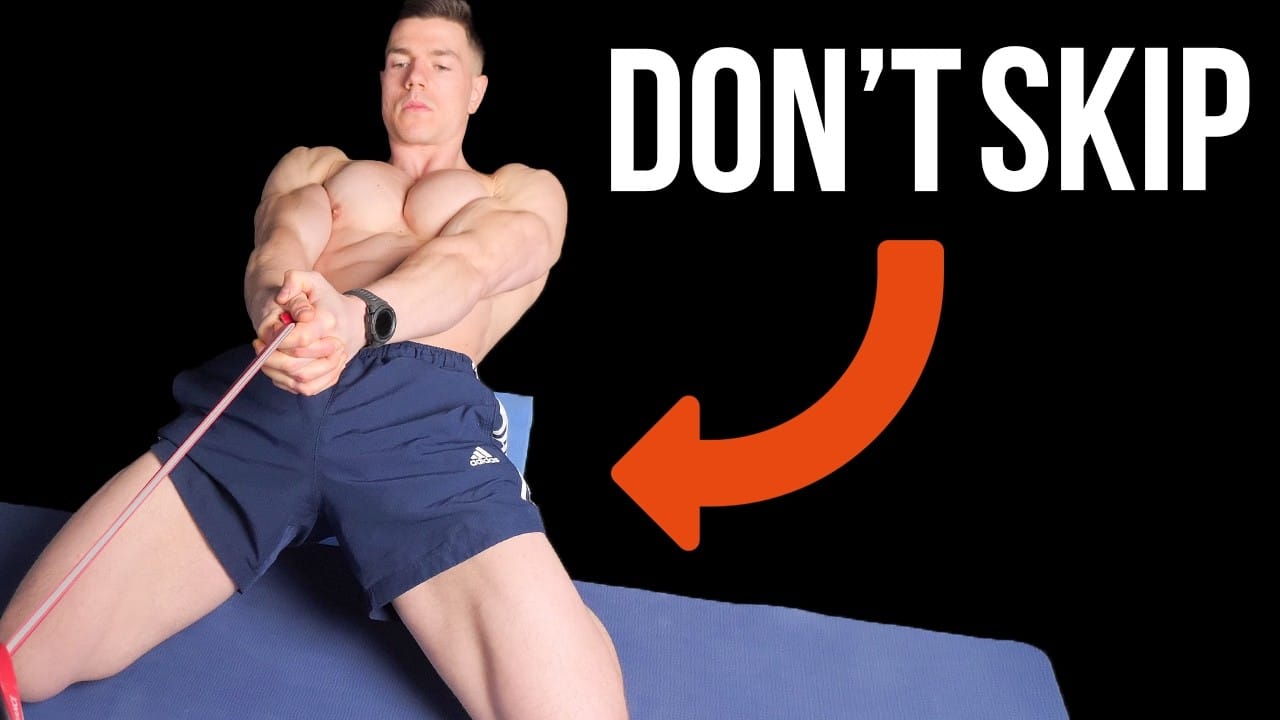
Using resistance bands to stretch hamstrings while lying down creates what fitness experts call a “cheat code” for flexibility.
The body relaxes completely on the floor, allowing access to deeper ranges of motion that standing stretches simply can’t reach.
The protocol is straightforward: Extend one leg with band assistance and hold for five breaths. Relax briefly, then repeat for five total reps of five-breath holds.
What makes this approach brilliant is how the band pulls the foot toward the face, creating ankle dorsiflexion. This delivers an intense calf stretch alongside hamstring lengthening.
For many struggling with toe touches, tight calves are actually the limiter, not just hamstrings. Since calf muscles cross both ankle and knee joints, this becomes a two-for-one mobility special.
The band provides resistance for hamstrings while offering assistance for typically weak hip flexors. As the leg extends straight, serious stretching occurs alongside strength building at length.
For beginners struggling to feel the stretch, this setup is absolutely transformative. The most critical cue: don’t let the leg drift away from the body, which weakens the stretch intensity.
Drive the thigh as close to the chest as possible while maximizing leg straightness. If the leg shakes uncontrollably and muscle cramps threaten, that’s the sweet spot.
Jefferson Curls: Not As Dangerous As You Think
The Jefferson curl might be the best hamstring stretch available, despite its controversial reputation.
With legs locked out and quads engaged, practitioners slowly curl their spine one segment at a time, lowering as far as comfortably tolerable. The stretch should feel uncomfortable, not painful.
During Jefferson curls, just calm down. You got to chill. This way, you can access your deepest range of motion.
Calm breathing activates the parasympathetic nervous system, signaling safety to the body and unlocking deeper ranges of motion.
Contrary to popular belief, rounding the back under load won’t destroy the lower back. This myth lacks strong scientific support.
The human spine is designed to bend, twist, and rotate under load. The poison is in the dosage—jumping straight to maximum weight is foolish, but bodies become robust and resilient with sensible training progression.
Start light. Loaded stretching powerfully increases range of motion in adults because weight assists deeper stretching while simultaneously building strength.
Those who’ve only performed gentle static stretches may discover this explains their forever-tight hamstrings.
I’ve spent the last 6 months doing Jefferson curls twice per week. I started with just an empty barbell and I’ve progressively overloaded up to 50 kilos.
For someone who could barely reach past their knees initially, Jefferson curls proved transformative. However, expect serious muscle soreness as hamstrings and spinal erectors train at length.
Progressive overload applies to flexibility training just like weightlifting. Gradually increase both range of motion and load, autoregulating based on daily readiness.
Progress isn’t linear—some sessions feel tighter or weaker. That’s normal. Consistent effort builds results over time.
Single Leg Good Mornings: The Hip Hinge Master
Single leg good mornings stretch hamstrings like few other movements can.
Hold weight behind the head to encourage straight back mechanics. The stretching leg stays straight for deep hamstring lengthening, while the support leg stays bent for balance and stability.
Proper hip hinge technique—keeping chest up and driving hips back—creates sensation entirely in hamstrings, not lower back. This posture loads hamstrings in their most lengthened position where they cross the hip joint.
The stretch should register high in the hip, not distally at the knee. Most people rush through good mornings, but slow tempo is essential, especially approaching deepest range.
The negative phase delivers the most effective hamstring stretch for flexibility goals.
Potent protocol: Perform 10 reps plus a 10-second hold on the final rep at maximum depth. This strengthens full range of motion while spending extra time in deep stretch for lasting gains.
For those already doing Jefferson curls, single leg good mornings provide perfect complementary work with their straight back and hip hinge, targeting different hamstring heads through varied angles.
Overhead Mobility: It Starts With Your Spine
Overhead mobility doesn’t begin at the shoulders—it starts with thoracic spine extension.
When upper back mobility is locked down, shoulders never stand a chance at healthy overhead movement.
Bodyweight Pullovers: The Ultimate Upper Body Opener
Rather than wasting time on dozens of ineffective stretches, bodyweight pullovers simultaneously open shoulders and spine.
This movement stretches thoracic spine into extension while opening lats, pec minor, and teres major—the big muscles that typically lock down overhead shoulder positioning. Practitioners also experience massive release through chest, ribs, and stomach as the body arches backwards.
The setup requires something solid as an upper back fulcrum—yoga blocks or firm foam rollers work well. Next, fix hands overhead using stall bars, a barbell in a squat rack, or a Smith machine with bench.
The execution is simple: Arch the body and drive hips toward the ground. Expect a massive stretch through spine and shoulders.
Warning—this stretch is extremely intense. Always move slowly and stay within strength limits when beginning.
After just a few sets of bodyweight pullovers, I feel like a completely different person. I’m standing taller with a proud upright posture.
Breathing feels easier, and overhead arm movement encounters less resistance. Big tension creates big stretch, which delivers more range of motion gains.
Challenging movements are the ones that actually transform bodies.
Beginner regressions include:
- Pullovers with weight overhead (same spine fulcrum, fraction of the load)
- Passive holds with bum on feet or floor (reduces intensity)
- Isometric holds without moving into deeper extension (safe introduction)
This stretch offers true progressibility—elevate hands and feet to expand range of motion continuously. If a mobility drill can’t be made harder, it’s not worth the time.
Hip Mobility: Undoing a Sitting Society
Modern life involves excessive sitting—at work, in cars, even at home watching videos. The result: hips that don’t move properly.
Pigeon Stretch: Classic Hip External Rotation
The pigeon stretch is an absolute classic for hip mobility. The front leg crosses the body, placing the hip into external rotation and creating strong stretching sensations in glutes, piriformis, and deep hip rotators.
Perform this stretch actively, using strength to increase range of motion. Light hand support for balance is acceptable, but don’t offload too much body weight.
Press the front shin into the ground, squeeze glutes, and own the position. This controlled pushing at limits transforms basic stretching into true mobility training that delivers lasting results.
Beginners benefit from using an incline bench, positioning the hip at a friendlier angle without knee discomfort. From there, hinge forward with either straight or rounded back—each stretches different areas and offers unique sensations.
Consistent pigeon training creates hips that move freely, glutes that activate properly, and less pinching during sitting or squatting.
Reverse Nordics: Hip Flexor Liberation
Reverse Nordics open even the tightest hip flexors. For those struggling with deep squats due to tight quads, this is the solution.
Start by squeezing glutes, maintaining slight posterior pelvic tilt while leaning back. This directs stretch into quads and hip flexors. Avoid excessive lower back arching—a common cheating mechanism.
Band-assisted variations are ideal for most practitioners. Bands provide maximum assistance at the bottom, where weakness is greatest, allowing exploration of deeper ranges than otherwise possible.
Reverse Nordics are sometimes called “natural leg extensions” because they mirror gym leg extensions with one crucial difference: machine extensions load quads most in contracted position, while reverse Nordics hammer them hardest in lengthened stretch position.
Leg soreness or tightness a day or two after training is normal—that’s eccentric loading creating delayed onset muscle soreness. After recovery, hip flexors feel noticeably more open with consistent practice.
Loaded Wall Lunges: The Couch Stretch Upgrade
Loaded lunges cure stubborn hip flexors better than passive couch stretching.
The problem with traditional couch stretches is passivity—there’s insufficient load to create lasting adaptation. Loaded wall lunges upgrade this by adding weight and holding under tension, forcing hip flexors and quads to adapt by building strength at length.
Start light with approximately 5 kilos in each hand. Weight should encourage deeper sinking, not cause body seizure.
Rather than moving in and out of stretch, hold end range and let load pull deeper over time. Think of it as yielding isometric work—slowly sinking deeper into hip extension.
As depth increases, stretch shifts into hip crease and lower abs, targeting the psoas muscle. Stay calm, breathe, and let each exhale guide further into hip extension.
Loaded wall lunges are demanding, but frequent practice creates noticeable differences in everyday activities like standing and walking.