Can You Strengthen Cartilage? Here’s What the Latest Science Says
This article is based on insights from a video by Professor Johan Bellemans, MD, PhD, a leading orthopedic surgeon and former head of Orthopaedics and Traumatology at the Catholic University Hospitals Leuven. He’s now a Consultant Surgeon at ZOL Hospitals in Genk, Belgium, and co-founder of the GRIT Belgian Sports Clinic in Leuven.
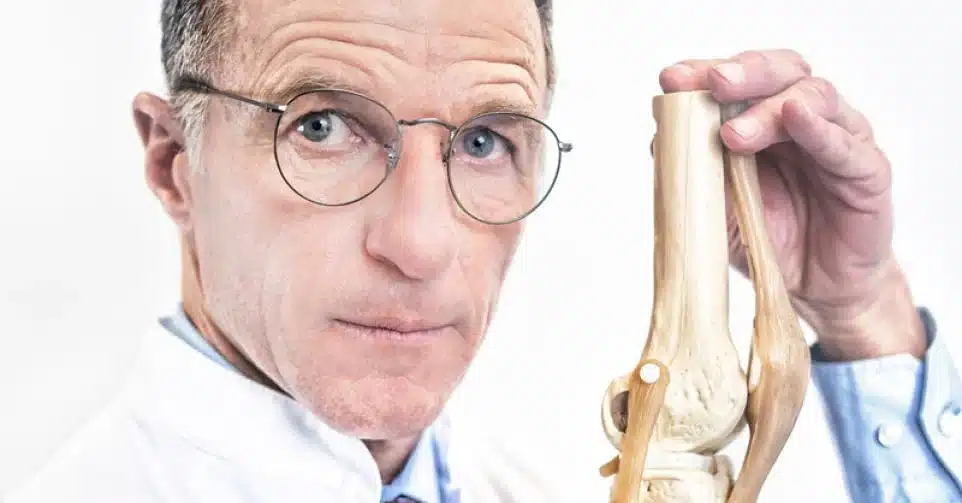
If you’ve been told that cartilage can’t heal — whether due to injury or age-related wear — you’re not alone.
But that belief is outdated.
Cartilage, unlike enamel, is living tissue. It responds to the right kind of stress and nutrients. That means it can be stimulated to repair and strengthen, helping reduce pain and restore function in damaged joints.
In this article, we’ll break down what really works to support cartilage health:
✅ The ideal type of exercise (and how long to do it)
✅ Why cartilage responds best to specific patterns of movement
✅ What supplements may actually help — and which ones to avoid
If you’ve struggled with knee, hip, or ankle pain, this science-backed approach could change the way you move — and help you move pain-free again.
Jump to:
- Why Strengthening Cartilage Matters
- What Type of Activity Strengthens Cartilage?
- The Best Exercises for Strengthening Cartilage
- The Workload Cartilage Doesn’t Like
- But There’s a Catch — Impact Isn’t Always the Enemy
- Cartilage-Supporting Supplements: Do They Help?
- The Bottom Line: Yes, Cartilage Can Be Strengthened
Why Strengthening Cartilage Matters
Cartilage plays a crucial role in joint health. It provides shock absorption and smooth gliding of your joints. When cartilage is damaged or worn, movement becomes painful and inflamed — but there’s good news. Cartilage is metabolically active. It’s made of living cells called chondrocytes, which produce essential building blocks: extracellular cartilage matrix and collagen fibers.
These chondrocytes can be stimulated to ramp up their activity — under the right conditions. This means your actions can influence whether your cartilage rebuilds and strengthens (anabolic activity) or wears down (catabolic activity).
What Type of Activity Strengthens Cartilage?
The key to improving cartilage structure isn’t high-impact sports or long endurance sessions. On the contrary, current evidence-based guidelines promote a specific formula:
- Short, cyclic, repetitive, non-impact or soft impact exercises
- Duration: 10–15 minutes per session
- Intensity: Moderate resistance
- Rest Period: Minimum 6 to 12 hours between sessions
This combination supports matrix production and collagen alignment within the cartilage — especially in the outer layers that are critical for gliding and shock absorption. Doing more than 15 minutes doesn’t harm, but past the 15-minute mark, the chondrocytes essentially “shut down,” gaining no additional benefit.
Why Cyclic Motion Works
The magic of this method lies in its consistency and low impact load. Constant, repetitive cycles apply a mild, consistent pressure that encourages cell activity in a positive way — helping tissue organize and reinforce itself in ways that reduce pain and improve function.
The Best Exercises for Strengthening Cartilage
1. Stationary Cycling
Stationary biking is perhaps the most ideal cartilage-friendly activity:
- Duration: 10–15 minutes
- Cadence: Moderate pace
- Intensity: Moderate resistance — not too light, but sustainable
- Frequency: Once or twice daily, with 6–12 hour rest intervals
Cycling mimics repetitive gliding motion with minimal impact. It allows you to condition your joints without aggravating already weakened cartilage.
2. Cross Trainer (Elliptical)
This is another excellent choice because it combines smooth motion with full body coordination:
- Duration: 10–15 minutes
- Speed: 60–70 cycles per minute
- Resistance: Moderate
Its smooth stride reduces joint stress while still engaging cartilage productively.
3. Rowing Machine
Rowing provides both lower body and core engagement while supporting cartilage health through controlled motion:
- Duration: 10–15 minutes
- Stroke Rate: 20–30 strokes per minute
Rowing uses a pushing motion with low contact speed, ideal for joint recovery stages.
4. Leg Press
If you prefer strength-style training, a leg press machine set to moderate resistance can also be useful. Just make sure to maintain smooth, slow reps and don’t overload the machine.
- Duration: 10–15 minutes
- Repetitions: 20–30 per minute
Keep the motion repetitive and controlled to avoid cartilage-irritating spikes in load.
The Workload Cartilage Doesn’t Like
While moderate, smooth pressure stimulates cartilage, sharp, high-impact loads have the opposite effect. Activities like running, jumping, or abrupt pivoting movements can overload weakened cartilage, worsening wear.
This is especially true for long-distance runners who maintain sharp repetitive impact over time. Compared to the “green line” (smooth, repetitive load) in science models, the spikes of impact in high-intensity sports present a much more hostile environment for damaged cartilage.
But There’s a Catch — Impact Isn’t Always the Enemy
Interestingly, while cartilage doesn’t appreciate high-impact forces, the subchondral bone plate — the hard bone layer just beneath the cartilage — does. Impact loading helps strengthen this bone, which can provide added protection and support for the cartilage and deeper tissues.
This means, in time, even people with a damaged cartilage layer may be able to return to impact sports — but only after building up the strength of both the cartilage and subchondral plate in a gradual, smart way.
Progression Plan
- Start with non-impact cyclic exercises as described above.
- Once stable, integrate soft impact training such as high-speed walking or light jogging.
- Combine with strength training to further support subchondral bone and surrounding musculature.
- Finally, reintroduce full-impact exercise slowly — if your joints remain pain-free.
This process may take months depending on the extent of your cartilage injury — patience is critical.
Cartilage-Supporting Supplements: Do They Help?
Many ask whether nutritional support can help during this process. Recent studies suggest supplements may aid cartilage recovery by either enhancing anabolic processes or reducing catabolic breakdown mechanisms.
The ingredients with the most convincing science behind them include:
- Glucosamine
- AKBA (Acetyl-11-keto-beta-boswellic acid)
- Undenatured type II collagen
- Collagen hydrolysate
- Bromelain (anti-inflammatory enzyme derived from pineapple)
These nutrients function differently:
- Some reinforce cellular repair mechanisms
- Others minimize inflammatory or destructive enzymes
While no supplement offers a cure, they may complement a well-structured exercise plan designed around cartilage-supportive principles.
The Bottom Line: Yes, Cartilage Can Be Strengthened
Despite long-held myths, the science now supports that cartilage is trainable tissue. With the right type of exercise — repetitive, soft-impact, and moderate in intensity — you can stimulate key cells to rebuild and reinforce joint surfaces.
For anyone recovering from injury, experiencing arthritis, or simply trying to prevent wear-and-tear, this approach offers a practical and promising way forward. Add some strategic dietary support, remain consistent, rest sufficiently between sessions, and you may be able to get back to activities like running and jumping — pain-free.