Popular fitness YouTuber Will Tennyson recently shared an intense leg training session that showcases exactly what it takes to build serious lower body strength and size.
In his latest video, Tennyson walks viewers through what he calls the most demanding workout of his current training split—a brutal leg day packed with heavy compound movements that requires optimal recovery and mental preparation.
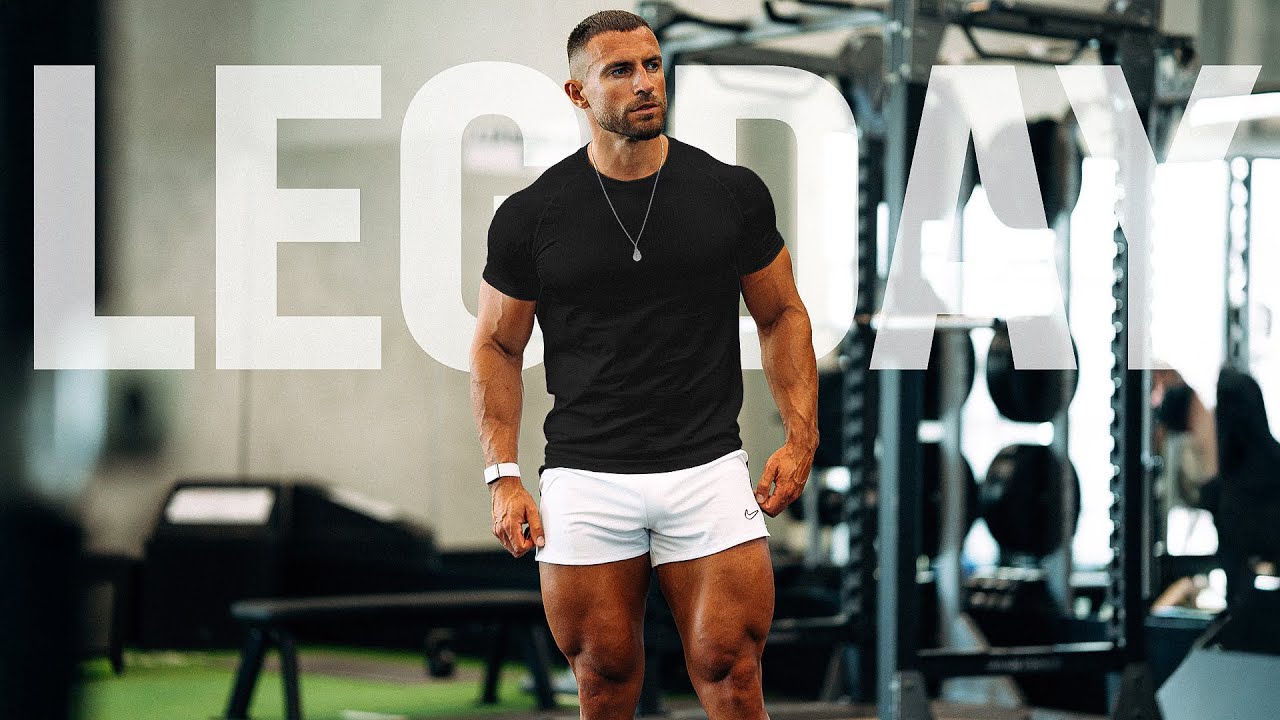
This isn’t your typical leg workout.
It’s a masterclass in progressive overload, strategic exercise selection, and the mental fortitude required to consistently push boundaries in strength training.
Jump to:
- Strategic Timing and Recovery Are Everything
- Hip Thrusts: Building Maximum Glute Strength
- Pendulum Squats: The Quad Builder
- Three Critical Factors for Leg Development
- Performance Killers: What Sabotages Your Workout
- Smith Machine Split Squats: Glute-Focused Brutality
- Managing Nausea During Intense Leg Training
- Leg Press: High-Volume Quad Pumping
- Flexible Programming: Moving Accessories When Needed
- Romanian Deadlifts: Hamstring Isolation on the Leg Press
- Session Duration and Program Completion
Strategic Timing and Recovery Are Everything
Tennyson emphasizes that he schedules this particular leg session either after a full rest day or after just one training day. The reason? He needs to be completely primed to handle the demands.
The session begins with a five-minute warm-up, including his signature dead hang for grip strength and full-body stretching.
Hip Thrusts: Building Maximum Glute Strength
First up in Tennyson’s workout are Smith machine hip thrusts, where he’s currently pushing 160 kilograms. He made an important switch from the plate-loaded booty builder machine he’d been using for five to six weeks.
The reason why I’m doing the Smith machine hip thrust is because in the previous split I was doing, I was doing the hip thrust actual machine, the booty builder plate loaded, which is a great machine, but it was getting to a point, especially the one I was using in here, I couldn’t actually add any more plates to it.
Tennyson prefers the Smith machine over traditional barbell hip thrusts for practical reasons.
I personally prefer this to doing the barbell hip thrust because it’s such a pain in the ass loading it up and it does wobble around a little bit more. You really have to put a lot more effort into stabilizing the bar.
While acknowledging that fixed machines may be “less functional” than free weights, he prioritizes the ability to load heavier weight safely for maximum muscle development.
Rest Periods Matter More Than You Think
Between sets of hip thrusts, Tennyson takes two to three minutes of complete rest. This isn’t laziness—it’s strategic.
One thing I’ve noticed with each week as the load gets heavier and you’re doing this style of training, the rest is so important. We’re not trying to work on cardio here. We’re trying to work on, okay, how heavy can we be lifting for the target reps.
He notes that beginners using lighter weights won’t need such extensive rest periods, meaning their sessions might finish under an hour compared to his hour and fifteen minutes.
Pendulum Squats: The Quad Builder
Tennyson considers the pendulum squat machine one of his absolute favorites for quad development, alongside hack squats.
This is a great machine. Every gym should have this machine.
His working weight has progressed to five plates plus additional weight. But before diving into heavy sets, he spends considerable time perfecting his foot positioning.
Tennyson positions his feet as low as possible on the platform to maximize quad engagement while keeping his heels planted. If positioned too low, his heels lift off at the bottom; too high, and he loses optimal knee flexion.
Once he finds the perfect spot, he maintains that exact placement for every set.
The Mental Game of Training
During the pendulum squats, Tennyson acknowledges that filming creates a unique dynamic.
Usually I get fully locked in with my music and get into this zone, but today we’re filming. So, the filming is a little bit of a distraction, but at the same time, it puts the pressure on me to perform. Can’t be looking like a little bitch on camera in front of tens of thousands of people.
Three Critical Factors for Leg Development
When addressing viewers who struggle with leg growth, Tennyson identifies three essential elements:
1. Training Frequency
Training legs once weekly might produce results, but twice-weekly sessions dramatically accelerate progress.
2. Progressive Overload
Tennyson emphasizes the importance of gradually increasing load over time. While controlled tempo and proper form matter, at some point you must challenge yourself with heavier weights.
Most important thing is mechanical tension, and that is primarily coming from the amount of resistance you’re using. So, lift a little bit heavier, but do it gradually.
3. Mental Intensity
You just got to get a bit nasty. Got to bring out some aggression. Got to let this beast out. Controlled rage. It is going to be a bit horrible, uncomfortable, unpleasant. We got to dig deep.
Performance Killers: What Sabotages Your Workout
Through years of experience, Tennyson has identified four factors that noticeably diminish training performance:
- Training fasted: While possible, it prevents optimization. Tennyson eats a substantial meal two hours before training—not one hour, specifically two—allowing proper digestion.
- Alcohol consumption: Even moderate drinking drastically impacts performance. Tennyson noticed that one night out could set his progress back one to two weeks, making consistent advancement impossible.
- Smoking (shisha and cigars): Despite enjoying an occasional cigar or shisha session, Tennyson found himself gasping for air mid-set after smoking, particularly during leg training.
- Inadequate recovery: Without proper rest between training sessions, performance inevitably suffers.
Smith Machine Split Squats: Glute-Focused Brutality
Tennyson describes split squats as “probably the most horrible exercise of all,” especially with dumbbells.
He prefers the Smith machine version because it eliminates stabilization concerns and removes the challenge of gripping heavy dumbbells. This allows complete focus on loading the movement pattern heavily.
Following quad-dominant pendulum squats, these split squats shift emphasis toward glute development. Tennyson stresses the importance of maintaining a neutral spine and engaging core musculature to prevent lower back strain.
His current working weight sits at 100 kilograms per leg.
The Power of Tracking Progress
The worst thing is like this is why tracking is so good because the tracking forces you to at the very least do what you did the previous week. Like before sometimes if I don’t track I’m like oh well I’ll just load it up to where it feels quite challenging.
Without tracking, Tennyson admits he might unconsciously select lighter weights. Knowing he lifted 100 kilograms the previous week creates accountability—lifting less means regression, not progression.
He does acknowledge that some days simply aren’t optimal performance days, which is why he strategically schedules demanding sessions when recovery markers like heart rate variability are favorable.
Managing Nausea During Intense Leg Training
Tennyson offers practical advice for those who experience nausea during leg workouts.
If any of you guys are training legs and like halfway through or after four exercises you feel like you’re going to puke, that’s okay. Like, we’ve all been there.
Rather than pushing through to the point of vomiting, he recommends ending the session and doing 20 minutes of walking. This cardiovascular conditioning helps prepare your body for future demanding sessions.
Each subsequent workout becomes more manageable as conditioning improves.
Leg Press: High-Volume Quad Pumping
Tennyson’s leg press variation uses a pendulum-style machine rather than the traditional 45-degree angle press. He loads 140 kilograms plus the machine’s weight for two working sets.
His preferred machine provides superior range of motion compared to standard leg presses.
For targeting different muscle groups, foot placement matters: high and wide emphasizes glutes, while lower positioning increases quad engagement. Tennyson positions his feet lower for additional quad focus.
He notes that his heels slightly lift at the bottom of the movement as he drives through his toes. While unconventional, he maintains this technique because it creates a better quad stretch while keeping him in a strong, safe position.
These leg press sets feature the highest rep count of the entire workout at ten repetitions.
Flexible Programming: Moving Accessories When Needed
Although calf training appears in Tennyson’s leg day programming, he takes a flexible approach based on how he feels post-workout.
After I’ve done this, I’m pretty fucked up today. Like, mentally, physically, I’m not going to give the calf training 100%. And I’m not just making excuses.
Instead of forcing suboptimal work, he carries calf training forward to rest days when he does light cardio. This might include 10-15 minutes of calves, 10-15 minutes of core, and 30 minutes of cardio—activities that don’t significantly elevate heart rate or interfere with recovery.
This strategic approach allows him to remain active daily without compromising recovery from demanding training sessions.
Romanian Deadlifts: Hamstring Isolation on the Leg Press
Tennyson concludes with a unique hamstring exercise performed on the leg press machine with completely straight legs, mimicking a stiff-leg deadlift.
The fixed position forces legs to remain straight throughout the movement, ensuring proper hamstring engagement.
His technique involves maintaining a straight spine while lowering until achieving full hamstring stretch, then consciously contracting the hamstrings to drive hips forward. The goal is minimizing lower back involvement and maximizing hamstring activation.
He recommends beginners practice with bodyweight first to master the movement pattern before adding resistance via barbell or dumbbell.
Tennyson emphasizes a slower tempo for this exercise to maintain control and ensure hamstrings perform the majority of work.
Session Duration and Program Completion
This particular leg session clocks in at one hour and fifteen minutes, while Tennyson’s other training days typically finish around one hour.
He notes that optimal session length ranges between 45 minutes and one hour fifteen minutes, depending on experience level, weights used, and required rest periods.
For those following his training app who can’t complete every exercise, he recommends logging whatever was accomplished and filling in missed work later. When he adds calf training on a subsequent rest day, he logs it back to the original leg session for complete weekly tracking.
This comprehensive approach to leg training—combining strategic exercise selection, progressive overload, adequate recovery, and flexible programming—demonstrates exactly what separates mediocre leg development from exceptional results.