You wake up and the moment your foot touches the floor, a sharp pain shoots through your heel.
Your shoulder throbs in the middle of the night. Your elbow burns even though you’ve never picked up a tennis racket.
Sound familiar? You’re not alone, and more importantly, you’re not falling apart.
Dr. Vonda Wright, an orthopedic sports surgeon and women’s health expert, recently explained what she calls “the itises”—plantar fasciitis, Achilles tendinitis, tennis elbow, frozen shoulder, even trigger fingers—and why so many women suddenly develop multiple tendon problems seemingly out of nowhere during perimenopause and menopause.
Jump to:
- The Real Reason Behind Sudden Tendon Pain
- Why Rest Is Actually the Wrong Advice
- Feed Your Tendons What They Need to Heal
- Cut Inflammation at the Source
- The Hormone Optimization Decision
- Sleep and Movement: Where Repair Actually Happens
- Debunking Common Myths About Tendon Pain
- A Lifestyle Approach, Not a Quick Fix
The Real Reason Behind Sudden Tendon Pain
Dr. Wright and her team published groundbreaking research on the musculoskeletal syndrome of menopause last year, making it freely available to everyone. Over 550,000 people have already downloaded it.
The revelation? Your tendons aren’t just structural connectors between muscle and bone—they’re living tissues packed with estrogen receptors.

If you want something simple that actually works, this is one of the most effective tools I’ve used to build strength, conditioning, and endurance without needing a full gym setup.
- Full-body training with one weight using swings, squats, and presses
- Solid cast iron build that feels stable and lasts for years
- Comfortable grip that makes high-rep workouts easier to handle
Your tendons, which are the connections between your muscle and your bone, are not just structural. They are living tissues, and every one of them has estrogen receptors.
When estrogen levels plummet during perimenopause and menopause, tendons lose critical collagen and water. They also lose their ability to repair microscopic damage from everyday activities.
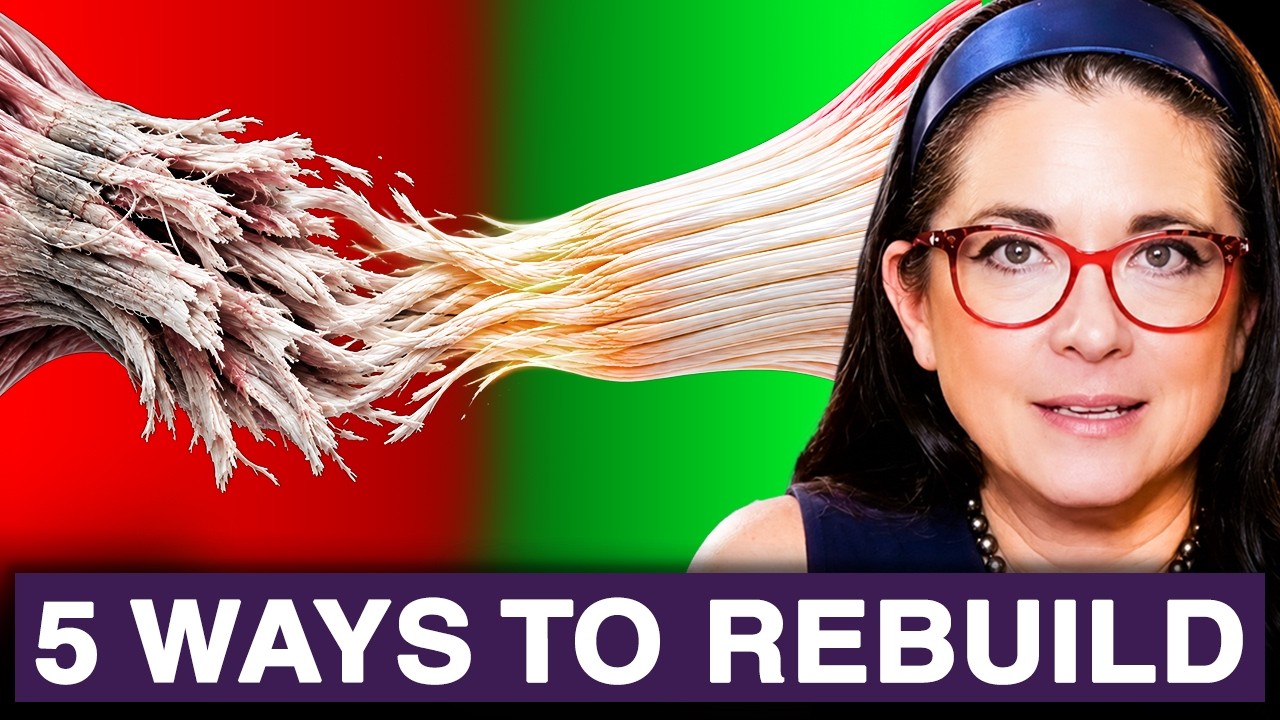
From Wet Rope to Frayed Cord
Dr. Wright uses a powerful analogy to explain what happens. A healthy tendon functions like a wet rope—strong, flexible, able to bend and spring back.
A menopausal tendon without adequate estrogen becomes like a dry rope. It frays, splits, and breaks even in areas that weren’t previously stressed.
A menopausal tendon that has lost its estrogen is more like a dry rope. It frays. It splits. It breaks where it was never even used before.
Tendons are approximately 70% collagen, and women can lose up to 30% of their collagen when estrogen declines. That’s not just a minor shift—it’s a fundamental mechanical change.
Why Rest Is Actually the Wrong Advice
If you’ve been told to simply rest your painful tendon and wait it out, you’ve received outdated guidance.
Modern treatment focuses on loading the tendon, not resting it. Waiting three to six months while avoiding activity leads to muscle loss and deconditioning—and the pain typically returns the moment you resume normal activities.
If you want something simple that actually works, this is one of the most effective tools I’ve used to build strength, conditioning, and endurance without needing a full gym setup.
- Full-body training with one weight using swings, squats, and presses
- Solid cast iron build that feels stable and lasts for years
- Comfortable grip that makes high-rep workouts easier to handle
Dr. Wright prescribes slow, heavy, controlled repetitions for affected tendons. Usually three sets of eight repetitions, with three seconds down and three seconds up, performed several times weekly.
Specific Exercises for Common Tendon Problems
- Plantar fasciitis or Achilles tendinitis: Single heel raises off a step
- Tennis elbow: Wrist extensions with light dumbbells or resistance bands
- Frozen shoulder: Daily range-of-motion work including slow stretches, pendulums, wall walks, and door stretches
Think of a tendon like a rope that you are rebraiding. Every controlled rep is another strand being put back in place.
Research supports that eccentric loading exercises—where muscles lengthen under tension—can effectively treat tendinopathies. A tendon denied appropriate mechanical stimulus during recovery grows weaker instead of stronger.
Feed Your Tendons What They Need to Heal
Since tendons consist primarily of protein, adequate protein intake becomes essential for repair. Dr. Wright commonly recommends one gram of protein per ideal pound of body weight.
She emphasizes front-loading protein at breakfast—30 to 40 grams in the first meal to activate protein synthesis.
Quality protein sources include:
- Eggs or egg whites
- Greek yogurt
- Cottage cheese
- Chicken
- Fish
- Tofu
Think of these building blocks as a construction site. Your tendon is a construction site. Protein is the lumber. If the lumber truck never arrives, the crew stops working to repair.
Cut Inflammation at the Source
Sugar creates inflammatory conditions throughout your body, and according to Dr. Wright, it makes tendon pain worse.
If you want something simple that actually works, this is one of the most effective tools I’ve used to build strength, conditioning, and endurance without needing a full gym setup.
- Full-body training with one weight using swings, squats, and presses
- Solid cast iron build that feels stable and lasts for years
- Comfortable grip that makes high-rep workouts easier to handle
When patients eliminate processed sugar for as little as seven days, inflammation from their tendon issues noticeably decreases.
That means reading labels carefully. Sugar hides in yogurt, sauces, breads, and many processed foods. All added sugars count—including honey and agave.
An inflamed body is like a stove that somebody left on. Even with nothing on top of the stove to cook, the burner remains hot.
Choose fiber-based carbohydrates over simple, starchy ones to minimize inflammatory responses.
The Hormone Optimization Decision
Since estrogen loss triggers tendon degradation in the first place, addressing hormone levels becomes a root-cause approach rather than merely treating symptoms.
Dr. Wright emphasizes making an informed decision about hormone therapy based on current evidence, not outdated fears from the 2002 Women’s Health Initiative study.
She recommends the book Estrogen Matters by Avrum Bluming and Carol Tavris for comprehensive information on hormone therapy risks and benefits.
If you want something simple that actually works, this is one of the most effective tools I’ve used to build strength, conditioning, and endurance without needing a full gym setup.
- Full-body training with one weight using swings, squats, and presses
- Solid cast iron build that feels stable and lasts for years
- Comfortable grip that makes high-rep workouts easier to handle
This particular arm of the study was wrong, and it cost a generation or two of women their tendons, their bones, and their sleep.
Finding a hormone-savvy clinician can prove challenging since less than 7% of medical students and less than 30% of OB-GYNs receive formal training in this area. Keep searching until you locate someone knowledgeable.
Dr. Wright personally chose hormone optimization with estradiol, progesterone, and later testosterone after experiencing total body pain at age 47.
Sleep and Movement: Where Repair Actually Happens
Tendon repair occurs during sleep. Getting fewer than six hours nightly impairs collagen synthesis—this isn’t optional.
Daily movement matters just as much. Walking, mobility work, and gentle activity pump synovial fluid through joints and blood past tendons.
A tendon that never moves is like a garden hose left in the sun. It gets stiff, it cracks. We need water in it every single day.
You don’t need hours at the gym. Fifteen focused minutes three times weekly, targeting the specific tendon causing problems, provides an effective starting point.
Debunking Common Myths About Tendon Pain
Myth: If it hurts, rest it and it will heal.
Reality: Tendons not subjected to progressive loading grow weaker and stiffer. Controlled loading rebuilds tendon strength.
If you want something simple that actually works, this is one of the most effective tools I’ve used to build strength, conditioning, and endurance without needing a full gym setup.
- Full-body training with one weight using swings, squats, and presses
- Solid cast iron build that feels stable and lasts for years
- Comfortable grip that makes high-rep workouts easier to handle
Myth: Multiple tendon problems are just normal aging.
Reality: For midlife women, sudden onset of multiple tendon issues typically stems from estrogen loss, not inevitable aging.
Myth: A cortisone injection will fix the problem.
Reality: While injections may provide temporary relief (typically lasting about three weeks according to research), they don’t repair underlying tendon damage. Long-term effects of repeated cortisone injections on tendons remain unclear.
A Lifestyle Approach, Not a Quick Fix
Dr. Wright experienced firsthand how implementing these strategies resolved her own tendon pain at 47. She eliminated simple sugars, focused on fiber-based carbohydrates, made an informed decision about hormone optimization, and protected her sleep.
This comprehensive approach treats the itises that comprise part of menopause’s musculoskeletal syndrome:
- Load the tendon with slow, controlled resistance exercises—don’t simply rest
- Feed collagen with adequate protein throughout the day
- Cut simple sugars to reduce systemic inflammation
- Make an informed hormone decision based on current evidence, not outdated fear
- Guard sleep like a national treasure and move every single day
This is not just a program, it is not just a six-week episode. This is your lifespan. This is your lifestyle.
Consistency over time delivers better results than sporadic intensity. Your tendons—and the rest of your musculoskeletal system—will thank you for the long-term investment.