Forget rows of shiny gym machines and scrolling Instagram for isolation moves promising bigger arms.
Military training doesn’t care about aesthetics—soldiers train for survival, for combat, for situations where strength isn’t optional.
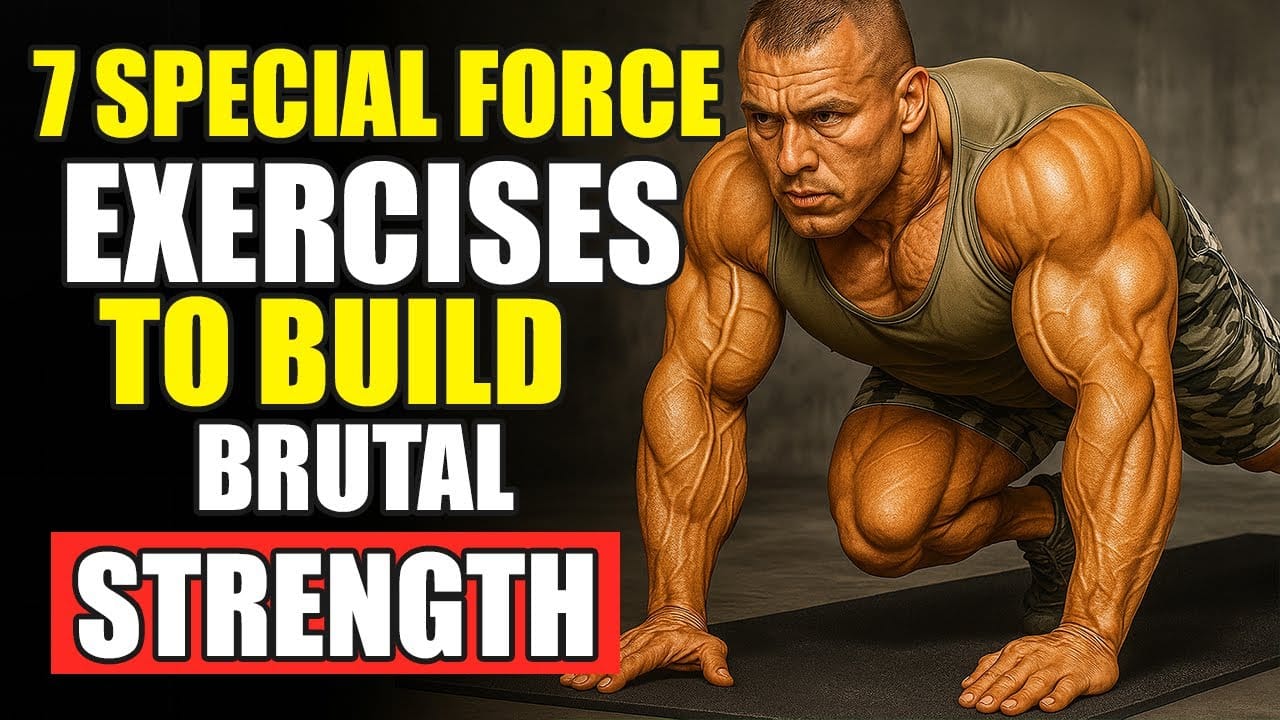
Picture a soldier carrying a 70-pound rucksack, sprinting across uneven ground under fire, or dragging a wounded comrade to safety when every ounce of energy screams to quit.
That is real strength—functional, battle-tested, and unbreakable.
Jump to:
Pull-Ups: The Soldier’s Benchmark of Raw Power
If there’s one movement that appears in every military base and special forces camp across the globe, it’s the pull-up.
This timeless exercise isn’t just another gym staple. It’s a benchmark of raw power, grit, and discipline that strips away all excuses.
When you grip that bar, there’s nowhere to hide—you either get your chin over or you don’t.
Why Militaries Worldwide Rely on Pull-Ups
Think about scaling a wall with 40 pounds of gear strapped to your back. Imagine grabbing your comrade’s wrist and pulling them out of danger.
That exact motion—pulling your body upward against gravity—mirrors what happens every time you complete a pull-up. This is survival strength, not just bodybuilding vanity.
Every controlled rep engages your lats, biceps, forearms, and core simultaneously. This isn’t isolation training—it’s full-scale muscle recruitment working exactly as nature intended.
The Total-Body Benefits
- Back Development: Builds that V-taper through wide lats, strong traps, and balanced rhomboids
- Arm and Grip Power: Transforms forearms into iron cables and teaches your grip to hold under pressure
- Posture Fix: Pulls shoulders back and strengthens muscles that hold you upright—confidence in every step
- Fat-Burning Effect: Engages massive muscle groups that torch calories like a metabolic weapon
Master the Form
Most people fail because they swing their legs, kick for momentum, or jerk themselves up. That’s cheating yourself.
True military-style pull-ups demand control:
- Grip the bar slightly wider than shoulder-width, palms facing away
- Start from dead hang with arms fully extended
- Pull with your back first—drive elbows toward ribs as chest rises
- Clear the bar with your chin, no leaning or “almost there”
- Lower slowly until arms lock again
Beginners should start with three sets of three to five reps. Can’t do one yet? Use resistance bands or Australian pull-ups until strength grows.
Advanced athletes can add weighted pull-ups—strap a plate to your waist and watch your entire upper body transform into an unstoppable force.
Burpees: The Full-Body Combat Drill
Burpees have a brutal reputation because they earn it.
One burpee packs multiple exercises into explosive motion: squat, plank, push-up, and jump flowing together seamlessly. Think of it as your personal military drill that trains your body to hit the ground and spring back up with speed and resilience.
No equipment needed, no excuses—turn any space into a full workout arena.
Why Burpees Deliver Results
Burpees torch calories like few other moves while working nearly every muscle group: chest, shoulders, arms, core, quads, glutes, and calves.
They condition lungs, strengthen hearts, and toughen minds. Each rep demands grit, forcing you to push through when your body screams to stop.
For fat loss, burpees are gold—just minutes can burn more calories than long sessions of isolated exercises. They also sharpen coordination, training smooth transitions between movements at lightning speed.
Perfect Execution
- Stand tall, feet shoulder-width apart
- Drop into squat, placing hands firmly on ground
- Kick legs back into solid plank—no sagging hips
- Perform clean push-up
- Drive feet forward back into squat
- Explode upward into powerful jump, arms reaching overhead
Avoid rushing reps, letting hips dip during plank, or skipping the top jump. Beginners should start with three sets of five to eight controlled reps.
Advanced athletes can add burpees over a bench, lateral jumps, or dumbbells for a muscle-building, fat-melting beast of a workout.
Bear Crawl: Primal Power Unleashed
Few exercises feel as raw as the bear crawl.
This primal movement forces your body to work in ways most gym machines never will. Picture needing to move quickly under low cover or crawl across uneven ground—this prepares you exactly for that.
Benefits spread across shoulders, traps, triceps, quads, hamstrings, calves, and core. This creates functional strength while improving posture, endurance, and mental toughness.
How to Crawl Correctly
Start on all fours with hands under shoulders and knees hovering inches off ground.
Move opposite hand and foot forward simultaneously—right hand with left foot—while keeping back flat and core tight. Imagine balancing an object on your back that can’t fall.
Common mistake: raising hips too high, turning controlled crawl into sloppy walk. Beginners start with three sets of 20 seconds, building toward full minute.
Advanced athletes add weighted vests or crawl backward for next-level functional strength development.
Farmer’s Walk: Carry Strength That Matters
The farmer’s walk looks deceptively simple—pick up weights and walk.
But in military training, it simulates carrying heavy gear or transporting wounded comrades under pressure. It’s about building solid foundation of posture, stability, and functional strength that supports every other movement.
This single exercise targets forearms, traps, core, quads, hamstrings, and calves, creating lasting muscle activation. For fat loss while building strength, it’s a calorie-torching dual threat.
Proper Form
- Grab dumbbells, kettlebells, or heavy household items
- Stand tall—chest up, core tight, shoulders back
- Walk in straight line with controlled, deliberate steps
Avoid swaying side-to-side or letting shoulders roll forward, which ruins posture and reduces effectiveness.
Beginners start with three walks of 20-30 seconds. Advanced athletes try single-arm carries or walking lunges with load.
Kettlebell Swing: Explosive Hip Power
The kettlebell swing is pure explosiveness in motion.
In special forces training, it develops raw hip power, endurance, and full-body coordination. Unlike slow controlled lifts, swings teach your body to generate force quickly—perfect when speed and power matter.
Benefits reach beyond glutes and hamstrings, activating core, back, shoulders, and grip. Because they burn calories rapidly while developing explosiveness, swings are ideal for fat loss and power gains simultaneously.
Execute Properly
- Place kettlebell between feet
- Hinge at hips, maintaining flat back
- Swing kettlebell to chest height using explosive hip drive—arms guide, hips provide power
Common mistakes: rounding back or lifting with shoulders instead of letting hips lead. Beginners focus on three sets of 12-15 swings, prioritizing technique over weight.
Advanced athletes increase challenge with heavier bells, one-arm swings, or alternating hands mid-air.
Mountain Climbers: Agility Under Fire
Mountain climbers combine strength, agility, and cardiovascular conditioning into single brutal movement.
Picture simulating uphill climb while maintaining plank position. This challenges speed, endurance, and core stability simultaneously.
In military training, mountain climbers build explosive agility needed to move across uneven terrain under pressure. They target core, hips, quads, glutes, hamstrings, shoulders, and arms while boosting heart rate and calorie burn.
Correct Technique
- Start in strong plank—hands under shoulders, body straight
- Drive one knee toward chest, then quickly switch legs
- Keep pace fast but controlled—imagine climbing mountain without stopping
Avoid letting hips rise too high, bouncing excessively, or losing plank alignment. Beginners start with three sets of 20 seconds, progressing toward full minute.
Advanced variations include weighted vests, crossover climbers (knee to opposite elbow), or increased speed.
Push-Ups: Foundation of Upper Body Dominance
Push-ups are among the simplest yet most powerful exercises in military training.
Soldiers perform push-ups not just to build muscle, but to develop endurance, stability, and functional upper body strength that translates to real-world performance.
Why They Work
- Chest and Shoulders: Build size across chest, anterior deltoids, and triceps
- Core Activation: Every rep engages abs and lower back for stable torso
- Functional Strength: Lifting own body weight improves movement patterns and resilience
- Endurance: High-rep push-ups strengthen muscles while boosting stamina
Perfect Form
- Start in plank with hands slightly wider than shoulder-width
- Keep body straight from head to heels
- Lower chest to ground, elbows at roughly 45-degree angle
- Push back up explosively while keeping core tight
Common mistakes include sagging hips, flaring elbows, or bouncing at bottom. Beginners start with three sets of 8-12 reps.
Advanced trainees add diamond push-ups, incline variations, weighted push-ups, or explosive clap push-ups to increase difficulty and muscle activation.
Push-ups are more than an exercise—they’re a foundation. Mastering them builds strength you can carry anywhere, anytime, without equipment.
They’re a soldier’s classic for a reason: simple, brutal, effective, and transformative.