Getting lean might be straightforward, but staying that way for years? That’s where most people stumble.
The difference isn’t just about willpower or discipline.
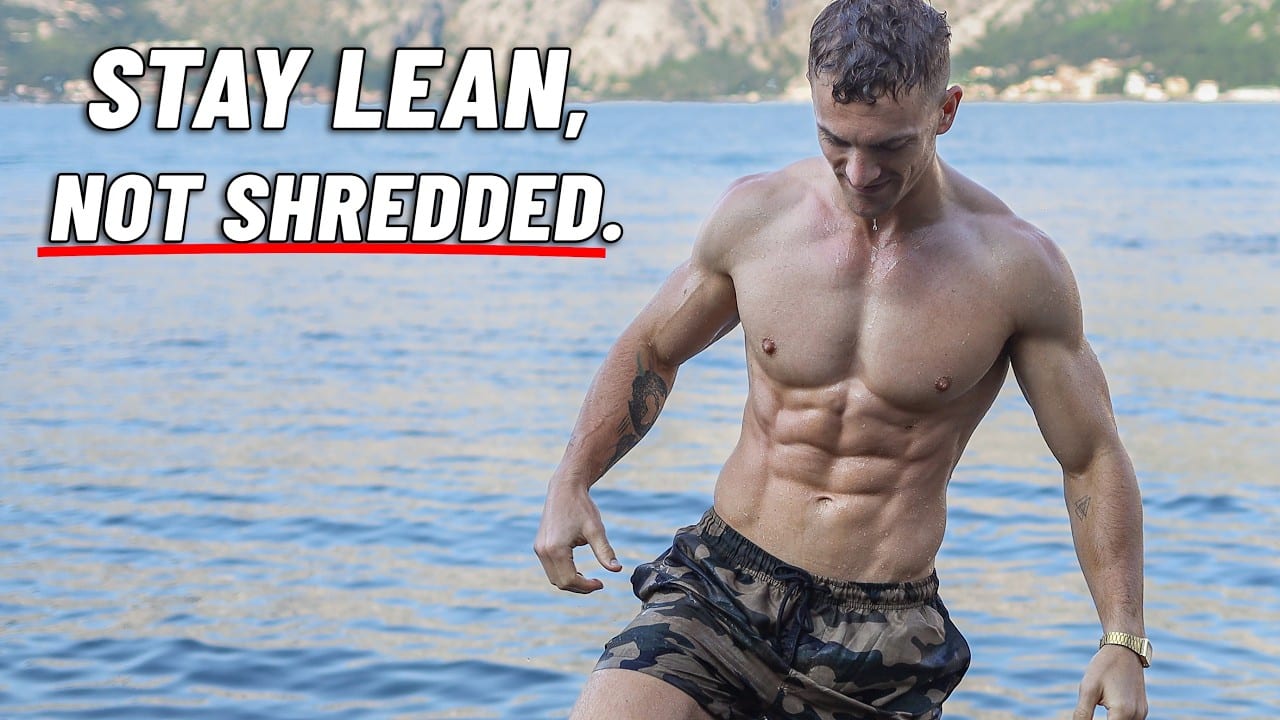
It’s about understanding sustainable strategies that work for your body long-term, especially if you’re natural and want to maintain visible abs at 30, 40, or even 50 years old.
In a recent video, fitness expert Jordan Lenny shared his proven framework for maintaining leanness without sacrificing health, happiness, or sanity.
Jump to:
The Critical Distinction: Shredded vs. Lean
Most people confuse getting shredded with staying lean, but Lenny emphasizes these are fundamentally different goals with vastly different consequences.
Getting extremely shredded—think stage-ready bodybuilder—comes with serious downsides: decreased energy, lower testosterone, poor mood, diminished libido, and even potential eating disorders. For most people, these symptoms don’t appear at 12-14% body fat, but maintaining extremely low levels creates a miserable existence.
You can get shredded but you can only stay lean. The point at which these symptoms start to affect a person is quite individualized but for most this stuff isn’t happening at 12, 13, 14% body fat.
Even competitive bodybuilders maintain peak conditioning only briefly during competition, often masking symptoms with supplements unavailable to average fitness enthusiasts.
Lean is sustainable. Low double-digit body fat with visible abs and enough muscle definition to look athletic? Entirely achievable without negative health consequences.
Build Muscle First, Get Lean Second
Lenny argues this sequence matters tremendously for two interconnected reasons.
First, building muscle before cutting fat proves far easier than attempting to gain muscle while already lean. Second, more muscle mass makes maintaining leanness exponentially simpler.
Why? Muscle tissue burns calories constantly—walking upstairs, sitting on your couch, even sleeping. Higher calorie requirements mean consuming more food before gaining fat.
Having more muscle costs a lot in calories so you’ll essentially constantly be using more when you walk up the stairs when you’re sat on the couch when you’re doing or not doing anything.
People maintaining leanness with minimal muscle typically compensate through high activity levels—climbers, cyclists, endurance athletes whose lifestyle naturally burns calories.
Without that built-in activity? You’ll need either conscious calorie burning through exercise or severe calorie restriction. Neither approach proves sustainable long-term.
Master Intuitive Eating Without Tracking Forever
While Lenny considers calorie and macro tracking the single most valuable tool for fat loss, he acknowledges most people won’t track forever.
That’s where intuitive eating becomes essential—but it requires careful calibration.
True intuitive eating means consuming food when hungry, stopping when satisfied, and naturally maintaining caloric balance. The catch? Satiety only reliably indicates caloric intake when eating predominantly whole foods.
Processed foods deliver high calories with minimal fullness. Whole foods provide satiety with fewer calories.
What you do need to figure out generally through trial and error is how lean do I have to eat in order to feel full whilst consuming roughly the number of calories that enables me to maintain my weight.
For most people, sustainable intuitive eating means primarily whole, unprocessed foods with occasional indulgences. Once calibrated through initial tracking and experimentation, this approach allows indefinite maintenance without obsessive monitoring.
Optimize Energy Levels Holistically
Maintaining leanness requires consistent physical and mental dedication—dramatically easier with high energy levels.
Beyond avoiding excessive calorie restriction, Lenny emphasizes multiple factors affecting daily energy:
- Nutritional content: Vitamin and mineral deficiencies commonly cause lethargy
- Sleep quality: No calorie surplus compensates for inadequate rest
- Testosterone levels: Impacted by diet, rest, alcohol consumption
- General health markers: Everything from hydration to stress management
Higher energy impacts training performance, recovery capacity, decision-making quality, willpower reserves, craving intensity, and motivation levels.
Really anything you do in life is easier with a bit more of a spring in your step.
Find Training You Actually Enjoy
While calorie restriction alone enables leanness, high activity levels make the process dramatically easier and more sustainable.
Resistance training proves essential for maintaining muscle mass while lean. Beyond that, cardio-focused activity becomes nearly mandatory for long-term success.
Lenny recommends exploring various activities—both resistance and cardio—until discovering something genuinely enjoyable. Sports particularly excel because focus shifts from burning calories to performance, making fitness a positive side effect rather than primary motivation.
Use Calorie Surpluses Strategically
Occasional overfeeding happens—holidays, special meals, social occasions. Most people’s instinct involves immediate damage control through extra cardio.
Lenny suggests a different approach: lift weights first.
Especially important following calorie deficits, surplus calories provide rare opportunity for enhanced training performance. Rather than immediately burning calories off, channel them toward muscle building.
I think instead of just seeking to burn these calories off as quickly as possible you should put them to good use and achieve some kind of hypertrophy stimulus that would otherwise have been quite difficult to achieve.
Extra calories enable better workouts, additional training volume, superior muscle pumps, and meaningful hypertrophy stimulus. Those calories exist in your system regardless—might as well extract maximum benefit.
Additional cardio remains optional afterward, but resistance training should take priority when body composition matters most.
The Long Game Mindset
Staying lean at 30, 40, and 50 requires abandoning short-term thinking. Extreme approaches might deliver rapid results but guarantee eventual failure.
Sustainable leanness emerges from reasonable body fat levels, adequate muscle mass, calibrated nutrition habits, optimized energy management, enjoyable training routines, and strategic surplus utilization.
None of this qualifies as rocket science. But mastering the art of long-term leanness requires patience, experimentation, and commitment to health over aesthetics alone.
The reward? Looking and feeling your best year after year without sacrificing quality of life in pursuit of unsustainable standards.