Mitochondrial health has emerged as a cornerstone of longevity research, with three leading scientists revealing groundbreaking insights into how we can optimize these cellular powerhouses.
From infrared light therapy to mitochondrial replacement and autophagy enhancement, the path to healthier aging may be more accessible than previously imagined.
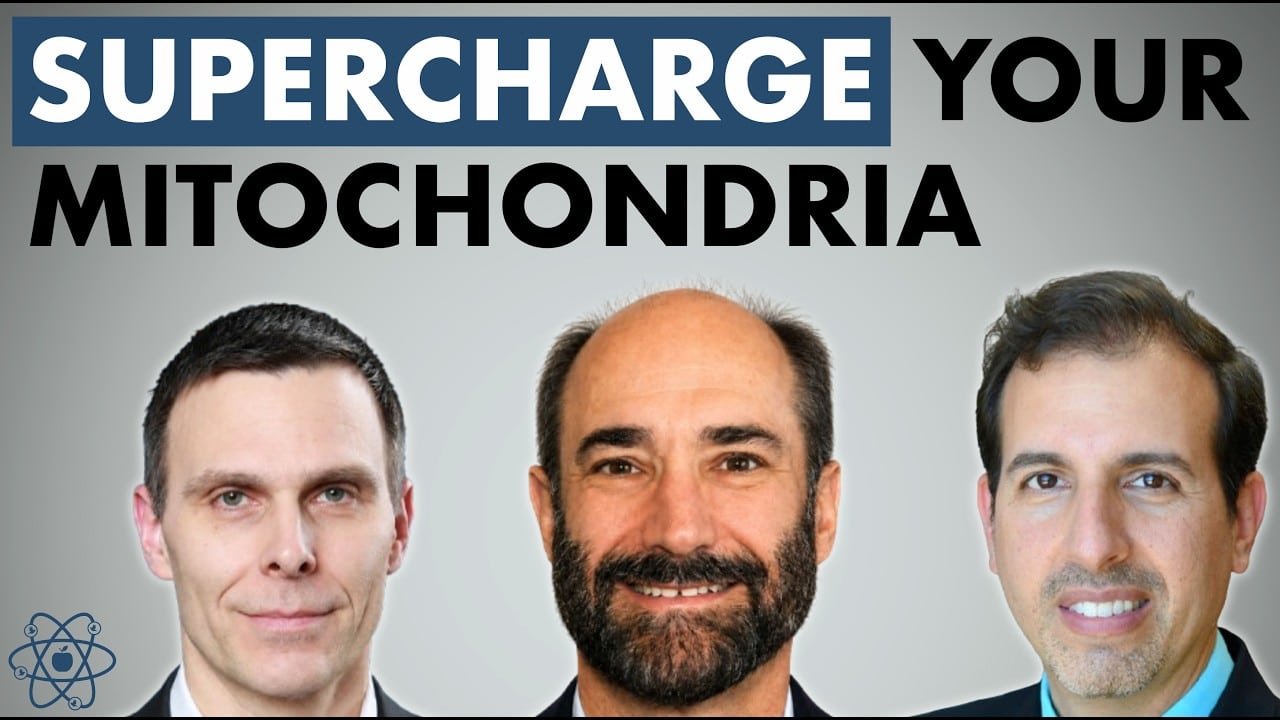
In a comprehensive discussion featuring Professor Roger Seheult, Professor Michael Snyder, and Professor Matt Kaeberlein, researchers explored cutting-edge strategies for extending both lifespan and healthspan.
The conversation reveals practical interventions available today alongside futuristic therapies on the horizon.
Jump to:
- Infrared Light: Activating Mitochondria Throughout Your Body
- Why Mitochondrial Health Determines Disease Risk
- Three Revolutionary Approaches to Mitochondrial Rejuvenation
- GLP-1 Agonists: Beyond Weight Loss
- The Supplement Controversy: What Actually Works?
- Autophagy: Your Cellular Recycling System
- Caloric Restriction: Finding the Human Sweet Spot
- Rapamycin: The mTOR Inhibitor
- Practical Takeaways for Optimizing Mitochondrial Health
Infrared Light: Activating Mitochondria Throughout Your Body
Professor Seheult’s research into infrared light therapy demonstrates a fascinating phenomenon called the abscopal effect. This process allows mitochondrial activation in one part of your body to trigger improvements in distant cells.
Seheult explained how infrared light at 850 nanometers penetrates human tissue, reaching cells throughout the body even when not directly illuminated.

If you want something simple that actually works, this is one of the most effective tools I’ve used to build strength, conditioning, and endurance without needing a full gym setup.
- Full-body training with one weight using swings, squats, and presses
- Solid cast iron build that feels stable and lasts for years
- Comfortable grip that makes high-rep workouts easier to handle
The tissue in the human body that has the highest concentration of mitochondria is the retina, and that’s what he studies. He’s been studying this for decades.
Researchers measured mitochondrial function by testing color discrimination in the retina. As mitochondrial ATP production drops 40 to 70% with age, color detection becomes impaired.
Testing the Abscopal Effect
The study divided participants into three groups: no light exposure, full body and head illumination, and body-only exposure with an aluminum container blocking light from reaching the retina directly.
Results showed statistically significant improvement in color discrimination across all illuminated groups, including those where the head was shielded.
He was able to show that upregulating mitochondria in the path of the light in one part of the body was actually able to improve the mitochondria output of ATP in other parts of the body that were not directly connected to this light.
Why Mitochondrial Health Determines Disease Risk
Mitochondria function as cellular batteries, producing energy essential for every bodily process. Their decline sits at the epicenter of chronic disease development.
Seheult compared mitochondria to car engines that generate heat as a byproduct of energy production. Without proper cooling systems, this oxidative stress damages the very organelles producing it.
- Heart disease: Linked directly to mitochondrial dysfunction
- Neurodegenerative conditions: Parkinson’s and Alzheimer’s show mitochondrial damage
- Kidney disease: Causative relationship with mitochondrial decline
- Metabolic disorders: Diabetes and obesity create oxidative stress cycles
The COVID-19 Connection
The pandemic revealed how mitochondrial health determines vulnerability to severe illness. Individuals with pre-existing oxidative stress faced dramatically higher mortality rates.
If you want something simple that actually works, this is one of the most effective tools I’ve used to build strength, conditioning, and endurance without needing a full gym setup.
- Full-body training with one weight using swings, squats, and presses
- Solid cast iron build that feels stable and lasts for years
- Comfortable grip that makes high-rep workouts easier to handle
Some of us are healthy and fit, and our engines are running nice and cool. Some of us are a little overweight or a little bit older. Maybe we’ve got diabetes or some other chronic disease. And as a result of that, our engines are not running as cool as they should be.
When SARS-CoV-2 infection added additional oxidative burden, those already running “hot” experienced mitochondrial failure.
Three Revolutionary Approaches to Mitochondrial Rejuvenation
Professor Michael Snyder outlined three therapeutic strategies that could fundamentally transform aging intervention. These approaches target different aspects of cellular decline.
Mitochondrial Transfer Therapy
Cells naturally swap mitochondria, selecting functional ones while eliminating damaged versions. Snyder envisions a future where fresh mitochondria injections provide cellular rejuvenation.
I think we’ll be in a world where you could get fresh mitochondria injections. You’ll need billions of them, but it’s not that hard to make billions of mitochondria.
Clinical trials testing this approach have already begun, marking the transition from theoretical possibility to practical application.
Senolytic Compounds: Eliminating Zombie Cells
Senescent cells accumulate with age, releasing inflammatory markers that damage surrounding tissue. Multiple companies are developing senolytics—compounds designed to selectively eliminate these dysfunctional cells.
Evidence suggests removing senescent cells improves healthspan and potentially extends lifespan. Current trials are testing safety and efficacy in human populations.
If you want something simple that actually works, this is one of the most effective tools I’ve used to build strength, conditioning, and endurance without needing a full gym setup.
- Full-body training with one weight using swings, squats, and presses
- Solid cast iron build that feels stable and lasts for years
- Comfortable grip that makes high-rep workouts easier to handle
Stem Cell Rejuvenation
Every organ contains stem cells responsible for tissue repair and regeneration. Their decline contributes significantly to aging-related deterioration.
Researchers are developing methods to rejuvenate existing stem cells or introduce fresh populations throughout the body, including challenging targets like brain tissue.
GLP-1 Agonists: Beyond Weight Loss
Medications like semaglutide and tirzepatide have demonstrated benefits extending far beyond glucose control and weight reduction. Snyder, who uses these medications himself, reports remarkable multi-system improvements.
They basically are improving cognition, cardiovascular disease, kidney. There’s like 12 areas now they’ve all been shown to have benefit. Some of them independent of the weight loss, meaning they’re probably having benefit even in their own right.
Many longevity researchers now consider GLP-1 agonists potential longevity drugs. Some practitioners recommend microdosing strategies to obtain benefits while minimizing side effects like excessive fat loss.
The Supplement Controversy: What Actually Works?
Snyder acknowledges the complexity surrounding supplement efficacy. While certain nutrients show clear benefits, others remain scientifically uncertain.
Evidence-Supported Supplements
- Vitamin D3: Associated with cardiovascular benefits and multiple health improvements
- Vitamin B12: Critical for those with deficiencies, particularly older adults
- Vitamin K2: Enhances D3 absorption when taken together
The NMN Question
NMN supplementation remains controversial despite theoretical benefits. It provides precursors that support mitochondrial energy production, which naturally declines with age.
If you want something simple that actually works, this is one of the most effective tools I’ve used to build strength, conditioning, and endurance without needing a full gym setup.
- Full-body training with one weight using swings, squats, and presses
- Solid cast iron build that feels stable and lasts for years
- Comfortable grip that makes high-rep workouts easier to handle
NMN is one of these controversial ones. Some people say it works, some people say it doesn’t. And maybe it depends on who you are.
Snyder takes NMN himself at age 70, reporting subjective energy improvements. However, he emphasizes that large-scale confirmatory studies remain absent.
Mediterranean diets rich in polyphenols show clear benefits, but whether isolated antioxidant supplements provide equivalent advantages remains uncertain.
Autophagy: Your Cellular Recycling System
Professor Matt Kaeberlein explored autophagy—the process by which cells break down and recycle damaged components. This mechanism becomes increasingly important as damage accumulates with age.
Laboratory research demonstrates that autophagy activation extends lifespan in simple organisms like nematode worms and fruit flies. Evidence in mammals remains more limited but suggestive.
Autophagy is a People call it like the cellular recycling center, right? It’s a way to degrade damage that has accumulated and we know damage accumulates with age.
The Fasting-Autophagy Connection
Extended fasting induces autophagy, though the required duration in humans remains unclear. Measuring productive autophagy in living people presents significant technical challenges.
Kaeberlein cautions against over-interpreting animal data. Claims that 16-hour fasts robustly boost autophagy represent extrapolations beyond current evidence.
If you want something simple that actually works, this is one of the most effective tools I’ve used to build strength, conditioning, and endurance without needing a full gym setup.
- Full-body training with one weight using swings, squats, and presses
- Solid cast iron build that feels stable and lasts for years
- Comfortable grip that makes high-rep workouts easier to handle
Furthermore, fasting benefits disappear if individuals compensate by overeating during feeding windows.
Caloric Restriction: Finding the Human Sweet Spot
Laboratory mice respond dramatically to severe caloric restriction—sometimes equivalent to 800-900 daily calories for humans. These extreme interventions produce the largest lifespan extensions in controlled environments.
However, Kaeberlein warns against directly translating mouse protocols to human application.
I think we know if you took most people and you put them on an 8 or 900 calorie a day diet that that’s going to be really challenging. There’s going to be physical challenges, there’s going to be emotional challenges, mental health challenges, social challenges.
Humans face pathogen exposure and environmental stressors absent in laboratory settings. Severe restriction compromises immune function precisely when robust defenses prove most critical.
The Muscle and Bone Density Problem
Low-calorie diets increase risks of inadequate muscle mass and reduced bone density. In humans, these factors drive disability and mortality far more significantly than in protected laboratory mice.
Kaeberlein recommends maintaining body composition between extremes—avoiding both excessive adiposity and dangerous under-muscling. Quality nutrition matters regardless of total caloric intake or dietary philosophy.
If you want something simple that actually works, this is one of the most effective tools I’ve used to build strength, conditioning, and endurance without needing a full gym setup.
- Full-body training with one weight using swings, squats, and presses
- Solid cast iron build that feels stable and lasts for years
- Comfortable grip that makes high-rep workouts easier to handle
Rapamycin: The mTOR Inhibitor
Rapamycin has demonstrated lifespan extension across every tested animal species. The drug inhibits mTOR, a protein central to growth regulation and nutrient sensing.
mTOR helps cells determine whether conditions favor growth and reproduction or stress resistance and maintenance. High nutrient availability signals growth; scarcity triggers conservation.
Rapamycin is a drug that tricks the cell into thinking that there isn’t much food around. So, it turns down mTOR sort of independent of the nutrient level that’s available in the environment.
This mTOR inhibition increases autophagy and stress resistance pathways. In mice and rats, rapamycin delays numerous age-related diseases while extending maximum lifespan.
Kaeberlein has used rapamycin personally, reporting benefits for inflammatory conditions like frozen shoulder. Growing numbers of physicians and researchers are exploring its potential as a longevity intervention in humans.
Practical Takeaways for Optimizing Mitochondrial Health
While futuristic therapies progress through development pipelines, several evidence-based strategies exist today.
- Increase infrared light exposure: Spend more time outdoors to naturally boost mitochondrial function
- Prioritize nutrient quality: Choose whole foods rich in polyphenols and antioxidants
- Consider targeted supplementation: Vitamin D3, B12, and potentially NMN based on individual needs
- Maintain optimal body composition: Avoid extremes in either direction while preserving muscle mass
- Explore GLP-1 agonists: Discuss potential benefits with healthcare providers, particularly if metabolic concerns exist
The convergence of mitochondrial transfer, senolytic therapies, and stem cell rejuvenation suggests a future where aging becomes increasingly modifiable. Until these interventions reach clinical availability, optimizing mitochondrial health through lifestyle remains the most accessible path to extended healthspan.
If you want something simple that actually works, this is one of the most effective tools I’ve used to build strength, conditioning, and endurance without needing a full gym setup.
- Full-body training with one weight using swings, squats, and presses
- Solid cast iron build that feels stable and lasts for years
- Comfortable grip that makes high-rep workouts easier to handle
As Snyder emphasized, longevity interventions only matter if they preserve health and vitality. Nobody wants extended lifespan accompanied by disability and suffering.
The goal isn’t merely adding years to life—it’s adding life to years through cellular optimization and mitochondrial rejuvenation.