What if the endless stretching, strengthening, and mirror-checking isn’t actually improving your posture?
Popular movement specialist Conor Harris recently dropped a perspective-shifting insight that challenges everything people think they know about fixing rounded shoulders and forward head posture.
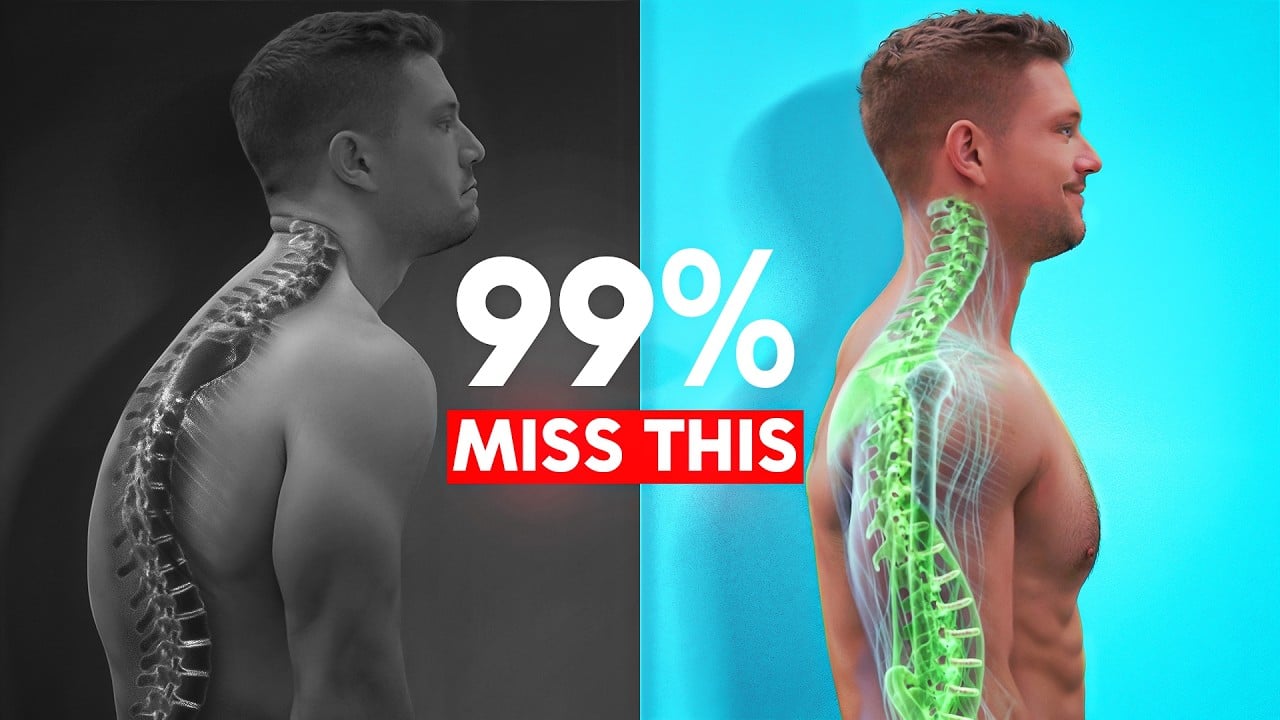
In a detailed YouTube video breaking down his client transformation results, Harris argues that trying to “fix” posture directly is precisely why most people fail.
Instead, he suggests focusing on something entirely different—and the results speak for themselves.
Jump to:
- Why Traditional Posture Fixes Miss the Mark
- What Posture Actually Represents
- The Real Solution: Restore Movement Capabilities
- A Real-World Case Study
- The Number One Movement Limitation
- Self-Assessment: The Thomas Test
- Training Hip Extension
- Addressing Asymmetries: Pelvis Rotation Test
- Corrective Exercise for Rotation
- The Bigger Picture
Why Traditional Posture Fixes Miss the Mark
Harris believes most people approach posture correction backward. They look at their reflection, notice rounded shoulders or a forward head position, then immediately jump to upper back exercises and chest stretches.
But this strategy treats symptoms rather than root causes.
This is a direct example of someone looking at their body thinking that they need to address what is going on as a result of their limitations, not actually addressing those underlying limitations.
Harris compares it to someone with frequent colds constantly treating their runny nose instead of strengthening their immune system. The visible posture issue is merely an outcome of deeper movement restrictions.
What Posture Actually Represents
According to Harris, posture isn’t about tight or weak muscles. It’s a strategy your body uses to remain upright against gravity based on available movement options.
Over time, sedentary habits, accumulated injuries, and reduced movement variability limit the body’s ability to express different movement patterns. Fewer movement options eventually manifest as what people label “bad posture.”
What posture actually represents is one strategy to stand upright against gravity. And it’s sort of this static representation of a strategy, not necessarily something else like tight or overactive or underactive muscles.
Interestingly, Harris notes that posture doesn’t directly correlate with pain. Some people have terrible posture without discomfort, while others with seemingly good alignment experience chronic pain due to compensatory movement patterns creating wear and tear on joints.
The Real Solution: Restore Movement Capabilities
Harris has found consistent success by focusing on what’s missing in someone’s movement repertoire rather than trying to force their posture into a “correct” position.
The best posture changes I’ve ever made consistently with my clients is trying to fix what’s missing within their movement, not trying to directly fix their posture.
This approach emphasizes improving range of motion and movement variability. When someone regains lost movement capabilities, posture naturally improves as a side effect.
A Real-World Case Study
Harris shared an example of a client with an extremely forward center of gravity—positioned far ahead of neutral alignment. Rather than stretching hip flexors or performing posture-specific exercises, Harris identified two primary movement limitations:
- Lack of hip extension (inability to bring the leg underneath the body)
- Collapsed foot position (unable to effectively engage heels and maintain arch structure)
By addressing these specific movement deficits, the client’s center of gravity shifted back dramatically without directly “working on posture.” The visual transformation happened as a natural consequence of restored movement.
The Number One Movement Limitation
According to Harris, lack of hip extension is by far the most common movement restriction he encounters. Whether someone has anterior pelvic tilt or swayback posture, they typically can’t genuinely extend their hip—bringing the leg underneath the body.
This limitation creates compensatory patterns throughout the entire body, affecting everything from foot position to shoulder alignment.
Self-Assessment: The Thomas Test
Harris recommends a simple self-assessment called the Thomas Test to evaluate hip extension capability. Here’s how to perform it:
- Find a firm surface like a table (beds are usually too soft)
- Position yourself with about half your thigh hanging off the edge
- Roll onto your back
- Hug one shin toward your chest until there’s no discomfort in hip fronts
- Allow the other leg to drop toward the table
- Let your head rest naturally with chin pointing up
What to look for: Your hanging leg should be able to touch or come very close to the table surface while staying aligned (not drifting sideways). If it stops short and won’t go further, that indicates limited hip extension.
Training Hip Extension
Harris demonstrates a foundational exercise to improve hip extension using a foam roller:
- Lie on a firm surface with half your thigh hanging off
- Place a foam roller under your upper thighs where hamstrings are located
- Ensure low back is completely flat and relaxed (add elevation if needed)
- Keep knees aligned with hips, feet neutral
- Pull one leg back with knee pointing at ceiling
- Gently push down into roller with the hamstring at 3-4/10 effort
- Breathe slowly: in through nose, out through mouth
- Hold for 8-10 breaths, 1-2 sets
The key is maintaining a relaxed, flat low back throughout without forcing anything. If tension appears in the hip front, adjustments to elevation may be necessary.
Addressing Asymmetries: Pelvis Rotation Test
Many people also experience postural imbalances from side to side. Harris offers a pelvis rotation assessment to identify rotational limitations:
- Lie on your back with feet comfortably close to glutes
- Keep feet and knees together
- Position arms directly out at shoulder level
- Allow knees and feet to fall together to one side
- Stop when opposite shoulder begins lifting
- Repeat on other side and compare range
The side with less range indicates a rotational limitation requiring specific corrective work.
Corrective Exercise for Rotation
For the limited side, Harris recommends a side-lying exercise with precise setup requirements:
- Lie on the limited side
- Place folded pillow under lowest rib (hip stays flat)
- Use double-folded pillow to keep head neutral
- Position body with 90-degree angles at both knees and hips
- Optional: place light resistance band above knees
- Exhale to engage side abs and bring ribs down
- Add slight posterior pelvic tilt without squeezing glutes
- Bring top foot slightly up wall
- Push top knee forward while maintaining heel contact (50% weight on heel)
- Raise top knee in line with top foot
- Hold while breathing, focusing on glute and ab engagement
Critical reminder: Move the knee forward first, then up. Forward movement is more important than height for proper glute activation.
The Bigger Picture
Harris’s approach represents a fundamental shift in thinking about posture correction. Rather than obsessing over mirror appearances and forcing bodies into “ideal” positions, he advocates for comprehensive movement restoration.
This philosophy has saved him considerable time and stress while producing superior long-term results with clients. By prioritizing movement capability tests over visual posture assessments, improvements happen more organically and sustainably.
I put more emphasis on and care more about the tests that reflect movement capabilities and range of motion than I do how much their posture improves.
The correlation Harris consistently observes between improved range of motion and better posture suggests that movement quality drives postural outcomes, not the other way around.
For anyone frustrated by stubborn postural issues despite dedicated corrective exercise routines, this perspective offers a refreshing alternative: stop trying to fix how you look and start restoring how you move.