Most people stretching their way through stiffness are missing the bigger picture.
Random stretches won’t fix what sitting, standing still, and moving in limited patterns have broken.
What the body actually needs are foundational positions that restore natural movement patterns—the kind humans were built to perform every single day.
Three simple movements can unlock hips, spine, and shoulders in ways that transform how everything feels within 30 days.
Jump to:
The Deep Squat: A Position, Not Just an Exercise
Squatting deep isn’t a workout move reserved for gym bros. It’s a fundamental human resting position that bodies were designed to comfortably hold.
Contrary to outdated advice, deep squats don’t harm knees. What actually damages joints is avoiding full range of motion entirely, leading to stiffness, weakness, and instability over time.
A proper deep squat delivers multiple benefits:
- Restores hip mobility
- Improves ankle motion
- Builds knee stability
- Reduces lower back stress
Your Squat Won’t Look Like Anyone Else’s
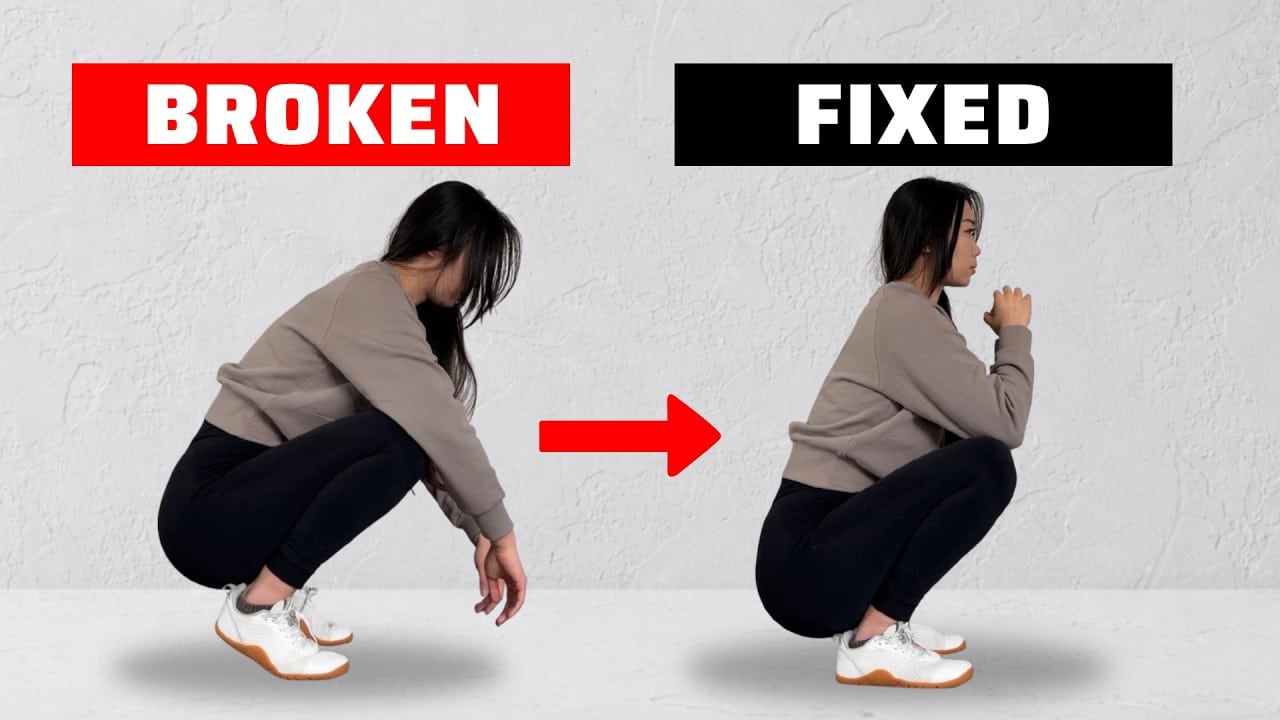
Body structure dictates squat form. Some people need wider stances with toes angled out. Others stay naturally upright but require more ankle flexibility.
Forcing a “textbook” squat ignores individual anatomy. Instead, find a stance where balance feels stable, relaxed, and centered over the midfoot.
If heels lift or chest collapses forward, that’s just feedback. Bodies need time relearning this position as safe and natural.
How to Practice
Start by sitting in the bottom position with heels elevated if necessary. Hold for approximately 60 seconds.
Gently shift weight side to side. Breathe deeply and consciously relax.
Perform this daily, gradually reducing support as hips, knees, and ankles adapt. Once comfortable in the bottom position, walking and lifting become noticeably easier.
The World’s Greatest Stretch: Reclaiming Rotation
Modern life steals something crucial: rotation.
Sitting facing forward. Driving facing forward. Working at screens in fixed positions. Thoracic spine stiffens, hip flexors shorten, lower back compensates for what the mid-back can’t do anymore.
Enter the world’s greatest stretch—a movement restoring thoracic rotation and hip flexor length simultaneously.
Execution Breakdown
Step into a long lunge position. Bring one elbow down toward the ground first.
Then rotate that same arm open toward the ceiling, following it with your eyes. Feel the stretch through the front hip and rotation through the mid-back.
This isn’t passive stretching. It’s active teaching—training the spine to rotate where it’s designed to, so the lower back doesn’t have to pick up slack.
Take several slow breaths on each side. No rushing. Just controlled movement paired with full exhales.
Done consistently, posture feels lighter. Stride becomes smoother. Lower back restriction diminishes significantly.
The Dead Hang: Decompression Through Suspension
Shoulders were engineered to hang, reach, and climb. Most adults abandoned these movements decades ago.
Bringing hanging back delivers powerful results:
- Spine gently decompresses
- Tight chest and lat muscles begin opening
- Grip and shoulder strength improve
- Posture restores through created space
Proper Hanging Technique
Hang with shoulders relaxed, not shrugged up toward ears. Keep ribs down rather than flaring forward. Maintain steady, calm breathing.
Build toward one full minute of continuous hanging. If that’s currently impossible, lightly tap feet down between shorter intervals.
Strength develops quickly here. Just a few minutes daily can noticeably transform how shoulders, neck, and back feel throughout normal activities.
Why These Three Movements Work
These aren’t arbitrary stretches pulled from generic flexibility routines. They’re foundational human positions that modern lifestyle has systematically removed.
Deep squatting restores lower body mechanics. Rotational lunging returns spinal mobility. Hanging decompresses and opens upper body.
Together, they address the three primary movement deficiencies plaguing desk workers, drivers, and anyone spending hours in fixed positions.
The 30-Day Transformation
Consistency matters more than intensity. Spending just a few minutes daily in these positions teaches the body that full ranges of motion are safe, normal, and necessary.
Within 30 days, many people report:
- Reduced chronic stiffness
- Improved posture without conscious effort
- Less compensatory pain in back and neck
- Greater ease in everyday movements
Bodies adapt remarkably fast when given proper inputs. These three movements provide exactly what years of restricted motion have taken away.
Stop Overcomplicating Movement
Feeling stiff, tight, or locked up doesn’t require complicated solutions. It requires returning to fundamental positions humans evolved performing naturally.
Skip the random stretching routines. Focus on deep squats, rotational lunges, and dead hangs instead.
These movements restore what sitting, standing still, and limited patterns have quietly stolen: the ability to move freely through space.
Commit to practicing them daily. Bodies remember what they’re designed to do—they just need consistent reminders.