You’ve heard it a thousand times: 10,000 steps a day is the golden ticket to weight loss and better health.
But what if that number was never actually based on science at all?
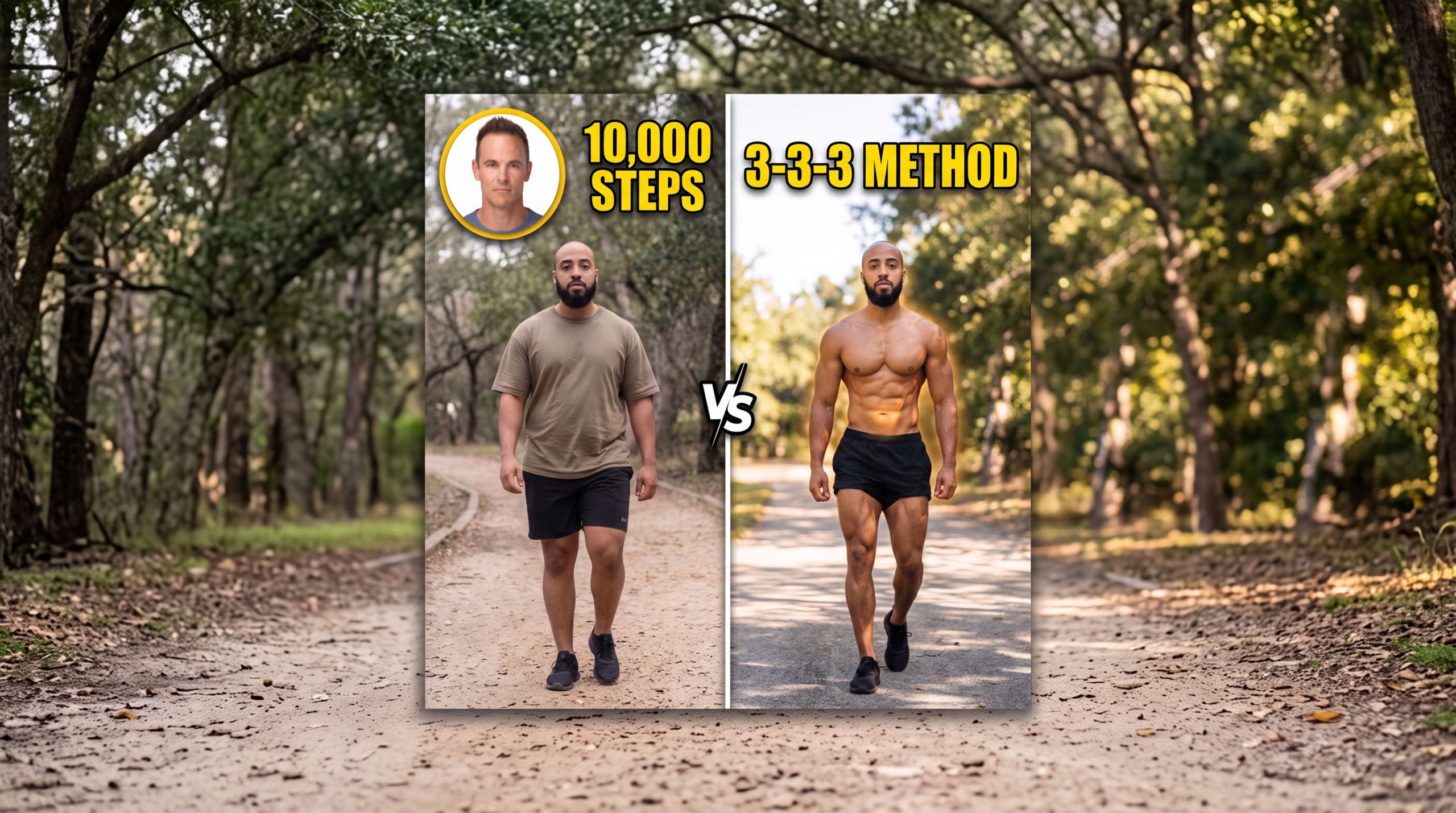
In a recent video, fitness creator Flex Fitness revealed something most people don’t know: the 10,000-step goal was invented in 1965 by a Japanese company selling pedometers, not by researchers studying fat loss.
More importantly, he introduced what he calls the “333 walking trick”—a structured 33-minute walk designed to target stubborn belly fat far more effectively than aimlessly chasing step counts throughout your day.
Jump to:
- Why 10,000 Steps Might Not Be the Answer
- Understanding the Three Stages of Fat Burning
- The First 3: Prime Your Fat Cells in Three Minutes
- The Second 3: 30 Minutes of Nasal-Only Fat Oxidation
- The Third 3: Lock in Proper Posture at Three Key Points
- Putting the 333 Method Together
- The Missing Piece: Nutrition and Insulin Control
- Is This Better Than Traditional Walking Recommendations?
- Who Should Try the 333 Walking Trick?
- Making It a Sustainable Habit
Why 10,000 Steps Might Not Be the Answer
The 10,000-step target has become so ingrained in fitness culture that most smartwatches come pre-programmed with it as the default goal.
Yet the origin story is surprisingly non-scientific. The number came from a 1960s marketing campaign in Japan for a device called “Manpo-kei,” which translates to “10,000 steps meter.”
While walking is undeniably beneficial for overall health, the problem lies in how most people accumulate those steps.
When you get up from your desk, walk 200 steps to the bathroom, sit back down, and then walk 300 steps through the grocery store later that afternoon, your fitness watch counts those steps. At the end of the day, your watch celebrates because you hit 10,000 steps.
The issue? Those scattered, low-intensity movements throughout the day don’t create the metabolic conditions necessary to burn stored body fat efficiently.
During the first several minutes of casual movement, your body primarily burns glucose and glycogen—not the stubborn fat sitting around your midsection.
Understanding the Three Stages of Fat Burning
To actually tap into belly fat, your body needs to progress through distinct metabolic phases.
Simply walking at a steady, comfortable pace might eventually lead to some fat oxidation, but it takes precious time—often 15 to 20 minutes—before fat becomes the primary fuel source.
Even then, if intensity remains too low or too high, fat burning efficiency suffers dramatically.
This is where the 333 protocol comes in, strategically sequencing three specific phases to maximize fat loss in minimal time.
The First 3: Prime Your Fat Cells in Three Minutes
The opening phase is all about preparation—clearing circulating glucose and signaling fat cells to release their contents.
For the first three minutes, and only the first three minutes, you walk as fast and purposefully as you possibly can while pumping your arms cleanly at your sides. You are not jogging, and you are not sprinting, but you are walking like you are late for a flight at the airport.
This brief surge of intensity triggers a cascade of metabolic events.
Fast walking rapidly depletes blood glucose, forcing muscles to pull sugar from circulation. Simultaneously, the sudden demand for energy prompts release of catecholamines—adrenaline and noradrenaline—which bind to receptors on fat cells.
These hormones essentially unlock fat stores, dumping fatty acids into the bloodstream where they become available as fuel.
In just three minutes, you’ve bypassed the lengthy warm-up period that wastes the first half of most casual walks.
The Second 3: 30 Minutes of Nasal-Only Fat Oxidation
Once fatty acids are circulating in your blood, the next challenge is actually burning them—not letting them get redeposited back onto your waistline.
This is where most people unknowingly sabotage their progress.
If you keep pushing hard, huffing and puffing through your mouth, your heart rate climbs too high. When your heart rate gets too high and you start breathing through your mouth, your body cannot deliver enough oxygen to your cells to burn fat.
Fat oxidation is an oxygen-intensive process. When intensity spikes and breathing becomes labored through the mouth, oxygen delivery can’t keep pace with demand.
The body then shifts back to burning primarily glucose, abandoning those freshly released fatty acids.
The solution? Nasal breathing for the entire 30-minute middle phase.
Breathing exclusively through the nose serves two critical functions:
- Increases nitric oxide production: Nasal breathing can boost nitric oxide in airways significantly, which dilates blood vessels and enhances oxygen delivery to tissues, including stubborn fat deposits.
- Acts as a natural pace regulator: Keeping your mouth closed physically prevents you from walking too fast, automatically keeping you in a lower heart rate zone where fat oxidation is maximized.
This moderate-intensity, oxygen-rich environment allows your body to burn fat as its primary fuel source—potentially drawing up to 85% of calories from stored body fat rather than circulating glucose.
The Third 3: Lock in Proper Posture at Three Key Points
Walking technique matters far more than most people realize.
Poor posture during walking not only reduces calorie burn but also allows core muscles—especially those responsible for a flat midsection—to remain completely disengaged.
The three-point posture lock transforms a passive stroll into active core conditioning:
- Eyes on the horizon, chin parallel to ground: Proper head alignment immediately corrects spinal positioning and opens airways for deeper, more efficient nasal breathing.
- Ribs down, belly button drawn 20% inward: This subtle contraction activates the transverse abdominis—the deep core muscle that acts like an internal corset, pulling the lower abdomen flat from the inside.
- Push through back big toe, squeeze glutes: Actively engaging glutes on each stride recruits the body’s largest muscle group, dramatically increasing metabolic demand while mechanically tightening the waistline.
When you walk with a relaxed, slouching core, your hip flexors do all the work while your glutes and your deep abdominal muscles stay completely asleep.
Maintaining these three postural checkpoints throughout your walk turns what would otherwise be a low-engagement activity into a full-body metabolic workout.
Putting the 333 Method Together
Here’s what the complete protocol looks like in action:
- Minutes 0-3: Fast, purposeful walking with arm pumping to clear blood sugar and unlock fat cells
- Minutes 3-33: Moderate-pace walking with exclusive nasal breathing to oxidize released fatty acids
- Throughout: Maintain the three-point posture lock—eyes up, core engaged, glutes firing
Total time commitment: 33 minutes.
Compare this to wandering aimlessly throughout the day trying to accumulate 10,000 steps, which can take 90 minutes or more of total walking time without ever creating optimal fat-burning conditions.
The Missing Piece: Nutrition and Insulin Control
Even the most perfectly executed walking protocol can’t overcome poor dietary choices.
You cannot out-walk a diet that keeps your insulin spiked all day long. If your insulin is elevated from the wrong foods, those fat cell doors will never open in the first place.
Chronically elevated insulin keeps fat cells locked down, preventing the release of stored fatty acids no matter how much you walk.
Frequent consumption of refined carbohydrates and sugars causes repeated insulin spikes throughout the day, essentially shutting off fat burning even during exercise.
For optimal results with any walking protocol, focus on dietary patterns that keep insulin levels stable: prioritize protein, healthy fats, and fiber-rich vegetables while minimizing processed carbohydrates and added sugars.
Is This Better Than Traditional Walking Recommendations?
The 333 method represents a structured, intensity-varied approach rather than simply accumulating steps.
Traditional recommendations to walk 10,000 steps daily still have merit for general health, cardiovascular fitness, and overall calorie expenditure. Research consistently shows that regular walking improves heart health, supports mental wellbeing, and helps maintain healthy body weight.
However, interval-based walking protocols may offer advantages for fat loss specifically. Studies on interval training demonstrate that alternating between higher and lower intensities can increase post-exercise calorie burn and may target abdominal fat more effectively than steady-state exercise.
The nasal breathing component adds an interesting dimension. While research on nasal breathing during exercise is still emerging, studies do confirm that nasal breathing increases nitric oxide production, which has documented benefits for vascular function and oxygen delivery.
The core engagement and posture emphasis also aligns with exercise science principles—actively recruiting more muscle groups during any activity increases total energy expenditure and can improve functional strength.
Who Should Try the 333 Walking Trick?
This protocol works particularly well for people who:
- Have limited time but want maximum fat-burning efficiency
- Already walk regularly but have hit a plateau with results
- Prefer outdoor exercise without equipment or gym access
- Want a structured approach rather than vague “move more” advice
- Are looking to specifically target stubborn midsection fat
It’s accessible for most fitness levels since the intensity during the bulk of the walk remains moderate and self-regulated through nasal breathing.
Those with respiratory conditions should consult healthcare providers before committing to extended nasal-only breathing during exercise.
Making It a Sustainable Habit
Consistency matters more than perfection with any fitness protocol.
Aim for the 333 walk at least four to five times per week for noticeable changes in body composition over four to six weeks.
Morning walks offer the advantage of exercising in a relatively fasted state, which may enhance fat oxidation further. However, the protocol works any time of day when you can dedicate 33 uninterrupted minutes.
Track your progress through measurements and how clothes fit rather than obsessing over scale weight, since you may simultaneously lose fat while building lean muscle in your legs and glutes.
Combine this walking strategy with attention to sleep quality, stress management, and consistent meal timing for comprehensive metabolic support.
The beauty of the 333 method lies in its simplicity and efficiency—no special equipment, no gym membership, just a strategic approach to something humans have been doing for millennia.
Whether or not 10,000 steps was ever the right target, one thing is clear: how you walk matters just as much as how far.