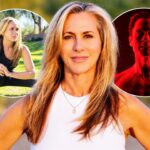
At 75, Dr. Natasha Vita-More is redefining aging—mind, body, and spirit.
She lifts weights, practices Pilates, and eats clean, nutrient-rich foods.

But what truly sets her apart is her daily commitment to challenge—not comfort.
A cancer survivor and leader in the longevity and transhumanism movement, Natasha’s philosophy isn’t about quick fixes or anti-aging fads.
Instead, it’s about resilience, mindset, and embracing discomfort for growth.
Here’s an inside look at her daily routine, revealing how she stays strong, sharp, and full of purpose while aging on her own radical terms.
Jump to:
- Her guiding principle: Do the hard things
- Movement is medicine: Her daily fitness routine
- The power of mindful mornings
- Food as fuel, not fashion
- Supplement smart—not blindly
- Sharpening the mind: Brain training through resistance
- Longevity mindset: A love for life and a dash of vanity
- Beyond biology: Cryonics and the future of humanity
- Evenings are for joy
- Final advice: Don’t let fear guide you
Her guiding principle: Do the hard things
“I do things that are challenging that I don’t want to do,” Natasha says.
This isn’t just a mantra—it’s her operating system. Whether it’s pushing through workouts when arthritis bites or rewriting habits from childhood sugar addiction, she treats discomfort like a training ground for growth.
“If we get too complacent in our comfortability, then we’re no longer challenged,” she adds. “And we’ve got to keep on challenging.”
Movement is medicine: Her daily fitness routine
Exercise is non-negotiable. Natasha works out seven days a week, reserving flexibility for one lighter day of walking or meditation.
Her go-to: Pilates. “It’s all about the core,” she explains. “As we age, we tend to shrink. Pilates helps us stand tall.”
She also strength trains, often starting with seated delt exercises and hammer curls. What makes her practice special is her willingness to adapt.
“Sometimes my body doesn’t cooperate,” she confesses. “I recently broke down crying at the gym because my shoulder wouldn’t lift a 45-pound weight. But I kept going.”
Flexibility, not perfection
For Natasha, movement isn’t about impressing anyone—it’s about functionality. “Being flexible is the most important. You don’t need to bodybuild or be a gymnast. But you do need to move.”
The power of mindful mornings
Natasha rises naturally around 6:00 or 6:30 a.m., but her day often begins at 4:00 a.m. with an unexpected burst of creativity.
“When I wake up in the early morning hours, I make space for writing affirmations or jotting down action items for the day,” she shares.
Afterward, she flows into Pilates, followed by quiet meditation—a practice that steadies her mentally and emotionally before tackling the day.
Food as fuel, not fashion
Natasha tends to skip breakfast, favoring a clearer mental focus in the morning. Her first meal comes later—a healthy, no-fuss brunch made of lean protein and vegetables.
“I keep it simple,” she says. “Today it’s salmon with avocado, kale, cucumber, lemon, sea salt, and pepper.”
She avoids heavy carbs and rarely fries food, preferring to cook lightly to preserve nutrients.
Favorite cuisines and treats
Japanese cuisine is her top choice. “I love sashimi and sushi,” she says. “But I adjust it to get enough vegetables.”
And yes, she eats ice cream and chocolate—occasionally. “If we’re too rigid with our taste buds, it can affect us emotionally too,” she laughs.
Supplement smart—not blindly
Natasha takes different vitamins at different times based on personal needs and lab data.
- Morning: Vitamin B complex, calcium, and a mild acidic agent.
- Evening: Vitamin D with K2, and omega-3.
Her supplement philosophy stems from precision. A nutritionist once discovered Natasha had a Vitamin K deficiency by testing a small sample of her hair and sending it to a German lab.
“No doctor told me. It took curiosity and testing to figure out what I really needed,” she explains. “You can’t guess this stuff.”
Sharpening the mind: Brain training through resistance
Work and intellectual play are key components of Natasha’s life. Despite being well past retirement age, she’s actively involved in scientific projects, gives speeches, and creates educational content related to longevity.
Why continue? “It’s not work for me, it’s play,” she says.
Why neuroplasticity matters
“Cognitive stress is good for us,” Natasha explains. “Doing things that are hard—especially things you don’t want to do—stretches your brain.”
She cautions against repetitive habits like doing crossword puzzles daily. “Once a routine sets in, the brain isn’t being challenged anymore,” she says.
Longevity mindset: A love for life and a dash of vanity
What keeps her going despite cancer, arthritis, and aging?
“Number one, love of life,” she says. “Number two, vanity. I was a model. I still care about how I look. But more than that, I care about how I feel.”
She refuses to give in mentally or physically when life gets hard. “When my friends say their bodies don’t work anymore, I tell them ‘Keep moving.’”
Beyond biology: Cryonics and the future of humanity
As a co-founder of the transhumanist movement, Natasha supports cryonics—preserving the body at ultra-cold temperatures in hopes of future revival.
“It’s the best safety net we have. The alternative is death,” she says. “I’m not saying I want to live forever… but having the option? That’s fascinating.”
She’s also keen on AI, even if she isn’t sure what its final impact will be. “Every technology has risks, but we navigate them. That’s what humans do.”
Evenings are for joy
In the evenings, Natasha and her husband Max Moore, a philosopher and futurist, slow down with wholesome routines—dinner, comedy, and starlit sky meditations.
“Laughter is one of the greatest anti-aging therapies,” she says. “We also connect through music and dancing a few times a week—it lifts the spirit.”
Final advice: Don’t let fear guide you
To her younger self—and to us—Natasha offers this:
“Don’t be afraid. Do the things that scare you. But do them with authenticity and integrity.”
Her life is a reminder that age doesn’t have to dictate energy, curiosity, or strength. Vitality comes from what we practice daily—how we move, think, eat, and love.
And most of all, it comes from never stopping.