At 56, Bill Maeda isn’t chasing six-pack abs or PRs in the squat rack—he’s chasing longevity.
The Honolulu-based fitness influencer, personal trainer, and colon cancer survivor has transformed his social media presence into a masterclass in sustainable health, blending real-world experience with unconventional wisdom.
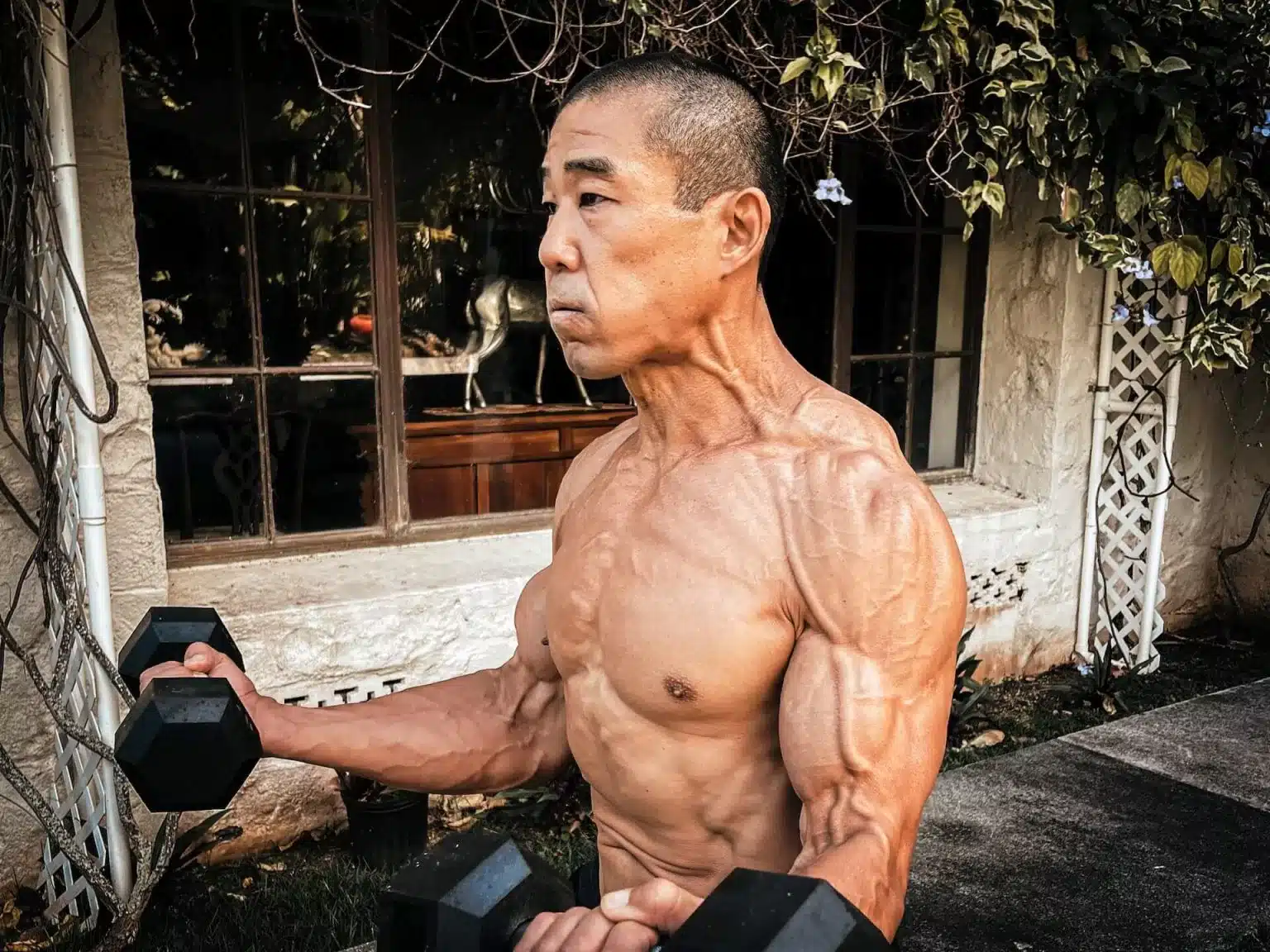
And while he’s best known for deadlifting barbells with his teeth or hanging upside down to train his hip flexors, it’s his candid approach to food, supplements, recovery, and sleep that has quietly become the real blueprint for aging well.
Jump to:
- A Lifestyle Built for the Long Haul
- No Macros, No Rules—Just Real Life Eating
- “Recovering Sugar Addict” with a Soft Spot for Taro Chips
- The Supplement Stack That Actually Works for Him
- From Overtraining to Overhauling: His Recovery Philosophy
- Aging with Purpose, Not Perfection
- Takeaways from Bill Maeda’s Longevity Strategy
A Lifestyle Built for the Long Haul
Maeda’s story is one of survival and evolution. After beating stage 3 colon cancer in 2012, he realized health isn’t just about performance—it’s about resilience. Now, over a decade later, his daily habits reflect that shift.
“I’m more concerned with my brain health than using creatine for muscle enhancement,” Maeda said in a recent interview with GQ. “At my age, that doesn’t matter as much. I’m not trying to be huge anymore.”
That sentiment echoes throughout his approach to food, movement, and supplementation. It’s not about fitting into anyone else’s routine—it’s about building one that fits your life.
No Macros, No Rules—Just Real Life Eating
Despite being a longtime trainer, Maeda’s diet is surprisingly relaxed. He’s tried keto, low-carb, and intermittent fasting. But none of those lasted. With a metabolism he describes as unusually fast—even at 56—Maeda says his body simply can’t handle restriction.
“I eat until I’m not hungry,” he explains. “Not until I’m stuffed. Not until I’m full. Just until the hunger goes away.”
He begins every day the same way: three scrambled eggs, white rice, and butter. From there, meals vary—sometimes homemade corned beef hash over rice, other times hamburger steak, pho, or even Taco Bell.
Vegetables, however, are rare. After losing his colon during cancer treatment, Maeda says most fibrous foods upset his gut.
“Since then, vegetables don’t really sit well with me, and that’s okay. I don’t feel like that’s having a negative effect.”
Still, he’s aware of the trade-offs. “I try to,” he says, referring to eating more produce. But he leans on supplements and some unique combinations to bridge the gap.
“Recovering Sugar Addict” with a Soft Spot for Taro Chips
If you want to see Maeda light up, ask him about snacks.
“I used to have a big problem with ice cream,” he admits. Dairy doesn’t sit well anymore, but his cravings haven’t vanished.
The new vice? Taro chips and dried apricots. Together.
“It’s kind of weird, but you get this sweetness, a little salty, the crunch, and the chew. I end up eating way too much of that.”
He’s working to cut down on sugar and caffeine, especially now that he recognizes how both affect sleep, blood sugar, and mood. A failed experiment with intermittent fasting—where he’d eat nothing for the first six hours of the day, only to binge on sweets later—taught him the importance of morning carbs.
“If I just have eggs and simple carbs with some butter in the morning, that sets my blood sugar right for a long time,” Maeda says.
The Supplement Stack That Actually Works for Him
Maeda isn’t dogmatic about supplements, but he knows what’s helped—and what hasn’t.
Here’s what he currently takes:
- Vitamin D3
- Magnesium
- Multivitamin
- Vitamin C (Ester-C)
- NAD (Nicotinamide Adenine Dinucleotide)
- Creatine (for brain health, not muscle growth)
- Caffeine (up to 500mg/day)
- Peptides: BPC-157 and TB-500
Interestingly, Maeda credits NAD and peptides with a significant improvement in gut health—an area many overlook after major surgeries.
“My gut has never been the same since chemo and surgery. But when I started peptides, I noticed a big improvement.”
He’s also cautious not to rely on supplements as magic pills. Early on, he mistakenly believed peptides would allow him to push harder in training. The result? Swollen ankles, aching knees, and burnout.
“Peptides didn’t work for my joints when I was overtraining. But now that I’m sleeping more and training less, they’re helping.”
From Overtraining to Overhauling: His Recovery Philosophy
In 2023, after years of posting intense workouts daily on social media, Maeda hit a wall. His body broke down.
“I was only getting four hours of sleep. I’m surprised I didn’t kill myself.”
So he did the unthinkable for a social media fitness figure: he stopped.
These days, he trains just two days a week, with a third day focused on mobility. But the real secret weapon?
Sleep.
“I’ve trained myself since I was a teenager to get by on four to five hours,” Maeda says. “Now, my biggest focus is retraining my nervous system and circadian rhythm to accept more sleep.”
Getting to bed by 9:30 p.m. is his new PR.
“I’ll skip workouts now if it means I get more sleep. That’s the bigger win.”
And it’s paying off—less swelling, better joint health, improved gut function, and more energy throughout the day without relying on excess caffeine.
Aging with Purpose, Not Perfection
There’s a refreshing humility in the way Maeda talks about his health. He’s jacked, sure. But the real gains are internal.
He doesn’t preach. He doesn’t sell cookie-cutter plans. He openly admits when something doesn’t work. And he puts sustainability over spectacle, even if that means fewer likes on Instagram.
“I’m just focusing more on getting my sleep right. My highest goal is to be able to keep doing this for a long time.”
For those feeling overwhelmed by rigid diets, intense programs, or age-related declines, Maeda offers something rare: permission to listen to your body, adapt, and age gracefully.
His message? You don’t have to be perfect to be powerful.
Just consistent. Self-aware. And kind to yourself.
Takeaways from Bill Maeda’s Longevity Strategy
If there’s a template to borrow from Maeda’s playbook, it’s this:
- Prioritize sleep over workouts
- Eat to feel nourished, not full
- Cut back on sugar and caffeine—but don’t obsess
- Use supplements to support, not replace, healthy habits
- Train less if it means healing more
- Don’t ignore gut health
- Define success on your terms—not by social media metrics
Because at the end of the day, longevity isn’t built in the gym—it’s built in your daily habits.
And if Maeda’s any indication, the long game might just be the best one.