Strong hips aren’t just about powerful squats or impressive deadlifts.
According to strength and performance coach Joe Linhardt, a former Army Ranger with over 15 years of coaching experience, most men are completely neglecting the very foundation of their movement and long-term health.
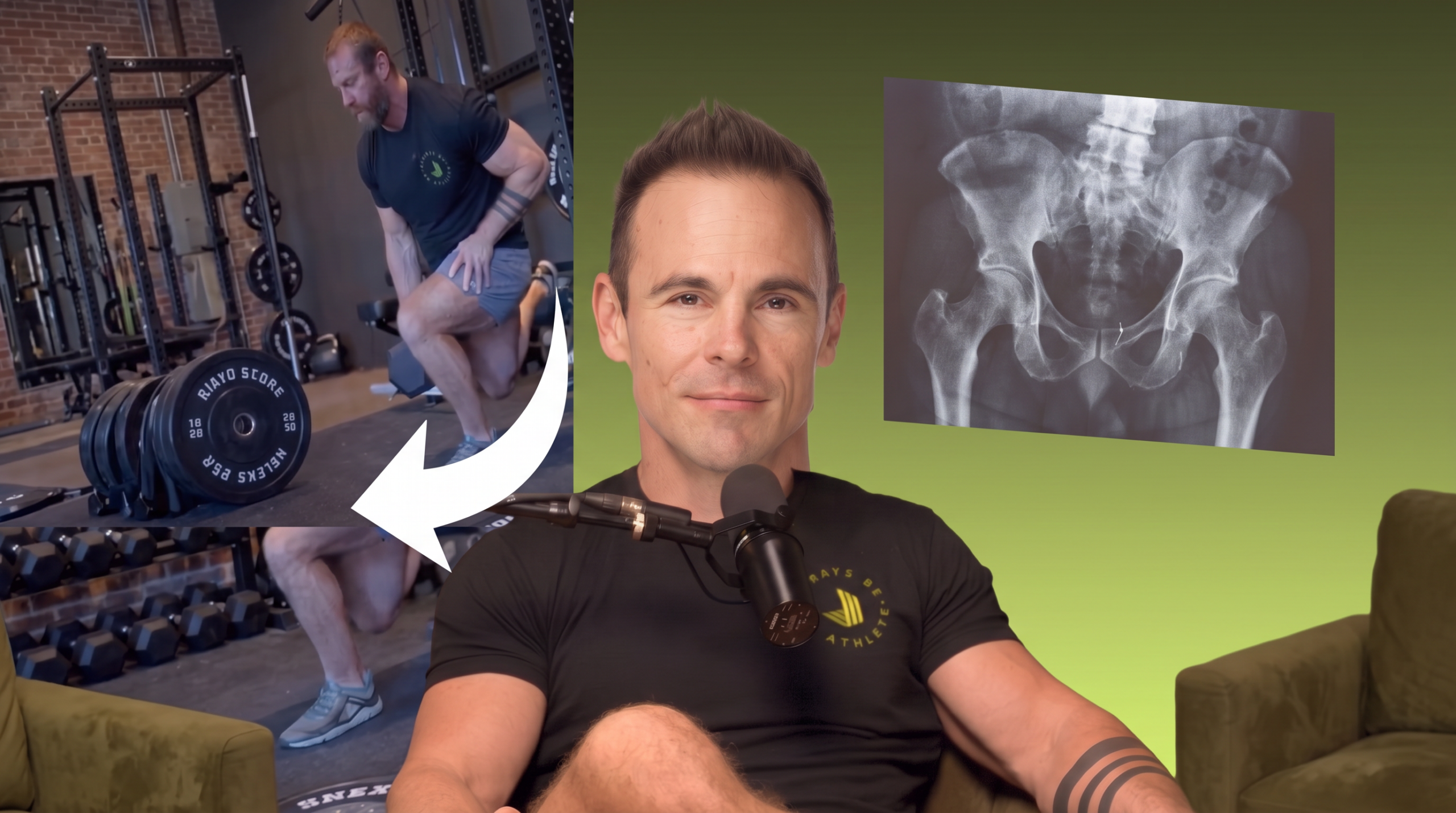
In a recent detailed discussion, Linhardt broke down exactly why traditional gym exercises fall short when it comes to hip health—and what you need to do instead.
The consequences of ignoring this advice? Everything from chronic back pain to serious mobility loss as you age.
Jump to:
Why Your Hips Matter More Than You Think
Linhardt doesn’t mince words about the importance of hip health.
The hips are the foundation for everything. Like we live and die by our hips. Keeping your hips healthy and strong and mobile is very important.
He’s witnessed this pattern repeatedly throughout his coaching career: when athletes lose hip mobility as they age, everything else deteriorates rapidly.
The hip complex consists of three critical areas that most people never think about: the hip joint itself (where the femur meets the pelvis), the lumbar-pelvic connection (where your lower back meets your sacrum), and the sacroiliac joints (the semi-mobile joints connecting your sacrum to your pelvic bones).
Men vs. Women: A Hip Health Gap
Interestingly, women tend to have fewer hip issues than men, despite historically facing more hip problems due to wider hips and conditions like osteoporosis.
The reason? Women typically train their glutes and hip abductors because they appreciate the aesthetic results. Their hormone profiles also naturally support better hip mobility.
Men, however, focus almost exclusively on bilateral movements like squats and deadlifts—exercises that build strength but create stiffness and ignore crucial movement patterns.
The Lower Cross Syndrome Problem
One of the biggest issues Linhardt sees is lower cross syndrome—a combination of weak glutes and abs paired with tight hip flexors and a tight lower back.
This creates chronic anterior pelvic tilt, where your pelvis tilts forward excessively.
The irony? Most men think their glutes are strong because they squat regularly.
Believe it or not, squats don’t train the glutes enough. Conventional deadlifts don’t train the glutes enough. And it doesn’t train them for the specific position they need strength at.
Glutes need to be strong at terminal hip extension—when you’re standing fully upright and they’re nearly fully contracted. This helps pull the pelvis down and back into proper alignment.
The Neglected Hip Flexors
Hip flexor training represents one of the most overlooked areas in men’s fitness programs.
Hip flexor training in general is one of the most neglected areas for men.
The hip flexor group includes the psoas muscles (which wrap from your femur to the base of your spine), the iliacus (which attaches to the back of your pelvic bone), and the rectus femoris (a quad muscle that also flexes the hip).
When hip flexors are tight, they yank the pelvis into anterior tilt. When they’re weak—especially in lengthened positions where the knee sits behind the hip—they can’t support proper movement during activities like running or throwing.
Traditional exercises like bench press, squats, and deadlifts do absolutely nothing for hip flexor strength or mobility.
Why Lunges Beat Squats (Yes, Really)
This might be Linhardt’s most controversial take, but he stands firmly behind it.
Things like Bulgarian split squats, lunges, and step-ups. I at my age prioritize those over heavy bilateral squatting. You heard me right and I’m going to stick by it. And guess what? There’s a good chance my legs are stronger than yours, too.
The reasoning is solid: lunges, Bulgarian split squats, and step-ups train independent hip articulation—something bilateral squats completely miss.
When you lunge forward, your pelvis has to articulate independently. One pelvic bone rotates back while the other moves forward. The sacroiliac ligaments must both allow this movement and stabilize against the rotational forces.
Without this ability, your gait slows dramatically as you age. You lose the strength and mobility to take big strides at a fast pace. Eventually, you can’t bend down under a car, pick things up from a lunge position, or even run to catch your toddler without risking injury.