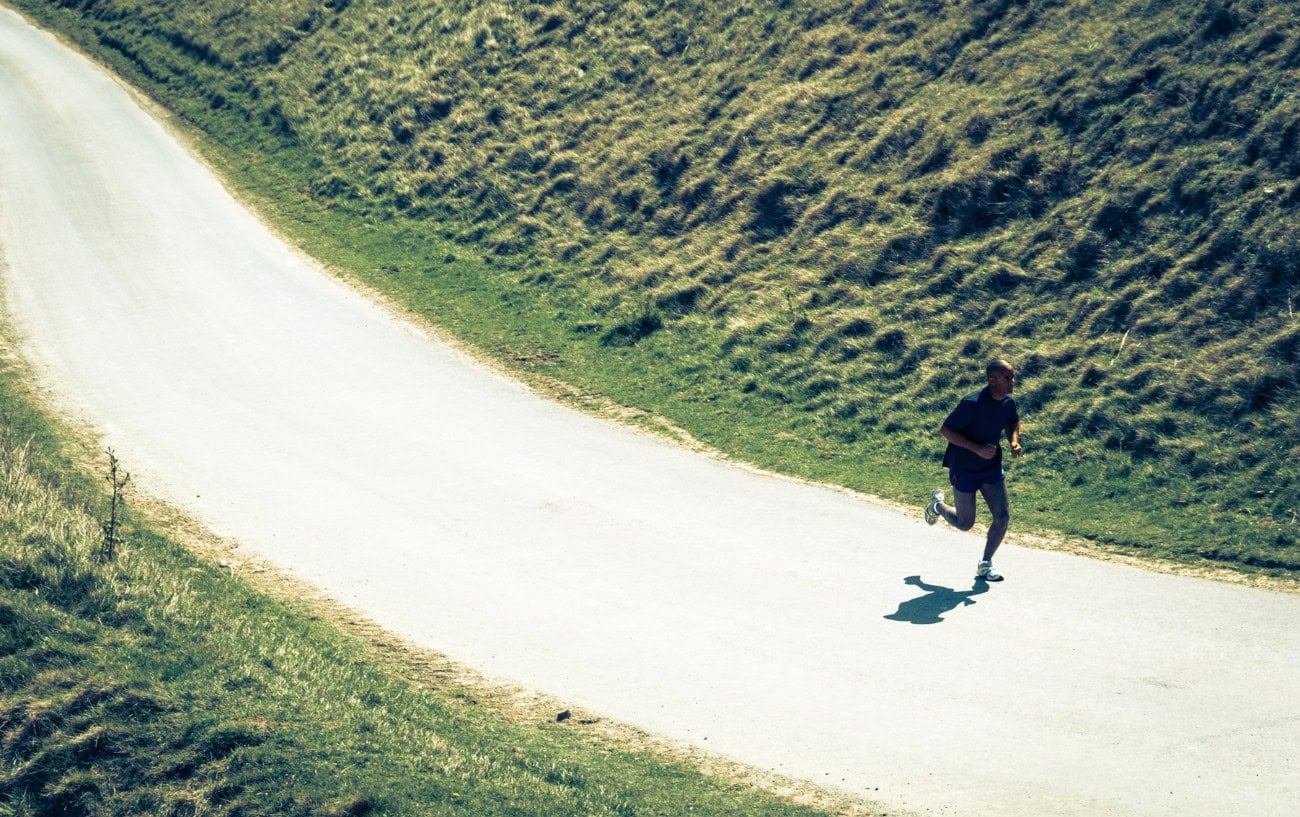
A 49-year-old man laced up his shoes and didn’t really stop running for over a year.
In one of the most extraordinary athletic case studies ever documented, a seasoned ultra-endurance runner completed a jaw-dropping 30,303 kilometers — roughly 18,830 miles — across 444 consecutive days, and scientists were watching his body the entire time.
What researchers found is both awe-inspiring and deeply alarming.
While his heart, blood work, and major organs held up surprisingly well, the hidden damage building beneath the surface tells a very different story — one that raises serious questions about the limits of human endurance.
Jump to:
The Challenge That Shouldn’t Be Possible
To understand the scale of what this runner pulled off, consider the numbers for a moment.
He averaged 68.3 kilometers — about 42 miles — every single day, took only four rest days across the entire 444-day stretch, and spent approximately nine hours on his feet daily at a steady pace of 7.7 km/h (4.8 mph).

If you want something simple that actually works, this is one of the most effective tools I’ve used to build strength, conditioning, and endurance without needing a full gym setup.
- Full-body training with one weight using swings, squats, and presses
- Solid cast iron build that feels stable and lasts for years
- Comfortable grip that makes high-rep workouts easier to handle
The route was mostly flat asphalt. No dramatic mountain terrain to blame for what came next.
Researchers from multiple institutions tracked his body obsessively throughout — collecting blood samples, muscle biopsies, ultrasound imaging, gut-microbiome data, body composition measurements, and organ scans before, during, immediately after, and for up to 17 months into his recovery period.
It is, without question, the most comprehensively documented ultra-endurance case study in history.
The Good News: His Body Held the Line
On paper, some of the findings are genuinely remarkable.
Despite running the equivalent of nearly three-quarters of Earth’s circumference, his total body weight dropped by only about three kilograms — roughly six pounds — most of which was fat loss. Hemoglobin levels, electrolytes, and testosterone all stayed relatively stable throughout the challenge.
Cardiac imaging revealed no major heart problems. His left-ventricular diameter and liver size increased slightly, but nothing that raised immediate red flags for researchers.
If you want something simple that actually works, this is one of the most effective tools I’ve used to build strength, conditioning, and endurance without needing a full gym setup.
- Full-body training with one weight using swings, squats, and presses
- Solid cast iron build that feels stable and lasts for years
- Comfortable grip that makes high-rep workouts easier to handle
He crossed the finish line. He finished what he set out to do. And by conventional markers, he looked okay.
But conventional markers, it turns out, don’t tell the whole story.
The Damage That Didn’t Show Up in the Mirror
Beneath those stable blood results, the runner’s musculoskeletal system was quietly being dismantled.
He developed painful injuries across more than 10 sites throughout his body. A tibial stress reaction caused significant pain and swelling midway through — yet he kept running, and it eventually resolved on its own. He also battled bilateral IT-band bursitis, tendinopathy, a partial tendon tear, meniscal abnormalities, and thickening of the plantar fascia.
That’s not a rough patch. That’s a body quietly screaming.
Muscle damage markers told an equally sobering tale. Creatine kinase — a key indicator of muscle breakdown — surged to 15 times its baseline level during the first month alone, then held at roughly three times baseline for much of the remaining challenge. Oxidative stress markers stayed elevated throughout.
If you want something simple that actually works, this is one of the most effective tools I’ve used to build strength, conditioning, and endurance without needing a full gym setup.
- Full-body training with one weight using swings, squats, and presses
- Solid cast iron build that feels stable and lasts for years
- Comfortable grip that makes high-rep workouts easier to handle
Iron stores declined significantly despite the runner taking oral iron supplements and receiving two intravenous iron infusions. He avoided full anemia, but only just.
The Performance Numbers Are Startling
Perhaps the most revealing data came from performance testing.
His jump height and explosive power dropped between 35 and 50 percent during the challenge. His muscles’ ability to generate force fell by around 25 percent. Strength recovered to near-normal levels within 10 months of finishing — but explosive power and full muscular strength had still not fully returned even 17 months after he stopped running.
Seventeen months. More than a year after completing the challenge, his body was still trying to rebuild what the road had taken.
His Mind Paid a Price Too
Physical damage was only part of the toll.
Between months 10 and 14 of the challenge, the runner reported episodes of forgetting his route and recent activities, alongside extended stretches of reduced motivation and low energy. Cognitive fog and emotional depletion had joined the injury list.
If you want something simple that actually works, this is one of the most effective tools I’ve used to build strength, conditioning, and endurance without needing a full gym setup.
- Full-body training with one weight using swings, squats, and presses
- Solid cast iron build that feels stable and lasts for years
- Comfortable grip that makes high-rep workouts easier to handle
Muscle biopsies added yet another layer of complexity. Markers tied to inflammation, cell death, and cellular recycling processes shifted during recovery, while proteins linked to mitochondrial function showed signs of rebuilding. Nearly all of his muscle fibers remained slow-twitch Type I — the endurance-adapted kind — suggesting his body had fully committed to one mode of operation.
What This Actually Means for Runners
It’s worth being clear: this is a single case report, not a universal law of what running does to every human body. No ethical research trial could ever deliberately assign this kind of stress to participants, which is precisely why this documentation is so scientifically valuable.
What it reveals is a critical distinction — the difference between systemic resilience and local recovery.
A person’s heart can look fine. Blood panels can come back clean. Pain can fade. Motivation can return. And yet, deep in the muscle tissue and connective structures, a debt is still being paid.
The ability to keep moving forward does not mean the body has actually absorbed what’s being asked of it.
High mileage training isn’t inherently dangerous. But relentless, unbroken mileage without adequate recovery can accumulate damage that stays invisible for months — until it becomes very difficult to reverse.
If you want something simple that actually works, this is one of the most effective tools I’ve used to build strength, conditioning, and endurance without needing a full gym setup.
- Full-body training with one weight using swings, squats, and presses
- Solid cast iron build that feels stable and lasts for years
- Comfortable grip that makes high-rep workouts easier to handle
For anyone pushing their limits out there, this story isn’t a warning to stop. It’s a reminder that finishing something extraordinary and fully recovering from it are two very different finish lines.