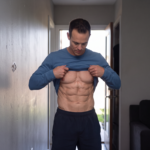
Getting six-pack abs doesn’t require magic pills or extreme diets.
It demands strategic training, smart nutrition, and consistency across 13 key principles that fitness expert Jeff Cavaliere swears by.

In a recent video, Cavaliere broke down his most effective tips for revealing abdominal muscles—and some might surprise you.
From proper hydration timing to breathing techniques most people get wrong, these evidence-based strategies address both training and nutrition for maximum results.
Jump to:
- Start Your Day With Water, Not a Shower
- Exercise Sequence Matters More Than Exercise Selection
- Divide Your Plate Like a Clock
- Stop Counting Reps, Make Them Count Instead
- Small Additions With Big Metabolic Impact
- Master the Art of Breathing During Ab Work
- Build Sustainability With Strategic Treats
- Frame Your Masterpiece With Serratus and Obliques
- Flip the Traditional Fitness Pyramid
- Avoid Extreme Tactics and Unnecessary Restrictions
Start Your Day With Water, Not a Shower
Before reaching for that morning coffee or jumping in the shower, Cavaliere emphasizes drinking 16 to 20 ounces of water immediately upon waking.
Morning dehydration is universal, and this simple habit sets the foundation for everything else. Without proper hydration, both training performance and nutritional efforts suffer significantly.
Water is going to be essential because if we don’t have it, every other training tip and even every other nutrition tip in this video is going to suffer if you don’t.
Consider investing in reminder water bottles to maintain hydration throughout the day.
Exercise Sequence Matters More Than Exercise Selection
Most people focus on which ab exercises to perform while ignoring when to perform them during their workout.
Cavaliere reveals that sequencing dramatically impacts results. The key lies in identifying what’s actually moving during each exercise.
The Optimal Ab Exercise Order
- Bottom-up movements first: Exercises where legs move while the torso stays relatively still (like reverse crunches or leg raises)
- Combined movements second: Exercises where both legs and torso move together (like bicycle crunches)
- Top-down movements last: Exercises where only the upper body moves (like standard crunches)
Bottom-up exercises require the most energy because you’re lifting the additional weight of your legs. Placing them first ensures you can perform them with proper intensity before fatigue sets in.
Top-down movements can still be performed effectively even when fatigued, making them perfect finishers.
Divide Your Plate Like a Clock
Nutrition simplification starts with visualization. Cavaliere recommends imagining your plate as a clock face, focusing on two specific times: 9:00 and 9:20.
This creates three distinct portions for different macronutrients:
- Largest portion (12:00 to 9:00): Fibrous carbohydrates—leafy greens, cruciferous vegetables, anything that crunches
- Second largest (9:00 to 9:20): Protein sources, whether plant-based or animal-based
- Smallest portion (9:20 to 12:00): Starchy carbohydrates like rice, potatoes, or pasta
The fact is, guys, when you divide your plate like this, nutrition becomes a lot easier. Counting calories is not something you have to do. And at the end of the day, when we get our nutrition in check, the six-pack abs are a hell of a lot easier to see.
Healthy fats should be incidental—used for cooking rather than piled on top.
Stop Counting Reps, Make Them Count Instead
Racing through 50 sloppy crunches delivers far less benefit than 15 deliberate, quality contractions.
Cavaliere emphasizes trading quantity for quality by slowing down movements and focusing on muscle contraction rather than arbitrary rep targets. What appears slow actually produces faster visible results.
Intentional contractions engage muscle fibers more effectively than momentum-driven repetitions.
Two Techniques for Better Lower Ab Engagement
First, ensure your pelvis actually moves through space during lower ab exercises. Without spinal flexion, you’re missing the full range of motion.
Second, contract your adductors by squeezing knees together or crossing feet during movements. This additional stability from the adductors onto the pelvis creates better leverage for lower abdominal fibers to pull effectively.
The difference in muscle activation becomes immediately noticeable.
Maximize Top-Down Movements With These Cues
During crunches and similar exercises, focus on lifting shoulder blades completely off the ground rather than just bending your neck.
Cavaliere introduces the “folding rib cage” technique—imagine a line directly beneath your rib cage, then fold your body in half along that line. This mental cue dramatically enhances contraction quality across all crunch variations.
Small Additions With Big Metabolic Impact
Individual fat-loss supplements and spices offer marginal benefits alone, but combined they create measurable differences.
Cavaliere incorporates three items daily:
- Green tea extract: Metabolism-boosting supplement
- Red pepper flakes: Added to dinner for thermogenic effects
- Cinnamon: Large amounts in morning oatmeal for improved insulin sensitivity
These additions require minimal effort and cost while supporting fat loss through increased metabolism, appetite reduction, and better insulin sensitivity.
The Ginger Advantage
Ginger serves double duty by decreasing insulin sensitivity and reducing muscle soreness.
If you’re embarking on your journey to a six-pack, but each workout leaves you too sore to get much out of the next one, then this is where this can have an impact in both ways.
Cavaliere simply eats a pinch of pickled ginger each morning. Consistency matters more than quantity.
Master the Art of Breathing During Ab Work
Proper breathing technique separates mediocre ab workouts from exceptional ones.
During crunches, exhale while simultaneously pulling your stomach down rather than pushing it out. This “cinching” action activates the transverse abdominis—the deep core muscle responsible for a tight, flat appearance.
Without transverse abdominis engagement, abs can appear bloated and distended despite being well-developed.
Build Sustainability With Strategic Treats
Cavaliere enjoys frozen yogurt with whipped cream nightly, demonstrating that enjoyment sustains long-term success.
If you hate the process, then you’re not going to get to where you want to be. Ultimately, if getting a six-pack is torture, you’re going to stop before you ever do.
Choose healthier treat options that satisfy cravings without derailing progress. Sustainability trumps perfection every time.
Frame Your Masterpiece With Serratus and Obliques
Visible abs without developed obliques and serratus resemble a picture without a frame—technically present but visually incomplete.
These “framing muscles” direct visual attention toward your midsection and create the tapered appearance that makes abs truly impressive.
The Corkscrew Exercise
This single movement targets both muscle groups simultaneously. Twist while coming up, press down through hands for serratus protraction, and rotate for oblique engagement.
While countless exercises work these areas, the corkscrew delivers comprehensive development efficiently.
Flip the Traditional Fitness Pyramid
Many people build their ab-seeking strategy with cardio or ab training as the foundation.
This approach fails consistently because nutrition must form the base of any six-pack plan. Ab training and cardio matter, but they cannot compensate for nutritional deficiencies.
If this isn’t in place, the saying goes, you can’t out train a bad diet. No matter what you do up here in terms of working out, it’s never going to undo what you’re doing wrong down here with your nutrition.
Prioritize eating habits before obsessing over workout volume or exercise selection.
Avoid Extreme Tactics and Unnecessary Restrictions
Eliminating apples, grapes, or carrots because of sugar content represents the kind of extreme thinking that sabotages progress.
Cavaliere compares such tactics to throwing deck chairs off the Titanic—missing the bigger picture entirely. These minor restrictions distract from addressing actual dietary problems.
Focus on substantial changes like portion control, processed food reduction, and consistent protein intake rather than demonizing healthy whole foods.
Sustainable ab development requires strategic training sequences, simplified nutrition frameworks, quality over quantity in repetitions, smart supplementation, proper breathing mechanics, enjoyment-based sustainability, complete core development, and avoiding extremes. These 13 principles work synergistically—implement them consistently rather than searching for shortcuts that don’t exist.