Scrolling through your phone might be doing more than just killing time.
According to face exercise advocates, one overlooked muscle is silently reshaping your lower face with every downward glance and frown.
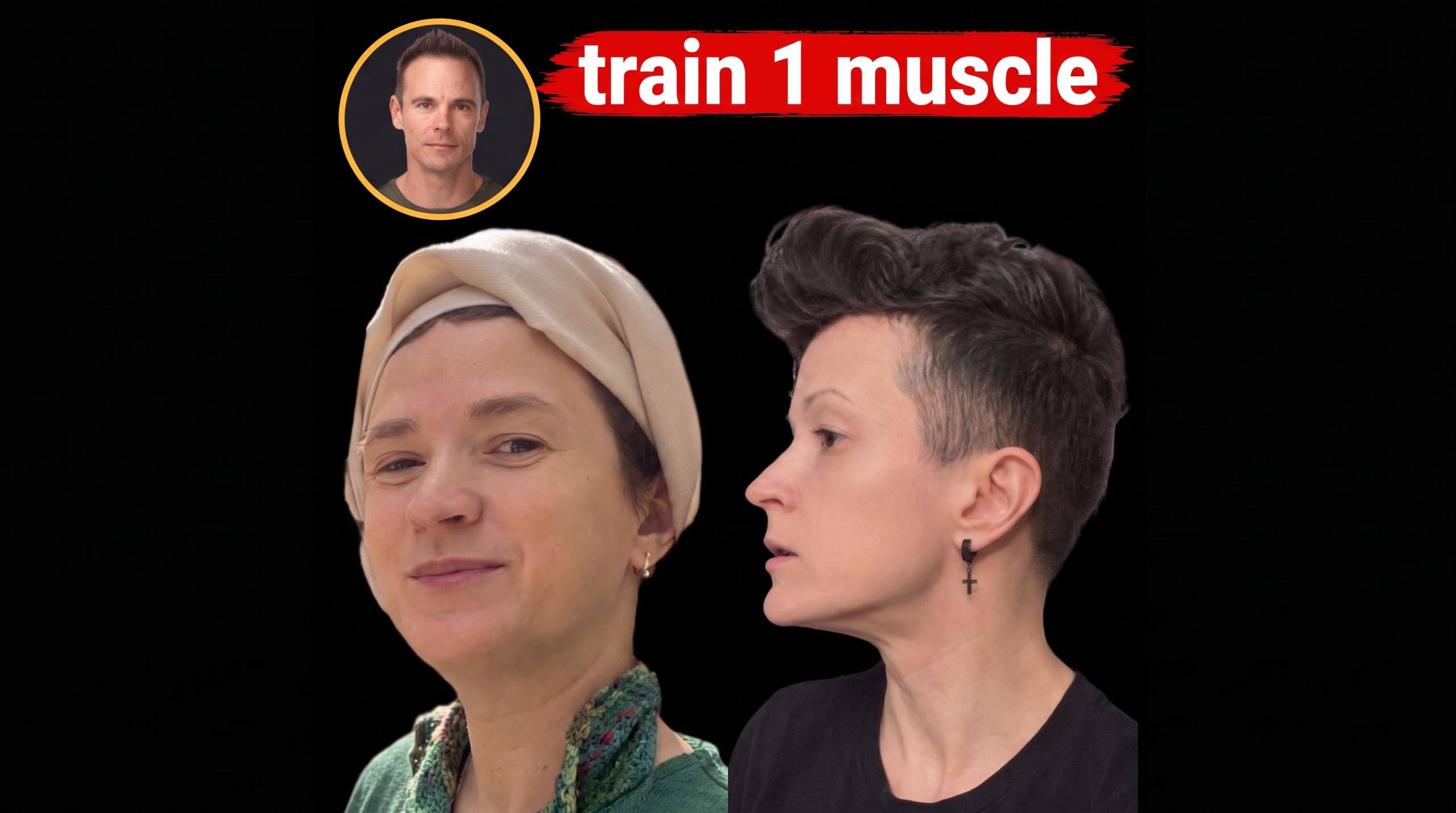
The platysma muscle—a thin sheet stretching from chest to jawline—is being blamed for jowls, sagging, and marionette lines that seem to appear out of nowhere.
But can a simple daily exercise really reverse years of downward pull, or is the science more complicated than social media suggests?
Jump to:
The Muscle No One Talks About
The platysma isn’t hiding deep within your body.
It’s a massive, paper-thin muscle originating in your upper chest, spanning across your collarbone, and climbing up your neck to anchor directly into your jawline and mouth corners. Cleveland Clinic anatomy resources confirm this broad origin and insertion pattern.
Because of where it attaches, face exercise proponents describe the platysma as acting like downward-pulling cables.
Every time you frown, strain, look down into your phone, this muscle, platysma, pulls downwards, literally dragging your cheeks, mouth corners, and jawline down with it.
Over time, this constant tension is said to create marionette lines, blur your jawline, and form jowls.
But the reality is more nuanced than a single muscle bearing all the blame.
What Really Causes Lower Face Sagging
Facial aging doesn’t happen because one muscle misbehaves.
Research published in Dermatologic Surgery and plastic surgery literature shows that lower face changes result from multiple overlapping factors:
- Collagen loss: Skin loses structural support over time
- Fat redistribution: Volume shifts downward and inward
- Bone resorption: Facial skeleton changes shape with age
- Gravity: Constant downward force on all tissues
- Genetics: Individual predisposition plays a major role
The platysma does develop visible bands—those vertical cords some people see when tensing their neck—and these do become more prominent with age.
But pinning jowls, marionette lines, and jawline blur entirely on one muscle oversimplifies a complex biological process.
The Platysma Lowering Flex Exercise
Despite the complexity of facial aging, face exercise enthusiasts believe targeted muscle work can make a visible difference.
The proposed exercise trains the platysma through direct isometric tension.
How to Perform the Movement
Sit tall with shoulders pulled back and down. Keep your head straight, chin parallel to floor.
Pull mouth corners back and downward, exposing your entire bottom row of teeth in an intense grimace.
Contract the neck muscles until two to four vertical bands strain visibly beneath the skin from your jaw down to your collarbone.
Lock in maximum tension for 5 seconds. Slowly relax back to neutral over 2 seconds.
Perform three sets of 10 to 12 repetitions daily.
The Claimed Benefits
According to proponents, this exercise delivers three key effects:
- Tones the muscular sheet: Prevents sagging by strengthening underlying tissue
- Resists downward pull: Builds controlled stress that counteracts gravity
- Boosts circulation: Pushes blood flow to neck area, improving tone and complexion temporarily
This is just one small exercise, and you can see the immediate strong effect.
The promise of immediate, visible results is certainly appealing.
What Science Actually Says About Face Exercises
The evidence here is more mixed than social media suggests.
A 2018 study published in JAMA Dermatology by researchers at Northwestern University did find some promise. Participants who performed facial exercises daily for 20 weeks showed modest improvements in cheek fullness as rated by dermatologists.
But that study had important limitations: small sample size, long commitment required, and improvements were subtle—not the dramatic before-and-after transformations often showcased online.
More importantly, claims of immediate visible results lack strong scientific backing.
Most research showing any benefit required months of consistent daily practice, not single-session transformations. Temporary flushing from increased blood flow might create a short-lived glow, but that’s different from structural change.
Some dermatologists caution that repetitive facial movements could actually worsen wrinkles over time, similar to how frowning and squinting create expression lines.
The American Academy of Dermatology offers mixed guidance, acknowledging potential benefits while emphasizing that evidence remains limited.
The Circulation and Tone Argument
Boosting blood flow to your neck and face does happen during exercise—any exercise.
Increased circulation delivers oxygen and nutrients while flushing metabolic waste. This can create temporary improvements in skin appearance: better color, slight plumping, enhanced glow.
But temporary is the key word.
These effects fade within minutes to hours after exercise ends. Long-term improvements to skin tone and texture require sustained changes—collagen production, improved hydration, reduced inflammation—that go beyond momentary blood flow increases.
Building Muscle to Resist Gravity
Can strengthening the platysma actually resist downward pull and prevent sagging?
The theory sounds logical: stronger muscles provide better structural support, similar to how core strengthening improves posture.
But facial anatomy differs significantly from skeletal muscle elsewhere in your body.
The platysma is extremely thin—almost translucent—and doesn’t have the same capacity for hypertrophy (growth) as thicker muscles. Its primary function involves facial expression, not load-bearing support.
No high-quality research demonstrates that isometric platysma exercises reverse jowls, eliminate marionette lines, or restore jawline definition in the way strength training builds biceps or strengthens legs.
Who Might Benefit Most
If you’re considering face exercises, realistic expectations matter.
People in their 20s and 30s with minimal signs of aging might maintain muscle tone and possibly slow early changes—though genetics, sun protection, and overall health likely matter more.
Those with moderate aging might see subtle improvements after months of consistent practice, based on the Northwestern study findings.
But expecting dramatic reversal of advanced sagging, deep marionette lines, or significant jowls through exercise alone isn’t supported by current evidence.
Medical treatments with proven efficacy include:
- Botox injections for platysma bands
- Dermal fillers for volume loss
- Skin tightening procedures (radiofrequency, ultrasound)
- Surgical options like neck lifts or platysmaplasty
The Bottom Line on Platysma Training
Understanding platysma anatomy reveals one piece of the facial aging puzzle.
This broad, thin muscle does connect chest to jawline, and it does contract during certain expressions. Visible platysma bands are real and can become more prominent over time.
But blaming one muscle for all lower face changes oversimplifies complex biological processes involving skin, fat, bone, and genetics.
Face exercises might offer modest benefits after months of daily practice, based on limited research. The 2018 JAMA Dermatology study provides the strongest evidence, showing subtle improvements in cheek fullness—not dramatic jawline transformation.
Claims of immediate visible results remain largely unsupported by scientific literature.
If you enjoy face exercises, find them relaxing, and maintain realistic expectations, they’re unlikely to cause harm for most people. Just don’t skip proven strategies: sun protection, quality skincare, healthy lifestyle habits, and evidence-based medical treatments when desired.
Your face ages through multiple mechanisms working simultaneously. No single exercise can override them all—no matter how intensely you grimace in the mirror.
Sources
- JAMA Dermatology 2018 – Association of Facial Exercise With the Appearance of Aging (Alam et al., Northwestern University) – https://jamanetwork.com/journals/jamadermatology/fullarticle/2666045
- Cleveland Clinic – Platysma Muscle Anatomy – https://my.clevelandclinic.org/health/body/platysma-muscle
- Dermatologic Surgery journal – Facial aging mechanisms and multifactorial causes
- American Academy of Dermatology – Guidance on facial exercises and aging