Mobility issues plague modern life—stiff hips, tight shoulders, aching backs.
But five bodyweight exercises can fix almost every mobility problem, no gym required.
These movements target the exact areas that get stiffest from sitting, desk work, and sedentary lifestyles.
And when combined into a simple 15-20 minute routine, they restore mobility most people thought was gone forever.
Jump to:
The World’s Greatest Stretch Lives Up to Its Name
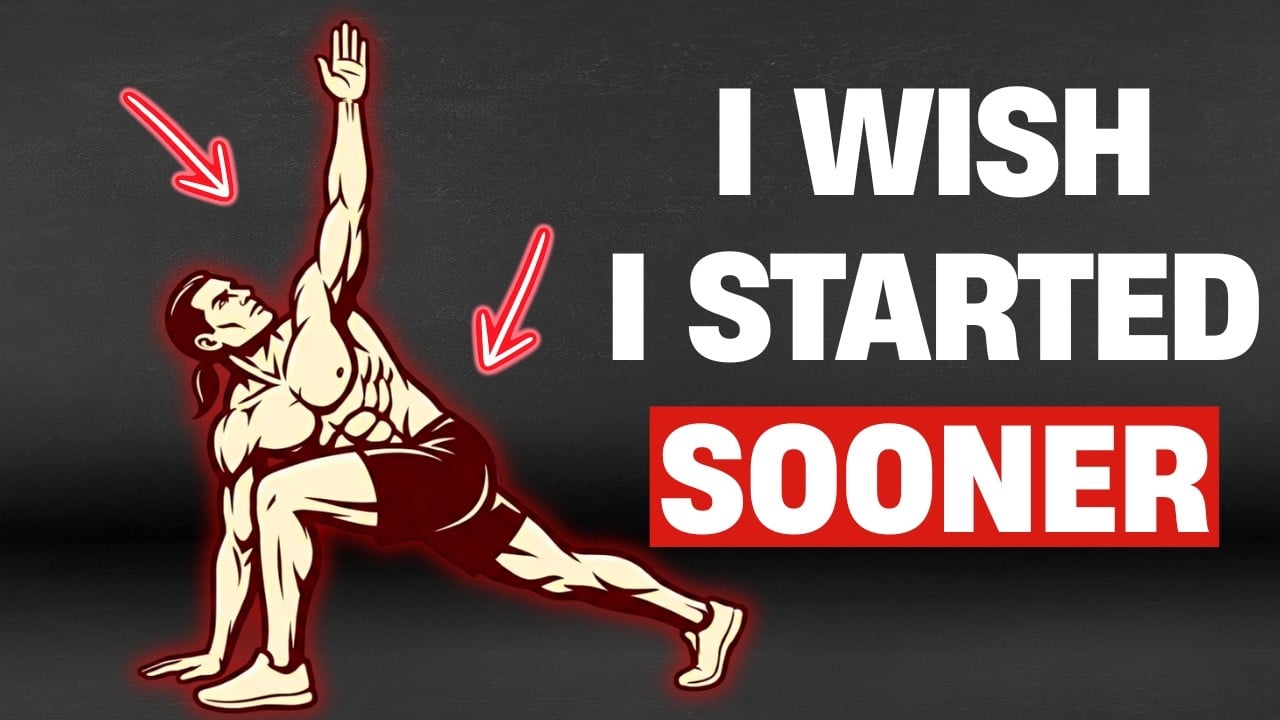
Athletes perform this complex-looking movement before games for good reason. This single exercise improves hip mobility, opens the thoracic spine, strengthens ankles, and restores rotational flexibility simultaneously.
It hits almost every major joint and muscle group that gets tight from prolonged sitting. No equipment needed—just floor space in a hallway, living room, or yard.
Start in a push-up position with hands on the ground and body in a straight line. Step the right foot up next to the right hand on the outside, with the knee bent and shin roughly vertical.
Drop the left elbow toward the ground, getting it as close to the left foot as possible. A massive stretch will hit the left hip flexor and groin.
Hold for two seconds, then rotate the torso and reach the right arm up toward the ceiling, opening the chest and upper back. Follow the hand with the eyes while rotating, holding for two seconds at the top.
Return the hand to the ground, step the right foot back to starting position, then repeat on the other side. That’s one full rep.
Aim for five reps per side, moving slowly and deliberately through each position. For beginners, hips will feel tight, the groin will stretch in unfamiliar ways, and the upper back will reveal its stiffness.
Start with smaller range of motion and gradually work deeper into the stretch.
9090 Hip Switches Target Neglected Hip Rotators
After opening hips and thoracic spine, it’s time to focus specifically on hip rotation. This exercise builds hip internal and external rotation, improves knee health, and eases tight hip joints.
Most mobility routines overlook these areas. By targeting often-neglected hip rotators, this movement restores proper hip function and supports the lower back, making everyday activities like walking, climbing stairs, getting in and out of cars, or squatting down more effortless and pain-free.
Sit on the ground with both legs bent at 90 degrees. The right leg should be in front with knee pointing forward and shin roughly perpendicular to the body. The left leg should be behind and to the side with knee pointing left and shin roughly parallel to the body.
Keep chest upright with hands on the ground beside for support. Lift both knees off the ground slightly and rotate the entire lower body to switch legs.
The back leg becomes the front leg and vice versa. Hips rotate internally and externally through ranges most people never access.
Lower knees back down in the new position—that’s one rep. Keep chest upright throughout the entire movement without collapsing forward.
After just a couple sets, hips start to open up significantly. Inner thighs stretch, hip rotators activate, and clicking or grinding may occur as hips move through ranges they haven’t experienced in years.
If this proves too challenging, use hands to help lift and rotate legs, or sit on a yoga block or cushion to elevate hips slightly.
Cat Cow Provides Complete Spinal Articulation
This simple but incredibly effective movement may look like just arching and rounding the back. However, it provides complete spinal articulation that restores mobility to every vertebrae, relieves back tension, strengthens core stabilizers, and improves breathing patterns.
Beyond flexibility, this exercise teaches motor control. It trains the spine to move fluidly through flexion and extension—the way it was designed to move.
Cat cow not only makes backs feel better but also reduces injury risk by training the body to control spinal movement safely and smoothly.
Get down on hands and knees with hands directly under shoulders and knees under hips. Spine should start in neutral position.
Begin the cow portion by dropping belly toward the floor, lifting chest and tailbone up toward the ceiling, and looking slightly upward. Spine should arch like a hammock with stretch across abs and front of body. Hold for 2 seconds.
Transition into cat portion by rounding spine up toward the ceiling, tucking tailbone under, dropping head down, and pulling belly button toward spine. Back should round like an angry cat with stretch through entire back. Hold for two seconds.
That’s one complete cycle. Move slowly and smoothly between these two positions, focusing on articulating each vertebrae one at a time rather than just hinging at one spot.
Aim for 10 to 15 slow, controlled repetitions. As mobility improves, increase range of motion and exaggerate the arch and round.
Deep Squat Hold Restores Natural Human Movement
This restorative, foundational movement represents a position humans are designed to spend time in. Due to modern lifestyles—long hours sitting in chairs, tight hips, reduced ankle mobility—many people struggle to achieve or hold this position.
This exercise improves ankle, hip, and knee mobility simultaneously while decompressing the spine and opening the lower back. It’s particularly helpful for bending down to pick things up, gardening, squatting to play with kids or pets, or sitting comfortably in positions other than chairs.
For anyone who struggles to squat down without feeling tightness, falling backward, or experiencing knee pain, this movement is essential for regaining natural functionality. It also transfers to other exercises, making them significantly easier to perform.
Stand with feet shoulder-width apart or slightly wider and toes slightly turned out to a comfortable angle. Slowly sink down into a deep squat position.
Keep heels flat on the ground, chest upright, and back neutral. Aim to stay in the squat for 20 to 30 seconds at first, then gradually increase to 1 or 2 minutes over time.
If maintaining balance is challenging, hold onto a sturdy object like a countertop, door frame, or chair for extra stability. Elevating heels on a small plate or book can make this easier on ankles initially.
Keep heels down throughout the entire exercise if possible. Avoid rising onto toes as that puts unnecessary strain on knees and reduces stretch effectiveness.
Knees should track in line with toes and chest should remain lifted to avoid excessive back rounding. The goal isn’t to make this a strength exercise—it’s to relax into the position and let gravity help sink deeper.
Breathe deeply and try to relax hip flexors and groin. The more relaxation achieved in this position, the more mobility improves.
Practice for a few minutes daily, perhaps while watching TV or scrolling through a phone. Within weeks, squat depth will improve dramatically.
Wall Angels Fix Shoulders and Upper Back
Most people forget that shoulder mobility and upper back movement are key aspects of overall functional fitness. This highly effective movement targets shoulder mobility, upper back strength, and posture correction.
It’s a simple yet powerful way to improve overhead reaching ability, reduce shoulder tension, and restore proper scapular movement—all leading to better living with less pain and more mobility.
For those spending long hours sitting at desks, frequently feeling tightness in shoulders and upper back, or unable to reach overhead without excessive back arching, this exercise is essential.
Poor posture, rounded shoulders, and lack of overhead movement in daily life often lead to shoulder impingement, neck pain, and upper back stiffness. Wall angels counteract these issues by opening the chest, strengthening the upper back, and restoring proper overhead mobility.
Stand with back against a wall. Feet should be about 6 inches away from the wall with entire back in contact. Press lower back gently toward the wall, eliminating any arch.
Raise arms into a goalpost position with elbows bent at 90 degrees. Try to get elbows, forearms, and backs of hands all touching the wall if possible. For many people, this starting position alone will be challenging.
From here, slowly slide arms up the wall, straightening them overhead while trying to keep everything in contact with the wall. Most people will find hands want to come forward off the wall as they raise arms. That’s okay—go as far as possible while maintaining contact.
Slowly slide arms back down to starting position. That’s one rep.
Avoid letting lower back arch excessively as arms raise. Keep core engaged and ribs from flaring forward. Focus on slow, deliberate movements to maximize mobility gains and strengthen correct muscles.
Do 10 to 12 controlled reps, really focusing on keeping as much contact with the wall as possible throughout the movement.
To increase difficulty, slow down even more—taking 5 seconds to slide up and 5 seconds to slide down. Adding a resistance band held in hands can activate additional muscles, but master the basic movement first before attempting variations.
Combine These Into Your Daily Mobility Routine
These five exercises create a quick, effective mobility routine to perform daily or at least three to four times weekly. Here’s how to structure it:
- World’s Greatest Stretch: 5 reps per side, moving slowly through each position (3-4 minutes)
- 9090 Hip Switches: 2 sets of 10 switches per side—10 times rotating to right leg in front, then 10 times rotating to left leg in front (3-4 minutes)
- Cat Cow: 15-20 slow, controlled cycles, articulating each vertebrae (2-3 minutes)
- Deep Squat Hold: 1-2 minutes sitting in bottom position, breathing and letting gravity help sink deeper (1-2 minutes)
- Wall Angels: 2 sets of 10-12 repetitions, moving slowly and maintaining wall contact (3 minutes)
Breathe normally throughout all movements—never hold breath.
In total, this mobility routine takes about 15 to 20 minutes and addresses hip mobility, spinal flexibility, ankle mobility, shoulder mobility, and thoracic spine rotation.
Consistent practice three to four times per week minimum yields noticeable results. Within 2 weeks, bodies feel looser. Within a month, movement noticeably improves. Within 3 months, mobility thought to be gone forever returns.
These five exercises fix 95% of mobility problems because they target areas that get stiffest from modern life. World’s Greatest Stretch opens hips and thoracic spine. 9090 Hip Switches restore hip rotation that sitting destroys. Cat Cow brings back spinal articulation that stiffness steals. Deep Squat Hold rebuilds ankle, hip, and knee mobility that chairs eliminate. Wall Angels fix shoulders and upper back that desk work ruins.