Joint pain and stiffness aren’t just an inevitable part of getting older—they’re symptoms of deeper cellular changes that signal aging and degeneration. But what if a simple compound could help preserve joint health, even into later life?
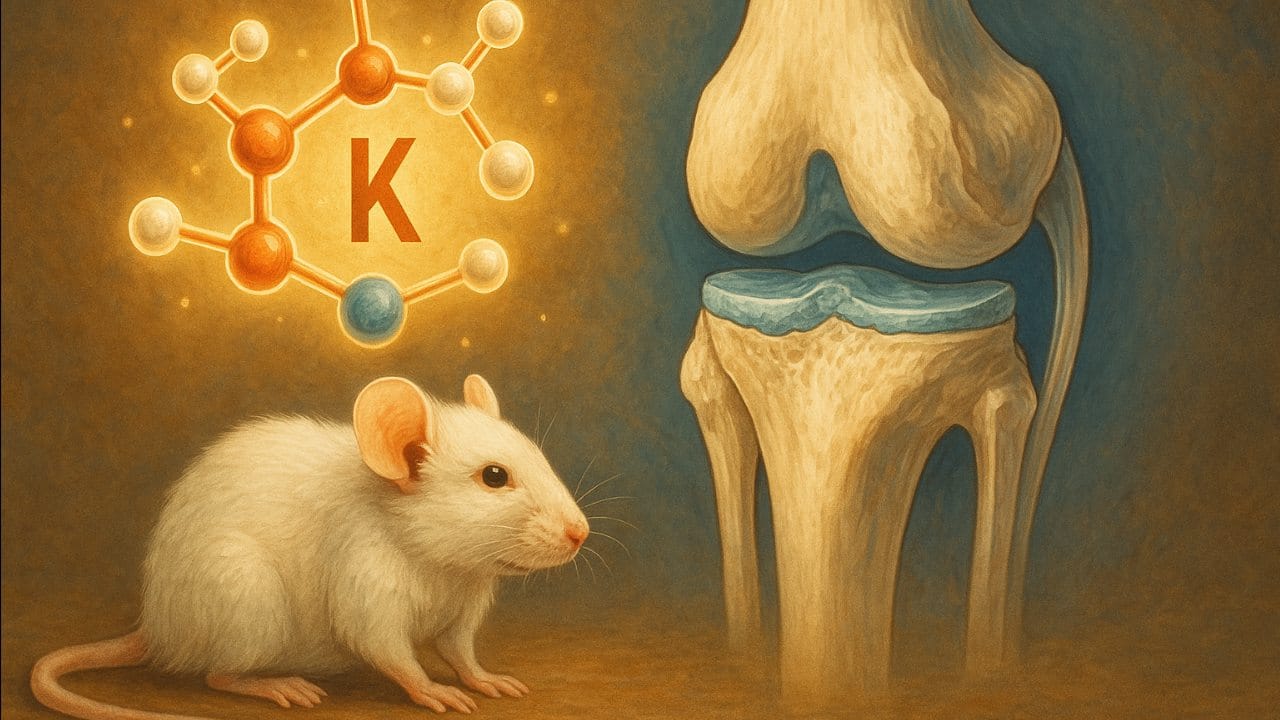
In a recent breakthrough published in Aging Cell, scientists discovered that alpha-ketoglutarate (αKG), a naturally occurring metabolite, not only improved joint structure in aging mice but also blocked key inflammatory pathways known to worsen arthritis.
The implications are striking—not just for joint health, but also for broader age-related diseases like Alzheimer’s and cardiovascular decline.
This article unpacks the latest research on αKG, how it protects aging joints, why inflammation is such a critical target, and whether this compound might hold the key to treating more than osteoarthritis in the future.
Jump to:
- What is Alpha-Ketoglutarate (αKG)?
- Cartilage-Preserving Power in Aging Mice
- Protection Against Post-Surgical Joint Damage
- How αKG Fights Inflammation at the Cellular Level
- Why This Matters for Aging and Longevity
- Could αKG Help with Alzheimer’s and Heart Disease?
- Recommended Dosages in Current Models
- The Bottom Line
What is Alpha-Ketoglutarate (αKG)?
Alpha-ketoglutarate is an intermediate compound in the Krebs cycle, which is how your cells generate energy from nutrients.
Beyond its role in metabolism, αKG has gained attention for its potential anti-aging effects, including extending lifespan in mice and improving intestinal health in older animals.
The new focus, however, is on how αKG might support joint integrity and cartilage preservation—two critical challenges as we age.
Cartilage-Preserving Power in Aging Mice
The study, led by a team at Southern Medical University in China, looked at whether αKG could protect against a deterioration of joint cartilage—a hallmark of age-related osteoarthritis (OA). Researchers studied mice at different life stages: young (3 months), middle-aged (10 months), and aged (22 months).
As expected, older mice exhibited clear signs of cartilage decay, including thinning and surface roughness in the temporomandibular joint (TMJ).
But after three months of consuming drinking water infused with αKG at either 0.25% or 0.75% concentrations, middle-aged and older mice showed extraordinary improvements:
- Improved cartilage structure with visibly smoother surfaces.
- Increased collagen II (Col2), a protein essential for cartilage durability and flexibility.
- Reduced ADAMTS5, an enzyme that breaks down cartilage.
Overall joint health was measured using OARSI scores—a standardized tool to assess osteoarthritis in animal models. Treated mice had significantly lower scores, indicating less joint degradation.
Protection Against Post-Surgical Joint Damage
To determine whether αKG helps beyond age-related wear and tear, researchers introduced joint damage surgically in rats—a model meant to simulate trauma-induced OA progression.
Rats that underwent partial discectomy (PDE), a procedure known to cause TMJ degeneration, were separated into groups receiving either 0.5% or 1% αKG. The results mirrored what was seen in aging mice:
- Cartilage erosion and cell loss were significantly reduced.
- Collagen levels increased, enhancing joint cushioning and regeneration capacity.
- The higher the dose, the stronger the protective effect, suggesting a dose-dependent relationship.
This suggests that αKG isn’t limited to preventative use—it may also have therapeutic value after injury or surgery.
How αKG Fights Inflammation at the Cellular Level
A major factor in cartilage breakdown is chronic inflammation, particularly via the IKK/NF-κB signaling pathway. This pathway acts as a switch to ramp up inflammatory agents in response to stress or damage, but in aging tissues, it often becomes hyperactive—leading to ongoing tissue destruction.
In both aged and injured animals, NF-κB activity was elevated. But αKG reversed that:
- Lower IKK and NF-κB activity meant reduced production of inflammation-driving molecules.
- This created a more sustainable environment for cartilage repair and chondrocyte (cartilage cell) resilience.
According to the researchers, “αKG’s anti-inflammatory effect via NF-κB inhibition appears to be central to its ability to preserve joint tissue.”
Why This Matters for Aging and Longevity
The bigger story here isn’t just about joint pain. It’s about functional longevity—the idea of not just living longer but aging better. Traditional OA treatments like NSAIDs and corticosteroids may relieve symptoms but often fail to address underlying degenerative processes.
αKG may offer dual benefits:
- Cartilage anabolic support: Encouraging rebuilding instead of just slowing breakdown.
- Inflammation control: Targeting the actual molecular culprits behind age-related tissue damage.
Its role in energy production also suggests a potentially safe profile for long-term use, though human trials will be key to confirming this.
Could αKG Help with Alzheimer’s and Heart Disease?
A compelling aspect of this research is how the NF-κB pathway connects not just to OA, but to multiple aging-related diseases:
- In Alzheimer’s disease, excessive NF-κB activity fosters neuroinflammation, accelerating memory and cognitive decline. Research published in the International Journal of Molecular Sciences confirms that targeting this pathway could be therapeutic [Sun et al., 2022].
- In atherosclerosis, NF-κB aggravates vascular inflammation and plaque build-up—factors contributing to heart attacks and strokes [Pamukcu et al., 2011].
Given that over 55 million people worldwide are affected by dementia and cardiovascular disease remains the top global killer for more than a century [WHO; AHA], αKG’s inflammation-modulating ability signals broader therapeutic possibilities.
Recommended Dosages in Current Models
In the study, dosages were administered via drinking water:
- Mice Models (natural aging): 0.25% αKG and 0.75% αKG for 3 months.
- Rat Models (post-surgical joint damage): 0.5% and 1% αKG concentrations showed efficacy, with stronger effects observed at higher doses.
While these dosages translate poorly to human equivalents without proper scaling, they provide a foundation for future clinical trials.
The Bottom Line
Alpha-ketoglutarate may be far more than an overlooked metabolic intermediate. It appears to preserve joint health at the molecular level, reduce inflammatory signaling, and boost the structural integrity of aging cartilage.
Its potential reach into brain and heart health only adds to the case for αKG becoming a new front-runner in the longevity supplement space. As research progresses, αKG could become a valuable component in multi-targeted approaches to healthy aging.
For now, αKG supplementation remains experimental, and it’s important to consult with healthcare professionals before incorporating any new compound into your wellness routine.