Ronnie Coleman is one of the greatest bodybuilders in history. But behind his eight Mr. Olympia titles lies a painful legacy: 13 spine surgeries, chronic pain, and a lifetime of physical damage from years of lifting extreme weight.
His story is both inspiring and sobering. It reveals the dedication required to reach superhuman levels of performance—and the irreversible toll it can take.
Jump to:
Ronnie Coleman’s Body Paid the Price
At his peak, Ronnie Coleman was otherworldly. With traps like armor plates and thighs like tree trunks, he redefined what the human body could achieve. But that muscle came at a cost.
“When you’re squatting 800 pounds and calling it nothing, you’re putting thousands of pounds of pressure on your spine,” said Dr. Antonio Webb, a board-certified orthopedic spine surgeon.
Coleman regularly squatted over 600 pounds for high reps. One of his injuries occurred during a set with that very weight—on rep number eight, he felt a pop. It was a herniated disc.
And that was just the beginning.
The Science Behind the Damage
Squatting heavy compresses the intervertebral discs—the spine’s shock absorbers. When overloaded, these discs can bulge or rupture, pressing against nerves and causing intense pain.
- A 400-pound squat exerts over 1,600 pounds of force on the spine.
- Disc degeneration is irreversible once the cushion between the bones collapses.
- Continuous strain without rest leads to wear-and-tear on the ligaments, tendons, and cartilage—not just in the spine but in the hips, knees, and shoulders.
Dr. Webb cautions, “The body needs time to recover. Without rest, muscles and joints break down faster than they can repair.”
Overtraining and Ignoring Warning Signs
Coleman trained six days a week, often without sufficient rest.
“I lift hard. I lift heavy. That’s how I’ve always done it,” he once said.
But consistency without recovery invites injury. In Coleman’s case, the overtraining led to:
- Chronic kyphosis, or forward spine curvature
- Severe arthritis in multiple joints
- Hip degeneration, requiring two hip replacements
- Dependence on opioids for pain control
Despite the damage, Coleman continued training. “I’ve been in pain for so long now, I’m just used to it,” he admitted.
13 Spine Surgeries—and Still Lifting
Spine surgery is complex. Coleman has had hardware implanted to stabilize his spine—screws, rods, and spacers to replace collapsed discs and decompress nerves.
But with every surgery, complications multiply:
- Scar tissue builds up
- Infection risk increases
- Pain persists or worsens
- Adjacent levels of the spine begin to degenerate
In one case, the hardware itself was the source of his pain. Doctors confirmed it with a nerve block and planned yet another surgery to remove the screws.
“It’s a surgeon’s nightmare to operate on a spine that’s already been operated on 12 times,” Dr. Webb noted.
Why Recovery and Moderation Matter
Ronnie Coleman’s experience offers a valuable lesson for anyone lifting weights or pursuing peak physical goals:
- Prioritize longevity over short-term gains
- Listen to your body—pain is a signal, not a challenge
- Respect the need for rest and recovery
- Avoid ego lifting—just because you can doesn’t mean you should
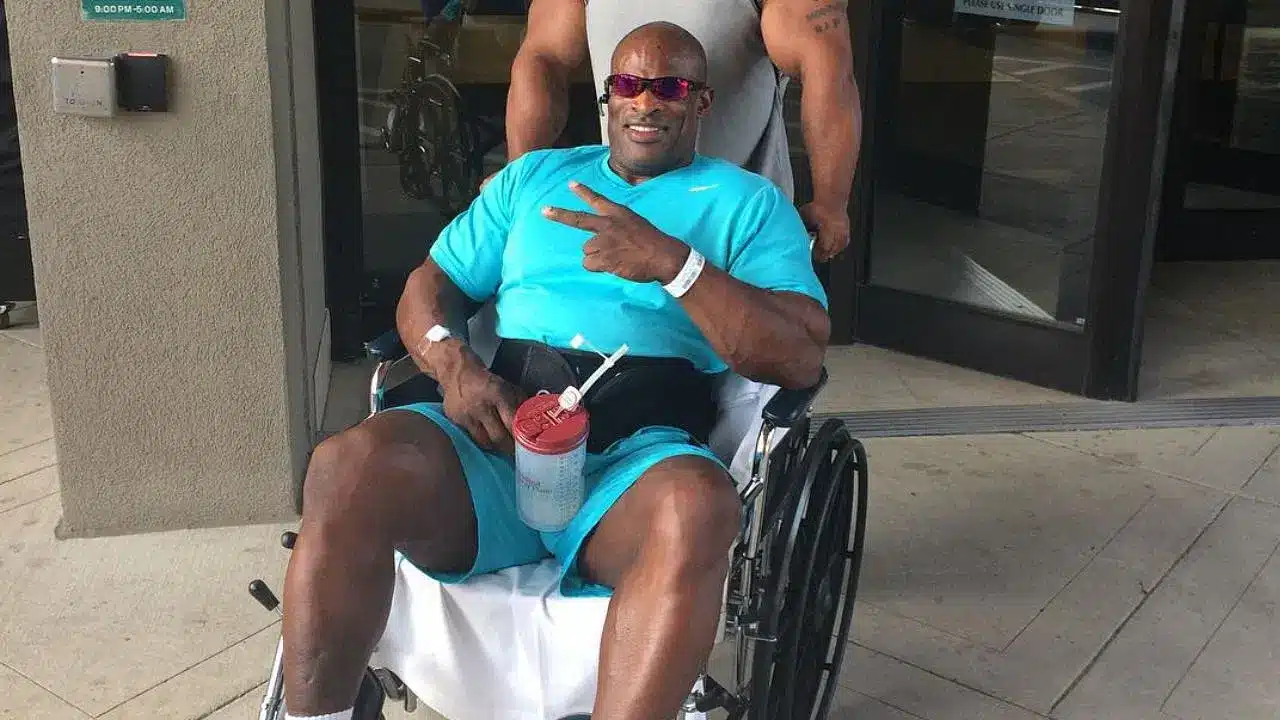
Coleman’s strength was legendary, but now he walks with crutches, bent forward due to spinal misalignment. Even after all the surgeries, he still struggles with daily activities.
When Enough Is Enough
Despite recommendations from surgeons, Coleman keeps lifting. He does it because he loves it. But his story illustrates the brutal consequences of pushing past the body’s limits.
“You have to understand when enough is enough. Some people just don’t get it,” Dr. Webb said.
Coleman has had to undergo anterior lumbar surgeries through his abdomen due to scar tissue in his back. These procedures are high-risk and involve moving internal organs and blood vessels to access the spine.
It’s a testament to how far he’s pushed—and how much his body has endured.
Lessons for Every Lifter
Ronnie Coleman’s career is unforgettable. But his physical decline is just as powerful a message as his rise to glory.
Here’s what anyone can take away from his story:
- Train hard, but train smart
- Respect your limits
- Don’t sacrifice health for aesthetics
- Seek professional guidance to avoid long-term harm
The price of greatness was steep for Coleman. His story reminds us that health isn’t guaranteed—and the choices made in the gym can shape life far beyond the weight room.