Navy SEAL training has become legendary for breaking even the strongest athletes.
But what actually makes someone quit when others push through?
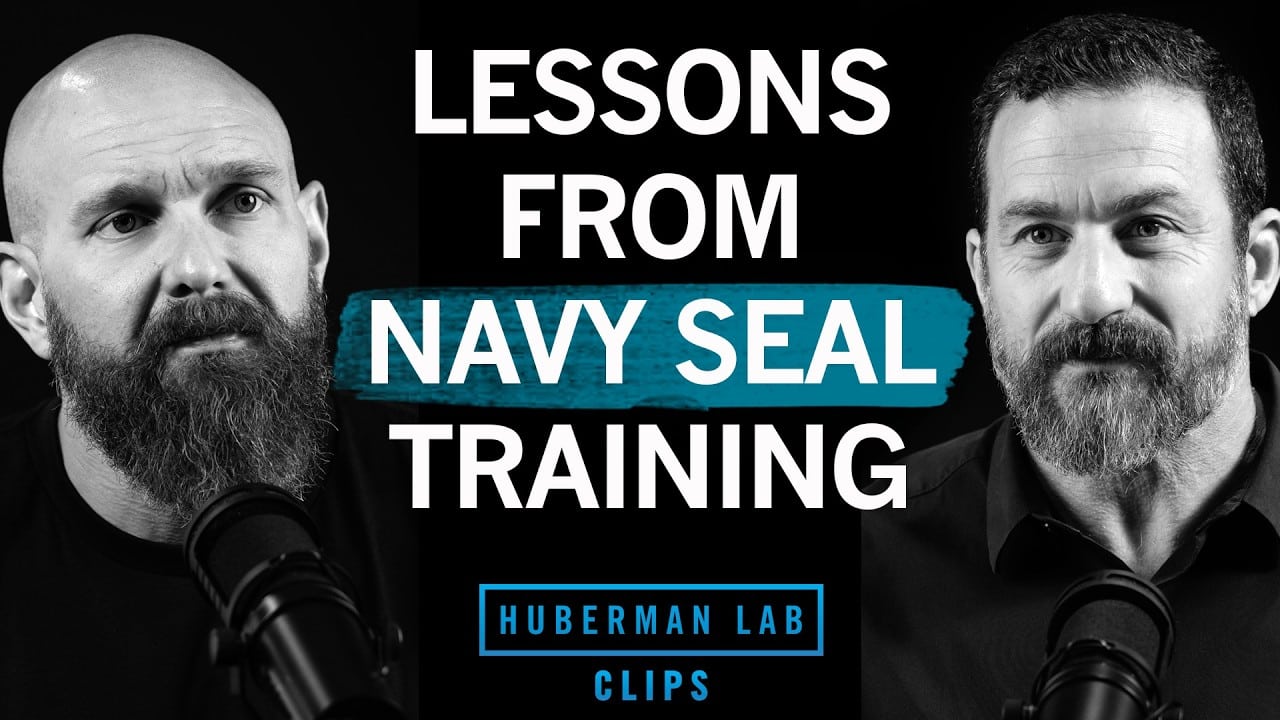
A former Navy SEAL who completed BUD/S training in 2002 recently shared insights that challenge common assumptions about who makes it through one of the military’s most brutal selection programs.
His perspective reveals that physical prowess matters far less than most people think.
Jump to:
The Crushing Weight of Expectation
Every candidate who shows up to BUD/S carries an invisible burden that civilians rarely understand.
Every single kid that’s doing that selection program is the biggest deal in his hometown, the biggest thing in his high school. Everybody knows he’s going and the amount of external pressure riding on that kid, unless you’ve done it, you have no idea.
This pressure creates a unique psychological challenge. Candidates aren’t just fighting cold water and exhaustion—they’re battling the fear of returning home in shame.
The SEAL who shared his experience grew up surrounded by Navy commandos, giving him what he calls “the inside scoop.” He knew exactly what awaited him, yet he describes himself as barely qualified by today’s standards.
The Standards Have Skyrocketed
Modern BUD/S candidates face competition that didn’t exist two decades ago.
The 17-year-old me that showed up in 2002, if I would try to be a Navy SEAL in 2025, they wouldn’t even take me. Your scores now have to be so competitive they wouldn’t even take me.
Current candidates need roughly 120 push-ups just to be considered. The baseline fitness requirements haven’t changed, but applicant preparation has become dramatically more sophisticated.
This creates an interesting paradox: better-prepared athletes are quitting at the same rates as less-prepared candidates from previous generations.
Physical Capability Means Nothing
One of the most surprising observations from BUD/S involves who actually makes it versus who quits.
There were definitely guys you look at that look like Dolph Lundgren from Rocky. You look at him, you’re like, oh, that dude is definitely going to make it. He’s gone in 20 minutes.
Meanwhile, candidates in worse physical condition often displayed unshakeable mental resilience. These individuals seemed immune to discomfort.
The pattern repeated throughout training: physical specimens crumbled while average athletes endured.
The Coleman Ruiz Theory
Former SEAL and BUD/S instructor Coleman Ruiz developed an informal profile of successful candidates. According to his observations, those who complete training typically have at least one of three background factors:
- Significant detention time in high school
- Varsity sports experience
- Divorced parents
These factors suggest that prior exposure to friction, conflict, or adversity builds mental toughness that elite physical conditioning cannot replicate.
The Power of Perspective Shifts
During surf torture—when instructors force candidates to lie in 60-degree water until hypothermia sets in—mass exodus events regularly occur.
But one trainee found a mental trick that transformed his experience.
You look over and all the West Coast SEAL teams are out to your right doing log PT. You look down to the left and you see the Hotel Del and this seven-year-old with a big pink flamingo jumping in the water having the best time of their life. It’s all about your perspective. That kid’s having the time of their life and we’re in the exact same water.
This reframing technique—recognizing that suffering exists primarily in interpretation rather than objective conditions—became a survival tool.
Candidates who mastered this mental shift could endure seemingly impossible conditions by simply changing how they viewed their circumstances.
The “I’d Rather Die” Mindset
Perhaps the most crucial psychological threshold involves reaching a point where death becomes preferable to quitting.
At some point, you just don’t care. You’re like, I’d rather fall stone cold dead in front of all of them and die right here than I would failing or quitting. At least you don’t have to go home head hanging in shame.
This isn’t suicidal thinking—it’s a mental calculation where the psychological pain of failure outweighs physical suffering.
During four-mile timed runs on soft sand with heart rates at maximum capacity, many candidates experience the sensation that their heart will stop. Those who continue aren’t necessarily braver; they’ve simply accepted that dying is preferable to quitting.
Performance Anxiety as Fuel
Fear of judgment becomes a powerful motivator. Watching fifteen teammates jump from an aircraft transforms paralyzing fear into automatic action.
What made you jump? Everybody else did it. I didn’t want to be the guy who said no. Sometimes that performance anxiety, that pressure to perform on demand, gets you through the hump.
This creates a feedback loop: social pressure triggers action, action proves capability, proven capability builds confidence for the next challenge.
The Ultimate Lesson from BUD/S
Training reveals a fundamental truth about human potential that extends far beyond military applications.
If it can be done by a human being, I can do it. How far can you run? As far as I have to. How fast can you run? As fast as I can. If you can run that, I can run it.
This belief system transforms impossible into inevitable. Any achievement accomplished by another human becomes automatically accessible.
BUD/S doesn’t create superhuman abilities—it removes psychological limiters that prevent ordinary people from accessing their full capability.
Why Most Candidates Quit
Starting classes typically begin with over 200 candidates. Graduation classes often number fewer than 20.
These weren’t weak individuals—they represented the most physically capable people in that year’s Navy. Yet over 90% couldn’t complete training.
The critical factor isn’t physical capability—it’s the willingness to embrace prolonged misery without knowing when it will end.
I always had the inside scoop. If you think this is going to end, it’s not. If this phases you, this is not the program for you. If that phases you, the SEAL team is going to chew you alive.
Building Mental Resilience Beyond BUD/S
The psychological tools developed during selection training apply to civilian challenges:
- Reframe suffering as temporary and purposeful
- Accept discomfort rather than fighting it
- Focus on process rather than outcome
- Use social pressure as motivation
- Recognize that perceived limits are psychological constructs
These principles work because they address the fundamental barrier to achievement: the mind quits long before the body fails.
BUD/S proves that extraordinary accomplishment isn’t reserved for genetic outliers. It’s available to anyone willing to push through when every instinct screams to stop.
The question isn’t whether you’re capable—it’s whether you’re willing to discover just how capable you actually are.