A fitness influencer who once followed what he now calls a “crap workout program” at 16 has completely transformed his approach to training.
Joe, a content creator who has refined his methods over years of trial and error, recently shared the exact bodybuilding split that’s been delivering “insane results” for him.
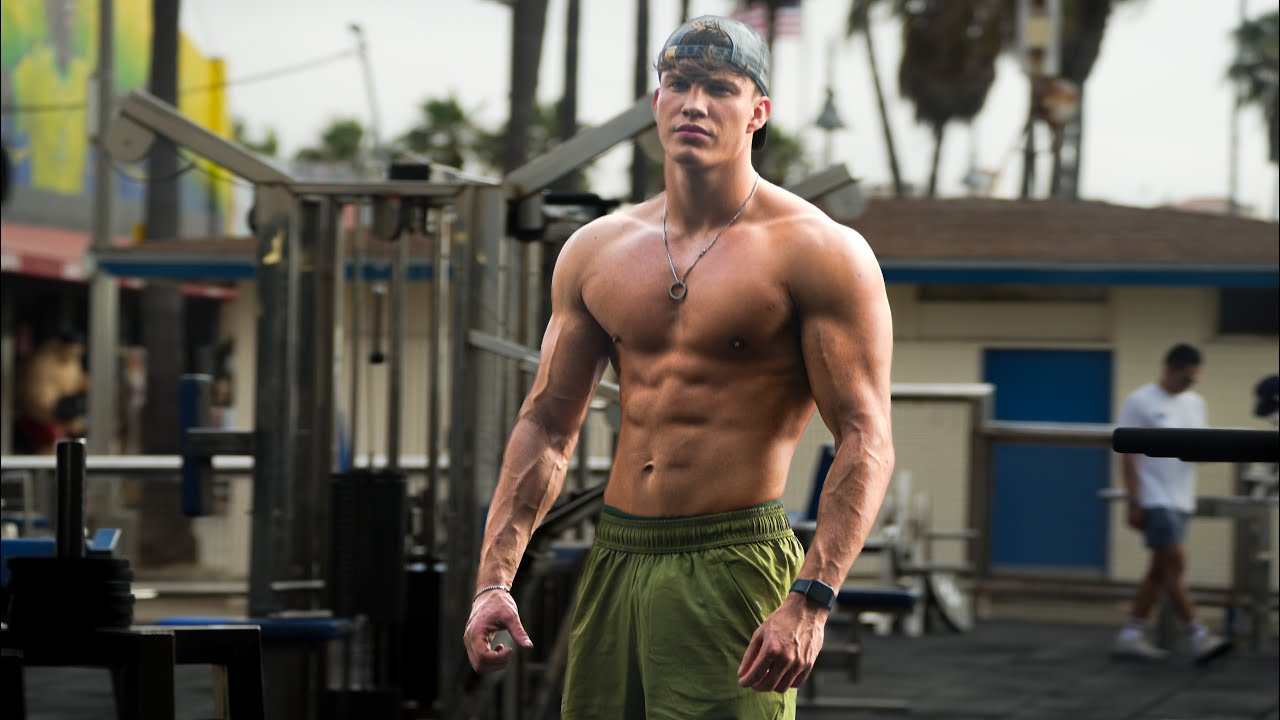
The program addresses a problem that plagues millions: with countless workout routines available online, choosing an effective one feels nearly impossible.
But this isn’t a routine for beginners or the casual gym-goer—it’s a high-volume, six-day push-pull-legs split designed specifically to maximize muscle growth.
Jump to:
- The Push-Pull-Legs Framework Explained
- Push A: Chest-Dominant Training
- Pull A: Building Back Thickness
- Legs A: Quad-Focused Brutality
- Strategic Rest and Recovery
- Push B: Shoulder Emphasis
- Pull B: Creating Back Width
- Legs B: Hamstring Priority
- The Keys to Success
- Progressive Overload Remains King
- Who Should Try This Program
The Push-Pull-Legs Framework Explained
Joe’s program follows a classic bodybuilding split structure: Push A, Pull A, Legs A, rest, Push B, Pull B, Legs B, rest, then repeat. This creates a sustainable rhythm that allows muscle groups adequate recovery while maintaining training frequency.
The “A” and “B” variations for each movement pattern add crucial variety. Push A emphasizes chest development, while Push B targets shoulders more heavily. Similarly, Pull A focuses on back thickness, and Pull B prioritizes width for that coveted V-taper physique.
Rest days are non-negotiable in this program. Joe emphasizes that the volume and intensity demand proper recovery, nutrition, and sleep to avoid overtraining and maximize results.
Push A: Chest-Dominant Training
Day one kicks off with incline dumbbell press, which Joe identifies as his favorite chest exercise. The rep scheme follows a specific pattern used throughout the program: one heavy “top set” of 5-9 reps, followed by a lighter “back-off set” of 10-15 reps.
This approach combines strength work with hypertrophy stimulus—the best of both worlds for muscle building.
The session continues with:
- Machine press (3 sets of 10-15 reps)
- Cable flies (3 sets of 10-15 reps, with a drop set on the final set)
- Press-ups to complete failure
- Cable lateral raises (4 sets to failure)
- Overhead tricep extensions (3 sets of 8-15 reps)
- Tricep pushdowns (2 sets of 8-15 reps)
Every single set should push toward or reach complete failure, Joe stresses. Progressive overload—gradually increasing weight, reps, or volume—is essential for continuous gains.
Pull A: Building Back Thickness
Day two shifts focus to pulling movements, starting with barbell rows using the same heavy top set and lighter back-off set structure. Compound movements anchor each workout, ensuring maximum muscle recruitment and hormonal response.
Following exercises include lat pulldowns, single-arm cable rows, cable pullovers, and rear delt flies. By this point, the back pump is intense, but isolation work for biceps and forearms still remains.
Cable curls and dumbbell hammer curls finish the session, targeting arms that have already been pre-fatigued from compound pulling movements.
Legs A: Quad-Focused Brutality
Day three introduces what Joe calls “the best yet, in my personal humble opinion, the toughest exercise in existence”—the barbell back squat.
Your legs will be in bits after this, but to fully maximize muscle hypertrophy, we’re going to be doing quad extensions and then we’ll throw some hamstring work in there with hamstring curls.
After squats come leg press, walking lunges (10-15 reps per leg for two sets), quad extensions, hamstring curls, and calf raises. Joe notes you should struggle climbing stairs for days afterward—confirmation of a properly executed leg session.
Strategic Rest and Recovery
Day four is designated rest, and Joe repeatedly warns against skipping it. High-volume training creates significant muscular damage and systemic fatigue that requires adequate recovery time.
Nutrition becomes equally critical during this phase. Muscle grows during rest, not during training—the workout provides stimulus, but recovery provides adaptation.
Push B: Shoulder Emphasis
Day five returns to pushing movements with a shoulder-dominant focus. Weighted dips lead off—an exercise Joe acknowledges many dislike but considers essential for development.
Dumbbell shoulder press follows with the familiar top set and back-off set structure. Cable lateral raises (3 sets of 10-15) thoroughly fatigue the deltoids before moving to chest work with machine press and cable flies.
Triceps receive attention through pushdowns and overhead extensions, ensuring complete arm development alongside shoulder and chest growth.
Pull B: Creating Back Width
Day six targets back width through vertical pulling patterns. Weighted pull-ups open the session, though Joe offers alternatives for those not yet strong enough: resistance bands or assisted pull-up machines work perfectly.
T-bar rows, lat pulldowns, cable pullovers, and rear delt flies follow. The pump after this sequence is “just nuts,” according to Joe.
Rope curls and EZ bar curls provide bicep isolation work to cap off the pulling volume for the week.
Legs B: Hamstring Priority
The final training day shifts leg emphasis to hamstrings. Stiff-leg deadlifts lead with the heavy top set approach, followed by hack squats that produce “some strange faces to say the least.”
Hamstring curls receive dedicated attention before quad extensions provide balance. Hip thrusts and calf raises complete the session—because as Joe notes, “we do not want skinny calves.”
The Keys to Success
Several principles make this program effective beyond just exercise selection. Training to failure or very close to it on virtually every set creates maximum mechanical tension and metabolic stress—two primary drivers of hypertrophy.
The top set and back-off set structure balances strength and size work efficiently. Heavy loads build strength that translates to higher volume capacity, while higher-rep sets accumulate the metabolic stress that triggers growth.
Drop sets and techniques like the press-ups to failure after cable flies push muscles beyond normal fatigue thresholds. These intensity techniques, used strategically rather than excessively, enhance results without requiring additional training time.
Progressive Overload Remains King
Joe emphasizes progressive overload repeatedly throughout his explanation. Simply completing the exercises isn’t enough—tracking performance and consistently improving is what separates those who build muscle from those who spin their wheels.
This might mean adding weight, performing more reps at the same weight, or reducing rest periods while maintaining performance. Any measurable improvement represents progress.
Who Should Try This Program
Joe clearly states this split isn’t for everyone. The volume is substantial, the intensity demanding, and the time commitment significant at six training days per week.
Intermediate and advanced lifters with solid technique, recovery capacity, and genuine bodybuilding goals will benefit most. Beginners should build foundational strength and work capacity through lower-volume programs first.
Those with time constraints, recovery limitations, or different training goals might find better options elsewhere. A program only works if you can execute it consistently—sustainability matters more than theoretical perfection.
Joe invites anyone using his program to share transformation results, demonstrating confidence in the approach that’s been delivering results for him over several months of consistent application.