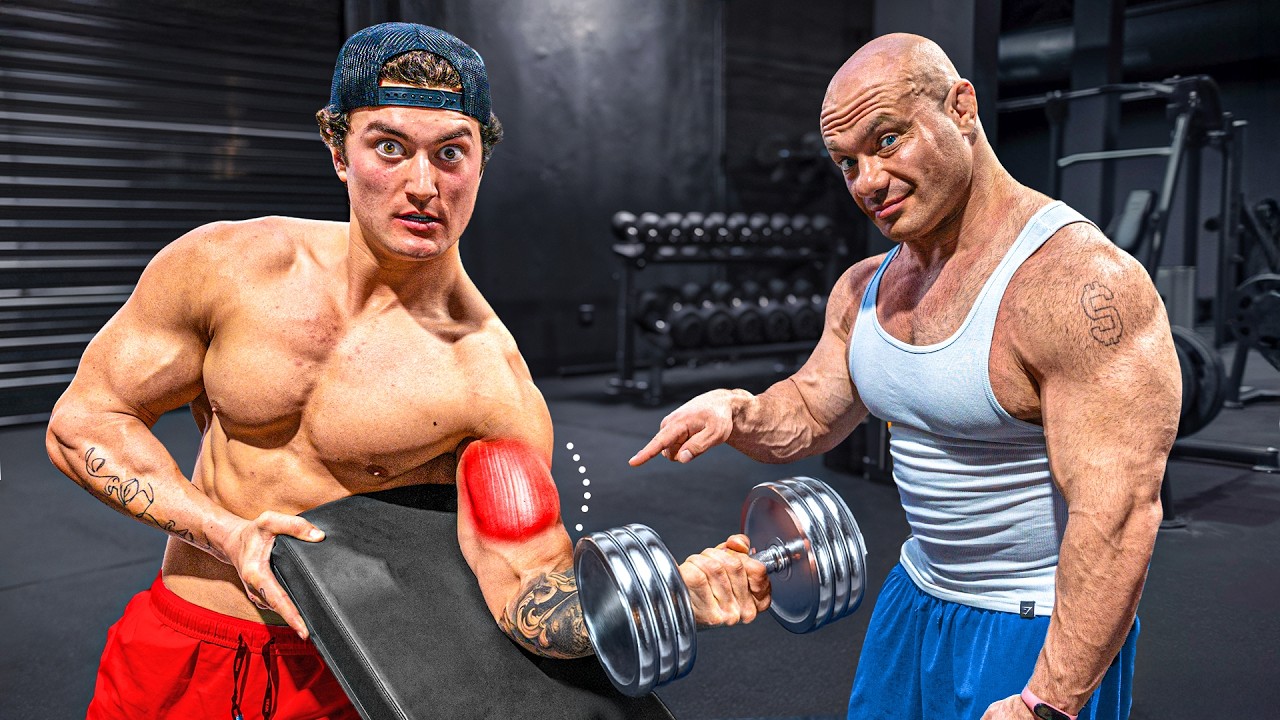
Exercise scientist Dr. Mike Israetel recently joined fitness creator Jesse James West to reveal his top three exercises for every major muscle group.
The session wasn’t just about rattling off movements.
It was about perfecting technique, understanding why certain exercises work better than others, and building muscle with intelligent programming rather than ego lifting.
Here’s everything they covered—and how you can apply it immediately.
Jump to:
- Back: Stretch Under Tension Is King
- Shoulders: Stop Worrying About Your Traps
- Triceps: Depth And Elbow Position Matter More Than Load
- Quads: Heels Elevated, Knees Forward, Ego Checked
- Glutes: Light Weight, Perfect Technique, Maximum Burn
- Hamstrings: Hinge Movements Plus Curls Equals Complete Development
- Biceps: Stretch Reigns Supreme
- Chest: Inclines, Flies, And Deficit Push-Ups
- Key Takeaways: Technique Trumps Weight Every Time
Back: Stretch Under Tension Is King
Dr. Israetel kicked things off with the lat prayer, also known as the straight-arm lat pulldown.
Most people butcher this movement by staying too upright. Israetel’s version? Radically different.
I want you to tilt over keeping your chest up and letting your elbows come up behind you until you’re essentially parallel to the ground.
This creates massive stretch at exactly the point where muscle fibers are most vulnerable—leading to superior hypertrophy stimulus.
Pull-ups came next, and West’s form earned rare praise from Israetel—almost.
It really is a 10 but I’m not going to say it’s a 10. I’m going say it’s a nine.
Israetel emphasized full dead hangs at the bottom, complete range of motion, and—critically—grip variety. Parallel, underhand, wide, medium: all effective.
Variation drives growth.
Finally, deficit barbell rows rounded out back training. Standing on plates forces deeper stretch while maintaining spinal integrity.
The full one recruits your mid and lower back more giving you that gnarly nasty thickness. The stimulus to the muscle is either better or the same but you don’t have to mess with a ton of weight.
Shoulders: Stop Worrying About Your Traps
Seated dumbbell lateral raises opened shoulder work—with one crucial tweak.
Israetel instructed West to pause just above parallel and control the eccentric phase slowly, keeping all tension routed through the side delts.
Think of dumbbells as drinks you’re constantly pouring out at the top.
Next came super ROM laterals, where dumbbells travel far beyond shoulder height—up to a 45-degree angle overhead.
This activates front delts at the top while maintaining side delt tension throughout.
West asked about disengaging traps during lateral raises. Israetel’s answer was blunt:
Show up to the gym train your delts normally let your traps engage fully and then when you walk up to the barbell on the rack with 845s on each side to do shrugs just don’t do them. Your traps already got hit with your delt training.
No direct trap work needed—ever.
Cable face pulls finished shoulders. Israetel set the cable at waist height and cued West to drive elbows up and back beyond his ears, pausing hard at peak contraction.
Triceps: Depth And Elbow Position Matter More Than Load
Seated overhead tricep extensions led tricep training.
Israetel’s key cue? Let elbows drift forward and inward, touching the weight behind your head like a “tricep crunch.”
Control matters infinitely more than weight here.
Lying skull crushers came next—but not the traditional version. Israetel had West lower the bar behind his head to the floor, creating extreme stretch.
An advanced variation? Have a spotter touch the front of your throat for deficit reps.
Finally, dips on a machine closed out triceps. Israetel emphasized keeping the chest vertical, elbows traveling backward, and descending until thumbs nearly touch shoulders.
Keep your chest vertical vertical vertical vertical vertical elbows back elbows back elbows back deeper deeper deeper.
Quads: Heels Elevated, Knees Forward, Ego Checked
High bar squats started quad work—with a game-changing modification.
Israetel placed 2.5-pound plates under West’s heels to mimic Olympic lifting shoes, allowing a more upright torso and forward knee travel.
The result? Massive quad activation with minimal load.
Hack squats followed. Israetel’s setup: feet low on platform, toes pointed outward, pressing through heels.
West’s form earned another rare compliment.
Then came the reverse Nordic curl—a “boss level” movement requiring serious strength and control.
You want to keep a straight completely vertical torso the entire time.
Lower yourself slowly, pause at the bottom, then explode back up. Partners can assist on the concentric while you control the eccentric solo—allowing training beyond failure.
Glutes: Light Weight, Perfect Technique, Maximum Burn
Front foot elevated Smith machine lunges opened glute training.
Elevation creates stretch. Shoelaces touch the ground at the bottom. Back leg drives the first portion of the concentric.
If you’re using like a plate on a side you either have glutes that are like Ronnie Coleman in his prime sized or you’re clown showing the whole thing.
Glute thrust machines followed—with an anti-bouncing protocol.
Instead of rapid pulsing, Israetel programmed one-second pauses at full hip extension, crunching hard into shortened position before lowering slowly.
Sit-back squats finished glutes. Medium-to-wide stance, toes out considerably, and—critically—never let knees travel past toes.
Push hips back aggressively throughout.
Hamstrings: Hinge Movements Plus Curls Equals Complete Development
Stiff-legged deadlifts led hamstring work.
Chest stays vertical, nipples pointed forward, knees pushed back but not locked. Lower until you feel deep hamstring stretch—no deeper.
West noted something profound:
I feel like I’m getting gains that I would get from doing a normal set from just stretching proper like the stretch and then getting a good contraction with a light weight feels better than doing it with a heavier weight and going to failure in that way.
Both seated and lying leg curls made the list. Israetel noted that while seated versions may have slight hypertrophy advantages due to hip pre-stretch, the difference is marginal.
Do whichever you prefer—or alternate for variety.
For lying curls, Israetel introduced the “Sam Sulek” variation: arch your back dramatically to pre-stretch hamstrings before curling.
Biceps: Stretch Reigns Supreme
Israetel opened with his now-infamous clown curls—performed lying back on a decline bench.
Arms stay tight to the bench, reaching toward heels throughout the movement. This creates insane stretch at the bottom.
If you struggle to get sore for biceps it will wreck you.
Incline dumbbell curls came next. Israetel’s twist? Grab the very end of the dumbbell to challenge supination maximally, keeping pinkies rotated upward throughout.
Free motion cable curls—dubbed “Superman curls”—finished biceps. Set cables high, lean back dramatically, and curl toward your belly button.
Chest: Inclines, Flies, And Deficit Push-Ups
Low incline dumbbell press started chest work.
Reach dumbbells to the top of biceps and front delts, pausing one full second at the bottom before pressing up and out.
Arch your back. This isn’t cheating—it’s optimal technique.
Flat dumbbell flies followed, with Israetel emphasizing controlled eccentrics and stopping when you feel a “painful stretch” that still feels strong.
He then introduced Gironda flies—named after legendary bodybuilder Vince Gironda—which involve coming down ultra-deep before pressing back up.
Finally, deficit push-ups closed chest training. Butt up, look forward slightly, elbows flare as you descend ultra-deep.
Only come two-thirds of the way up before descending again—keeping constant tension on pecs.
West has implemented these for over a year with “game-changing” results.
Key Takeaways: Technique Trumps Weight Every Time
Throughout the session, one theme dominated: better technique allows lighter loads while producing superior growth stimulus.
- Stretch under tension drives hypertrophy more effectively than heavy partial reps
- Controlled eccentrics activate more muscle fibers than bouncing or momentum-based lifting
- Pause reps at peak stretch or contraction intensify time under tension without adding weight
- Exercise variety matters more than finding one “perfect” movement
- Deficit and elevated positions unlock ranges of motion impossible with traditional setups
Israetel’s final wisdom? You don’t need barbell bench press if you’re executing incline presses and flies with pristine form.
Everyone knows bench press already.
These exercises—clown curls, deficit rows, reverse Nordics, Gironda flies—separate those chasing numbers from those chasing growth.