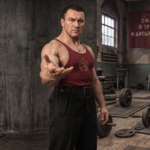
Soviet weightlifters from the 1950s possessed grip strength that Western coaches couldn’t explain.
Their hands didn’t just outlast competitors—they held weights that others couldn’t even attempt.
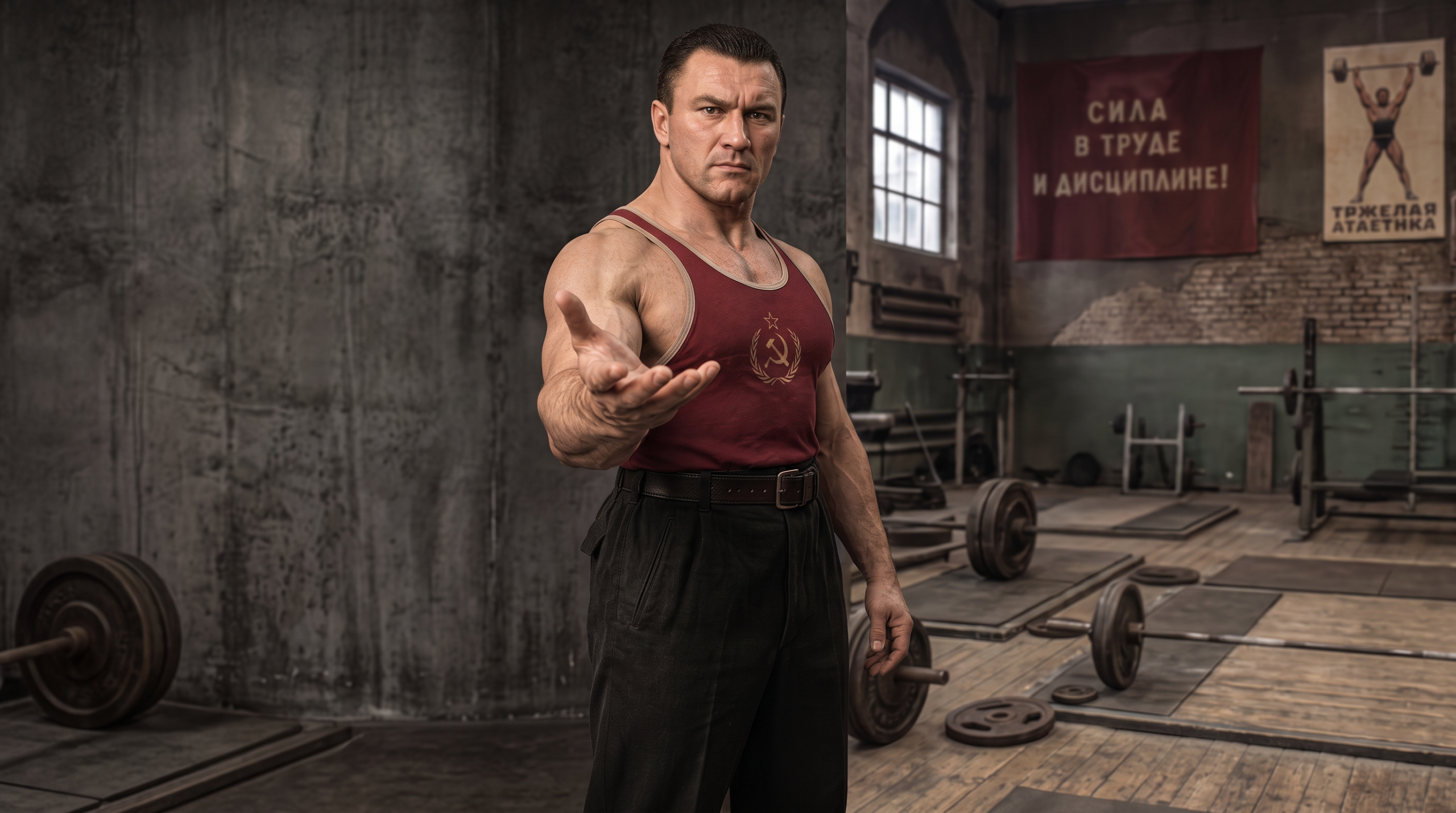
Ivan Udodov, weighing just 56 kg, won gold at the 1952 Helsinki Olympics by lifting a barbell his rivals literally could not grip long enough to try.
The training methods that built those unbreakable hands have been systematically removed from every certified fitness program in America, classified as too dangerous for the general population.
Jump to:
- The Soviet Philosophy: Grip as the Gateway to Total Strength
- The Foundation: Thick Bar Deadlifts
- Building Grip Endurance: The Timed Dead Hang
- Ballistic Grip Speed: The Kettlebell Hand Switch
- Wrist Rotational Stability: The Heavy Wrist Roller
- Thumb Dominance: The Two-Finger Pinch Lift
- Full-Body Integration: Weighted Rope Climbs
- Grip Resilience Under Fatigue: Barbell Finger Rolls
- What Was Really Banned—and Why
The Soviet Philosophy: Grip as the Gateway to Total Strength
Soviet sports scientists in the 1950s approached grip training fundamentally differently than their Western counterparts.
They didn’t view the grip as a weak link to work around. They saw it as the first expression of total body strength—the critical transfer point where every force the body produced either passed through to the barbell or was lost entirely.
Soviet documentation from the era recorded a principle that would shape their entire training system: an athlete whose grip failed before his legs, back, or shoulders reached maximum output had never actually expressed his full strength in competition.
The grip wasn’t the weakest link. It was the gate.
This philosophy led to the development of specific loading protocols that trained the hand and wrist in every position required under maximum load, ballistic load, and sustained load throughout extended training sessions.
When Western coaches encountered these methods through the 1960s and 1970s, they labeled them impractical, excessively specialized, or dangerous for general populations.
The exercises disappeared from certified programs before the athletes who’d trained them had finished dominating international competition.
The Foundation: Thick Bar Deadlifts
At the Soviet National Weightlifting Training Center in Moscow during winter 1952, conditioning coach Arkady Vorobyov prescribed an exercise that would become the cornerstone of Soviet grip dominance.
The thick bar deadlift—performed not with the standard 28mm competition barbell, but with bars measuring 50mm or greater in diameter.
This wasn’t a minor variation. Standard bars allow complete grip closure, creating a mechanically efficient position where tendons and bones lock around the bar, reducing muscular demand.
Thick bars prevent closure entirely.
Fingers, thumb, and palm must produce constant active force throughout every repetition because the mechanical advantage of the locked grip simply isn’t available.
Vorobyov documented that Soviet lifters who regularly trained thick bar deadlifts as supplements to competition pulling showed measurably stronger competition grip during the clean’s first and second pull phases compared to athletes who trained only on standard bars.
The specific muscular endurance and tendon strength thick bars developed had never been demanded by standard bar training.
Why Fitness Experts Banned It
During the 1980s, physical therapists flagged the extreme hand opening required for 50mm bars as a pulley injury risk.
The wide grip placed finger flexor tendons in high-tension positions considered dangerous for untrained hands.
Most certified programs excluded thick bar work entirely. The grip strength it built has never been replicated by standard bar movements.
Competition Results Western Coaches Couldn’t Explain
Throughout 1950s international competitions, observers consistently noted a phenomenon they couldn’t account for: Soviet grip failed last.
Foreign lifters who were demonstrably stronger by every upper body measure dropped bars that Soviet athletes of equal or lesser bodyweight maintained through complete pulls.
Western coaches attributed it to technique. It wasn’t technique—it was the thick bar.
Soviet grip had been trained under loads the standard bar never imposed. When both reached maximum competition weight, Western grip reached its training limit while Soviet grip encountered a load it had already exceeded in training.
That difference never appeared in American testing protocols because no test included a thick bar.
Building Grip Endurance: The Timed Dead Hang
At a Soviet physical culture facility in Leningrad during spring 1953, coaches prescribed an exercise from the Russian strongman tradition that Western observers dismissed as impractical.
The timed dead hang from a thick bar: gripping a 50mm+ diameter bar with both hands and hanging from full arm extension for as long as possible, without kipping, swinging, or upper body assistance.
This wasn’t an upper body pulling test. It was pure grip endurance, loading finger flexors, wrist flexors, and intrinsic hand muscles under sustained bodyweight for as long as the grip could maintain it.
Soviet coaches prescribed it specifically because the clean and jerk’s receiving position required athletes to maintain loaded grip under fatigue during final repetitions of heavy sessions, when other grip work had already depleted hand reserves.
The timed hang was always prescribed at session’s end, never the beginning.
A grip trained only when fresh was a grip never trained to fail safely when competition demanded it most.
Fitness experts classified the timed thick bar hang as a finger flexor pulley and shoulder joint risk during the 1980s. The grip endurance under accumulated fatigue it developed has never been included in certified training curricula.
Ballistic Grip Speed: The Kettlebell Hand Switch
At a Soviet wrestling facility in Kiev during autumn 1952, national program conditioning coaches adopted an exercise from Girevoy sport specifically to address wrestlers whose competition grip was failing.
The kettlebell high pull to hand switch: gripping a kettlebell handle in one hand, pulling explosively from hang to chin height, releasing the handle at the peak, catching it with the opposite hand, and lowering under control before repeating.
The hand switch at pull peak required the catching hand to close around a moving handle at the exact moment upward momentum was greatest, loading finger flexors with ballistic impact force no static or controlled exercise produces.
This matched the exact demand wrestling imposed: when a wrestler lost grip on an opponent’s sleeve or collar, he had fractions of a second to reestablish it before separation occurred.
Hand switch drills trained the speed and force of that reestablishment hundreds of times per session, building specific ballistic grip speed that no squeezing exercise or static hold ever developed.
Soviet documentation showed wrestlers who trained kettlebell hand switches demonstrated measurably faster grip reestablishment in competition than those who trained only static exercises.
Fitness experts classified ballistic handle releases as finger and wrist injury risks during the 1980s. The ballistic grip speed it built has never appeared in certified training curricula.
Wrist Rotational Stability: The Heavy Wrist Roller
At the Soviet national weightlifting preparation hall in Moscow during spring 1954, Vorobyov identified a specific weakness pattern in foreign lifters his team had competed against internationally.
He prescribed an exercise designed specifically to address it: the wrist roller with heavy loaded plate.
Standing with arms extended forward at shoulder height, parallel to floor, the lifter held a short wooden dowel with rope attached to its center and weight plate hanging from the rope’s end.
Rolling the dowel alternately with each hand wound the rope, lifting the plate from floor to dowel, then reversing and lowering under control.
The heavy wrist roller’s specific demand was forearm flexor and extensor strength under sustained wrist rotation with load increasing as rope wound tighter and plate rose higher—reaching maximum when full plate weight suspended from tightly wound rope directly beneath the dowel.
The Hidden Failure Pattern
Vorobyov’s 1954 Moscow documentation includes a critical observation about foreign lifters: when Western athletes lost bar control during the clean’s rack transition, it wasn’t grip failure in the sense of fingers releasing.
It was wrist failure.
The wrist rotated under bar momentum rather than sustaining position through rotational force of the transition. Fingers remained closed, grip still produced force, but the wrist couldn’t sustain its position against rotational demand heavy bars imposed moving from pull to rack position.
Standard bar exercises Western coaches prescribed trained grip as static hold, loading fingers and palm against bars that didn’t rotate under load.
The wrist roller trained wrist rotational resistance under loads specifically demanding it.
Fitness experts classified heavy wrist rollers as wrist and elbow flexor tendon injury risks during the 1980s because sustained rotational load under extended arm position created mechanical stress commercial training couldn’t standardize.
Most certified programs excluded it. The wrist rotational stability under load it built has never appeared in certified curricula.
Thumb Dominance: The Two-Finger Pinch Lift
At a Soviet strongman training hall in Minsk during winter 1953, a conditioning coach adopted an exercise from the Arthur Saxon and Hermann Görner strongman tradition.
The two-finger pinch lift with weight plates: gripping a weight plate by its edge using only thumb, index, and middle fingers of one hand, lifting from low rack to waist height, holding for prescribed duration, and lowering under control.
Pinch grip demanded the thumb’s adductor pollicis and first two digits’ finger flexors in pure pinch pattern that no bar or handle grip ever loads.
Bar and handle grips allow all fingers and thumb to wrap around cylindrical surfaces, sharing load through mechanically efficient wrapped position.
Pinch grip allowed no wrapping. Thumb pressed against plate face from one side, fingers from the other, with nothing between but smooth surface.
Full load was sustained by pinch force of thumb and two fingers against flat surface with no mechanical advantage from wrapping.
Soviet documentation showed athletes who trained pinch lifts demonstrated specific barbell control under maximum loads that bar-only trained athletes consistently lost.
In every bar grip, thumb is the weakest element—its contribution smaller than fingers because cylindrical surfaces let fingers wrap further and generate more force.
Pinch lifts made thumb the only element, forcing it to develop strength bar training always allowed it to avoid producing.
Fitness experts classified pinch lift concentrated digital loading as finger flexor pulley and thumb ligament injury risk during the 1980s. The thumb and pinch strength it built has never appeared in certified training curricula.
Full-Body Integration: Weighted Rope Climbs
In 1950s Soviet physical culture facilities, rope climbing with added weight was the primary grip and upper body pulling strength developer across every sport requiring hand-over-hand pulling strength.
Athletes attached weight belts carrying 10-30kg additional plates, gripped 2-inch diameter hemp rope, and climbed to the top—using hands and feet initially, progressing to hands alone.
The rope’s 2-inch diameter required hand grip wider than standard bars, closer to thick bar diameter, loading hands in the same full-grip-prevention position while simultaneously requiring grip sustainment through dynamic hand-over-hand climbing movement.
Added weight increased load beyond bodyweight, requiring grip to sustain forces unloaded climbs never demanded.
Soviet documentation showed weighted rope climb athletes demonstrated specific combinations of grip strength and upper body pulling endurance that no bar or machine exercise produced.
Fitness experts classified weighted rope climbing as shoulder, elbow, and grip injury risk during the 1980s. Most commercial gyms removed rope climbing entirely.
Grip Resilience Under Fatigue: Barbell Finger Rolls
In 1950s Soviet weightlifting preparation halls, barbell finger rolls were standard grip finishers prescribed at every pulling session’s end.
Lifters held barbells in standard overhand grip with arms hanging at sides, allowed bars to roll from palm to fingertips under control, then curled fingers to roll bars back into palm—repeating without allowing bars to leave fingers at each roll’s bottom.
Finger rolls trained finger flexors through complete range of motion under barbell load—from fully extended position at fingertip to fully contracted in palm.
This complete range was never trained by static grip exercises or pulling movements because both require grip remain closed throughout.
Finger rolls required grip to open partially under load and close again, training finger flexors in their lengthened, most vulnerable position under forces they were required to resist and reverse.
Vorobyov documented that lifters who regularly trained barbell finger rolls as session finishers showed specific grip resilience under accumulated fatigue in competition cleans that static-hold-only trained lifters consistently lost during final attempts of heavy meets.
The fitness industry classified partial grip release under barbell load as finger flexor and wrist injury risk during the 1980s. Most certified programs excluded any exercise requiring grip to open partially under load.
What Was Really Banned—and Why
These exercises weren’t removed from certified programs because Soviet hands were getting injured.
They were removed because the hands they built could hold what no certified training program had been designed to develop.
Western coaches watched Soviet lifters maintain grips through pulls that should have failed. They noted wrist stability through rack transitions that should have collapsed. They observed grip endurance through competition days that should have depleted.
When those same coaches examined the training methods producing these results, they saw injury risk profiles that didn’t fit commercial gym insurance models or standardized certification requirements.
The thick bar’s extreme hand opening. The timed hang’s finger flexor loading under fatigue. The kettlebell switch’s ballistic handle catch. The wrist roller’s sustained rotational stress. The pinch lift’s concentrated digital forces. The weighted rope’s shoulder and grip demands. The finger roll’s partial release under load.
Each represented a specific mechanical stress pattern that physical therapists could flag as higher risk than alternatives.
None represented training that general populations—untrained hands, commercial gym equipment, liability-conscious certification bodies—could easily standardize or safely scale.
So they disappeared.
What remained were the exercises that could be standardized: standard diameter bars, controlled tempos, static holds, isolated finger squeezers, wrist curls with light dumbbells.
Safe. Certifiable. Insufficient.
The Soviet grip training system of the 1950s built hands that Western testing couldn’t measure and Western training couldn’t replicate because Western training had removed every exercise that demanded what Soviet competition required.
Ivan Udodov’s gold medal grip at 56kg bodyweight—holding a barbell competitors couldn’t grip long enough to attempt—wasn’t genetic. It wasn’t technique in the sense Western coaches understood it.
It was the product of training methods that treated grip not as a limiting factor to work around, but as the first expression of total body strength—the gate through which everything else had to pass.
Those methods built unbreakable men. Then fitness experts buried them before most coaches understood what they were losing.