Stress doesn’t come from having too much to do.
It comes from not knowing what happens next—and leaving too many things half-done.
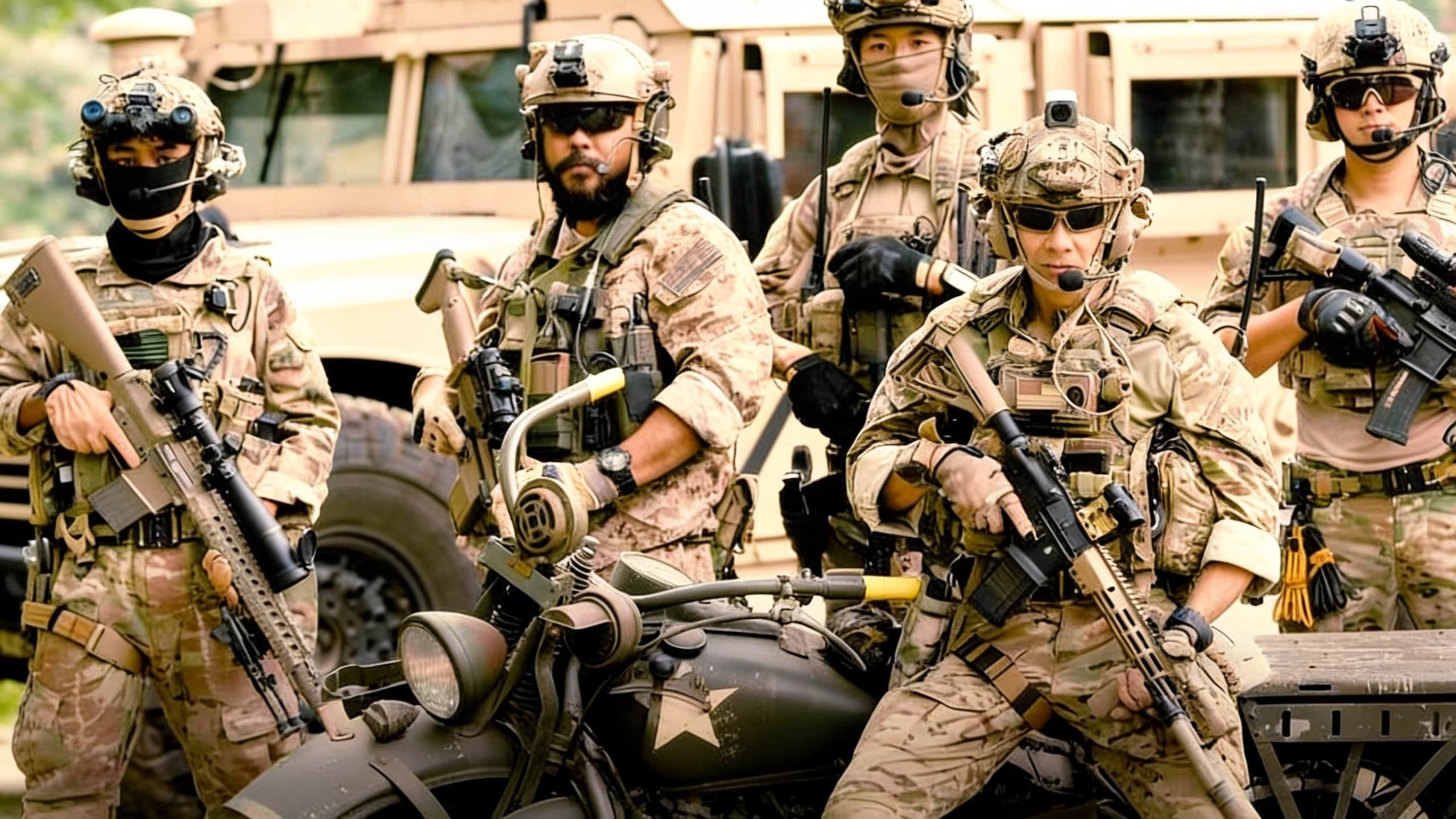
That’s the insight gaining traction across productivity and psychology circles, inspired by how elite military units manage pressure in life-or-death environments.
And the best part? Their strategies don’t require bootcamp—just smarter daily habits that anyone can adopt.
Jump to:
Why Uncertainty—Not Busyness—Triggers Stress
Most people blame overwork for their stress. But research points to a different culprit: uncertainty.
When you don’t know what’s coming—or when tasks remain unfinished—your brain stays in low-level alert mode. Chronic stress triggers cortisol release, which over time can lead to cardiovascular disease, gastrointestinal problems, and weakened immune function.

If you want something simple that actually works, this is one of the most effective tools I’ve used to build strength, conditioning, and endurance without needing a full gym setup.
- Full-body training with one weight using swings, squats, and presses
- Solid cast iron build that feels stable and lasts for years
- Comfortable grip that makes high-rep workouts easier to handle
Elite military forces like Navy SEALs and Army Special Forces face extreme uncertainty daily. Yet they’ve developed psychological frameworks that neutralize stress before it spirals.
According to Dr. Mark Staal, a clinical psychologist with extensive military deployment experience and incoming president of the American Psychological Association’s Society for Military Psychology, resilience training in special operations covers diaphragmatic breathing, cognitive reframing strategies, and realistic high-stress simulations designed to prepare members for catastrophic events.
The common thread? Creating a sense of control through preparation and structure.
The Zeigarnik Effect: Why Unfinished Tasks Haunt You
Ever notice how incomplete tasks occupy more mental space than finished ones?
That’s the Zeigarnik Effect, named after Soviet psychologist Bluma Zeigarnik. Her research demonstrated that uncompleted tasks are better remembered and more cognitively intrusive than completed ones.
These mental “open loops” create ongoing cognitive tension. Your brain constantly pings you with reminders, draining mental bandwidth and amplifying stress.
If you want something simple that actually works, this is one of the most effective tools I’ve used to build strength, conditioning, and endurance without needing a full gym setup.
- Full-body training with one weight using swings, squats, and presses
- Solid cast iron build that feels stable and lasts for years
- Comfortable grip that makes high-rep workouts easier to handle
Productivity expert David Allen built his entire Getting Things Done methodology around this principle. Published in 2001 and widely adopted across industries, GTD centers on capturing and systematically closing open loops to reduce cognitive load.
Military units apply this same concept operationally. Every mission involves detailed planning, rehearsal, and clear completion criteria—nothing is left ambiguous or half-finished.
Four Military-Inspired Habits That Reduce Daily Stress
Dr. Jerry Don Smith Jr., writing in the Operational & Defense Psychology Review, notes that psychological techniques used by Special Forces “are not reserved for elite warriors” and can be effectively applied to civilian life.
Here’s how to implement them.
1. Build Non-Negotiable Daily Routines
Military personnel thrive on structure. Wake times, meal schedules, training blocks—everything follows predictable patterns.
Routines eliminate decision fatigue and create psychological anchors throughout your day. When certain behaviors become automatic, your nervous system receives consistent safety signals.
If you want something simple that actually works, this is one of the most effective tools I’ve used to build strength, conditioning, and endurance without needing a full gym setup.
- Full-body training with one weight using swings, squats, and presses
- Solid cast iron build that feels stable and lasts for years
- Comfortable grip that makes high-rep workouts easier to handle
Start small: Set consistent wake and sleep times, even on weekends. Add structured morning routines that don’t require willpower—just repetition.
2. Close Every Loop Before Day’s End
Special operations teams don’t leave equipment half-cleaned or briefings half-completed. Everything gets finished or formally scheduled.
Apply this principle daily: Either complete tasks, delegate them, schedule them with specific time blocks, or consciously decide to drop them. No item should remain in mental limbo.
This isn’t about doing more—it’s about creating mental closure so unfinished business doesn’t follow you into evening hours or interrupt sleep.
3. Plan Tomorrow Before Today Ends
Uncertainty about what’s coming next triggers anxiety. Military units neutralize this through detailed operational planning and pre-mission rehearsals.
Civilians can adopt a simpler version: spend 10 minutes each evening mapping out tomorrow’s priorities, appointments, and key tasks.
If you want something simple that actually works, this is one of the most effective tools I’ve used to build strength, conditioning, and endurance without needing a full gym setup.
- Full-body training with one weight using swings, squats, and presses
- Solid cast iron build that feels stable and lasts for years
- Comfortable grip that makes high-rep workouts easier to handle
Knowing exactly what happens when you wake up eliminates morning decision paralysis and reduces cortisol spikes associated with feeling unprepared.
4. Protect Sleep Consistency Like Mission-Critical Equipment
Sleep scientists universally agree: consistent sleep schedules regulate your autonomic nervous system and dramatically reduce stress reactivity.
Military units treat rest as operationally essential, not optional. Special Forces train members to prioritize sleep hygiene even in austere environments because fatigue degrades decision-making and emotional regulation.
Set fixed sleep and wake times. Protect them as rigorously as important meetings. Your brain’s emotional regulation systems depend on it.
Control Beats Overload Every Time
Research consistently shows that feeling in control over your environment neutralizes stress responses and builds psychological courage.
Eric Barker, who interviewed Special Forces officers for his book Barking Up the Wrong Tree, found that elite operators emphasize preparation and rehearsal as primary stress-management tools. When soldiers know exactly what to do in chaotic situations, physiological stress markers drop significantly.
If you want something simple that actually works, this is one of the most effective tools I’ve used to build strength, conditioning, and endurance without needing a full gym setup.
- Full-body training with one weight using swings, squats, and presses
- Solid cast iron build that feels stable and lasts for years
- Comfortable grip that makes high-rep workouts easier to handle
Civilians face different stressors—financial pressure, relationship conflicts, work deadlines—but the underlying principle holds. Structure creates predictability. Predictability creates calm.
The Limits of Military Metaphors
Military stress researchers distinguish between combat-related stress (life-threatening uncertainty, deployment trauma) and civilian stress (work pressure, family responsibilities). The transfer of military coping strategies to everyday life requires contextual adaptation.
A clinical psychologist might affirm that routines and task completion genuinely reduce stress on a neurological level, while cautioning that intensive military psychological training involves institution-wide systems, not just four simple habits.
Cognitive behavioral therapists note that while structured scheduling and behavioral activation align with evidence-based CBT principles, underlying anxiety disorders often require professional intervention beyond habit changes alone.
Still, the core insight remains valid: most daily stress stems from cognitive chaos, not actual workload.
Implement One Habit This Week
You don’t need bootcamp discipline to benefit from military-inspired stress management.
If you want something simple that actually works, this is one of the most effective tools I’ve used to build strength, conditioning, and endurance without needing a full gym setup.
- Full-body training with one weight using swings, squats, and presses
- Solid cast iron build that feels stable and lasts for years
- Comfortable grip that makes high-rep workouts easier to handle
Choose one habit:
- Fixed sleep schedule — Same bedtime and wake time for seven consecutive days
- Daily loop-closing session — Spend 15 minutes before bed finishing, scheduling, or consciously dropping tasks
- Morning routine anchor — One non-negotiable sequence that happens every morning without decision-making
- Next-day planning ritual — Ten minutes each evening outlining tomorrow’s top three priorities
Track it for two weeks. Notice how predictability shifts your internal experience from reactive to prepared.
Stress thrives in ambiguity. Structure starves it out—one closed loop at a time.