Recovery between training sessions has long been considered sacred territory in fitness circles.
Wait 48 to 72 hours before hitting the same muscle again, or risk sabotaging your gains—that’s been the conventional wisdom for decades.
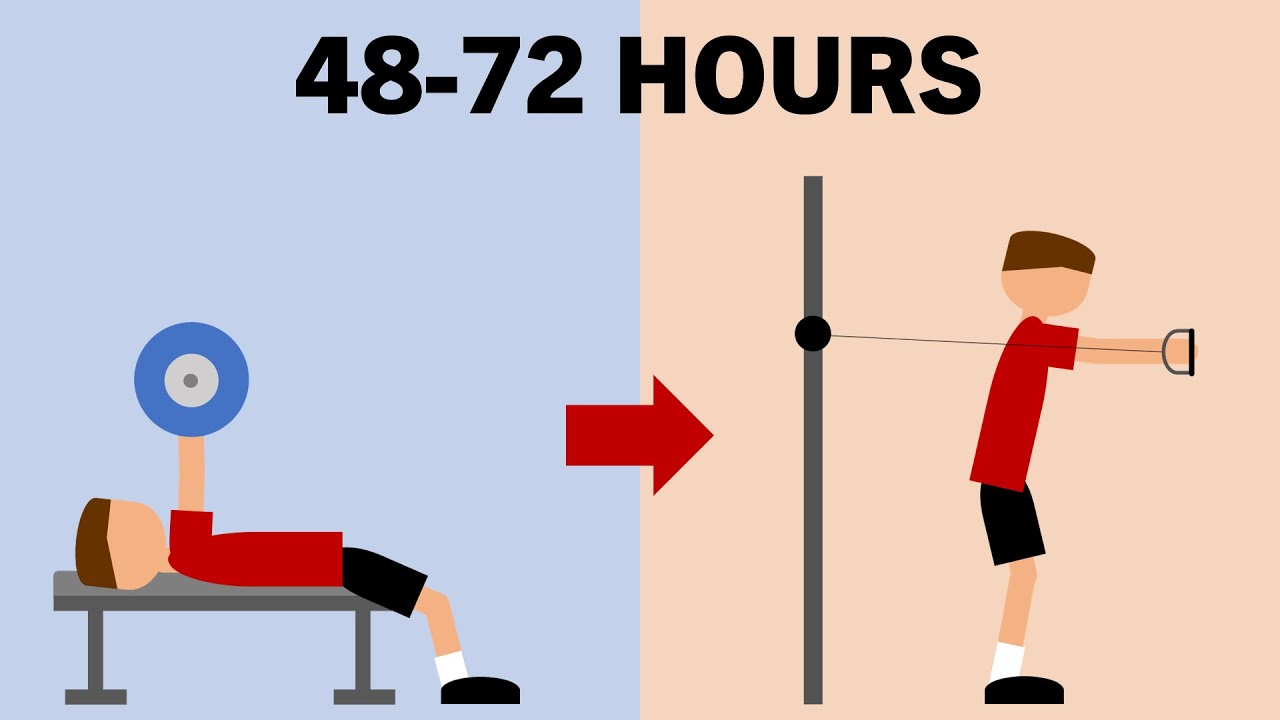
But what if this advice is overly conservative, or worse, completely misguided?
New research suggests the relationship between recovery time and muscle growth might be far more flexible than previously thought, opening doors to training approaches that challenge everything we’ve been told about rest days.
Jump to:
- The General Adaptation Syndrome Theory—And Why It Might Not Matter
- High-Frequency Training: Back-to-Back Sessions That Still Build Muscle
- Understanding Recovery: It’s Not One-Size-Fits-All
- Should You Train Through Soreness?
- The Familiarization Factor
- Regional Muscle Stress: Training the Same Muscle Group Differently
- Practical Recommendations: How Long Should You Actually Wait?
The General Adaptation Syndrome Theory—And Why It Might Not Matter
The traditional recovery model stems from General Adaptation Syndrome, a concept describing how muscles respond to training stress. The theory goes like this: training disrupts homeostasis, causing damage and inflammation that temporarily reduce muscle function.
After several days, the body repairs and supercompensates—making muscles bigger and stronger than before. Only then, according to conventional thinking, should you train that muscle again.
But does this theoretical framework actually translate to optimal muscle growth? Research on training frequency tells a different story.
High-Frequency Training: Back-to-Back Sessions That Still Build Muscle
Studies comparing different training frequencies—while keeping total weekly volume equal—reveal surprising findings. Higher frequencies often produce slightly better muscle growth than training each muscle just once weekly.
One particularly bold study pushed this concept to the extreme, comparing three versus six training sessions per week for each muscle group.
- One group performed four sets per exercise across three weekly sessions
- The other performed two sets per exercise across six consecutive days
- Total weekly volume remained identical between groups
The high-frequency group trained chest with fly variations every single day, Monday through Saturday. After six weeks, both groups achieved similar muscle growth across nearly all measured muscles.
The only exception was biceps growth in the high-frequency group, which researchers suspect may have been a statistical anomaly rather than meaningful data.
Training Twice Daily: Pushing Recovery Limits Even Further
Another study explored an even more aggressive approach—training the same muscles twice in a single day.
Participants performed identical exercises, volumes, and rep ranges. One group completed everything in one session; the other split their work between morning and afternoon sessions, training the same muscles with only hours of recovery between.
After eight weeks, no noticeable differences in muscle growth emerged between groups.
This evidence strongly suggests that training muscles within short timeframes doesn’t inherently compromise hypertrophy. The key insight? Volume per session matters more than recovery duration.
Understanding Recovery: It’s Not One-Size-Fits-All
Recovery is multifactorial and varies based on what aspect you’re measuring. Let’s break down three critical recovery markers.
Lifting Performance Recovery
Research examining post-training performance tracked trainees who performed three sets of 10 reps to failure on squats and bench press. Researchers then measured bar velocity at submaximal loads—an indicator of strength without inducing additional fatigue.
Results showed immediate decreases in velocity post-training. However, by 48 hours, performance had essentially returned to baseline for both exercises.
Important caveat: recovery times fluctuate dramatically based on session difficulty. Training closer to failure with higher volume using compound movements that stretch muscles significantly will extend recovery needs compared to moderate-intensity isolation work.
Muscle Protein Synthesis Rates
Muscle protein synthesis (MPS) indicates muscle tissue repair and growth potential, though it doesn’t directly measure actual hypertrophy.
A comprehensive research review established how MPS changes post-training:
- Trained lifters: MPS peaks within hours, returns nearly to baseline within 24 hours
- Untrained lifters: Elevated synthesis rates persist beyond 48 hours
This suggests recovery cycles for muscle growth may be shorter than traditionally reported, especially for experienced trainees. Beginners likely require longer recovery periods since resistance training represents a novel stimulus causing greater homeostatic disruption.
Muscle Soreness as a Recovery Indicator
While soreness doesn’t directly correlate with muscle growth, it serves as a general recovery marker.
One study had untrained subjects perform five sets of six reps to failure on incline dumbbell curls, repeating the same session seven days later. After the first session, biceps soreness peaked at 48 hours and hadn’t returned to baseline even four days later.
After the second session? Trainees barely experienced soreness at all.
This dramatic difference highlights how familiarization drastically reduces recovery demands. Your body adapts not just by building muscle, but by becoming more efficient at recovering from specific training stresses.
Should You Train Through Soreness?
There’s no universal answer, but here are practical guidelines:
Avoid training muscles experiencing severe soreness—it impairs lifting quality and suggests the muscle needs physiological recovery time. However, training with mild soreness is generally acceptable if it doesn’t compromise workout performance.
A useful rule: once you’ve passed peak soreness, you can typically train that muscle again safely.
The Familiarization Factor
Most research uses aggressive protocols designed to induce significant disruption—that’s how scientists study recovery. These studies often involve untrained subjects or training methods participants aren’t accustomed to, which exaggerates both disruption magnitude and recovery duration.
Real-world lifters typically perform similar routines weekly, making only incremental changes. This consistency allows faster recovery than research conditions suggest, as the body becomes increasingly efficient at handling familiar training stress.
Regional Muscle Stress: Training the Same Muscle Group Differently
Not all portions of a muscle or muscle group receive equal stress from every exercise. This creates opportunities for shorter recovery windows when alternating movement patterns.
Consider back training:
- Horizontal rows emphasize upper and middle traps plus rhomboids
- Vertical pulls target lats and lower traps preferentially
After performing pull-ups that maximally stress your lats, those muscles might need two to three days before training again. But your upper back muscles—minimally stressed during vertical pulling—could be ready for horizontal rowing work within 24 hours.
This principle allows technical back-to-back training of muscle groups without overlapping recovery demands.
Practical Recommendations: How Long Should You Actually Wait?
Research presents mixed findings that make concrete recommendations challenging. However, examining actual muscle growth data—the strongest evidence available—reveals that recovery duration matters less than expected when total weekly volume is controlled.
Start with 48 hours between training sessions for the same muscle group. This provides a reasonable baseline for most lifters.
Then adjust based on biofeedback:
- Minimal soreness, fatigue, or performance decrease? Training on consecutive days is likely fine
- High-volume, high-intensity session using novel exercises? Wait three to four days
- Different exercise targeting different muscle regions? Potentially train within 24 hours
The difficulty and novelty of your training session dictate recovery needs far more than arbitrary time rules. Listen to your body’s signals rather than rigidly adhering to outdated recovery dogma.
High-frequency training doesn’t compromise muscle growth when volume per session remains manageable. The old 48-72 hour rule isn’t wrong, but it’s not universally necessary either—especially for experienced lifters performing familiar exercises at moderate volumes.
Recovery is individual, context-dependent, and more flexible than conventional wisdom suggests. Experiment, monitor performance, and adjust accordingly.