Cartilage damage can feel like the end of your athletic journey or even your pain-free daily movement — but science says recovery is possible.
New insights reveal that cartilage can be strengthened through the right kind of exercise, contradicting the long-held belief that it’s like tooth enamel: dead and unchangeable.
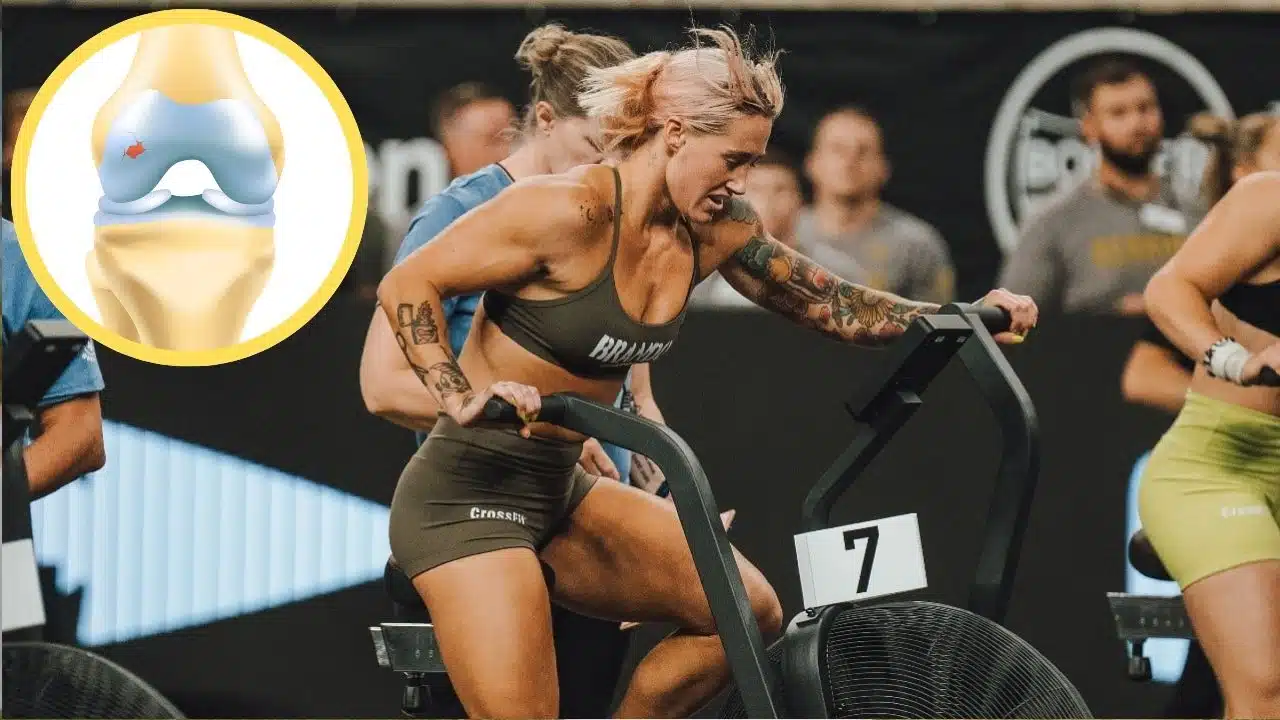
Instead, cartilage is a living tissue with active cells that respond to movement — and certain types of movement can actively help it rebuild.
If you’ve experienced cartilage wear in your knees, hips, or ankles, the right strategy may help protect what’s left, reduce pain, and even help you return to demanding sports like running or jumping.
Here’s how cartilage regeneration works, what types of exercise promote healing, and which supplements might make the process even more effective.
Jump to:
- Can You Really Strengthen Cartilage? Yes — Here’s Why
- How Exercise Impacts Cartilage Health
- The Best Low-Impact Exercises for Stimulating Cartilage Regeneration
- What to Avoid: High-Impact Movements and Loading Spikes
- Phase-Based Recovery Plan: From Healing to High-Impact
- Should You Take Supplements for Cartilage Health?
- Bottom Line: Protect, Rebuild, Gradually Reintroduce
Can You Really Strengthen Cartilage? Yes — Here’s Why
The notion that cartilage can’t heal or be strengthened is outdated. While it’s true that damaged cartilage doesn’t regenerate quickly, it’s also true that cartilage isn’t inert.
Cartilage consists of living cells called chondrocytes, which produce collagen and matrix—two components responsible for the tissue’s ability to absorb shock and allow for smooth joint movement.
These chondrocytes respond to specific types of physical load by increasing anabolic (building) activity. In other words, move right, and the tissue gets stronger. Move wrong, and degradation accelerates.
How Exercise Impacts Cartilage Health
Cartilage thrives when exposed to a specific type of stimulus: short, repetitive motion under moderate resistance.
According to current research, this stimulation works best when delivered in short bursts of 10 to 15 minutes, allowing ample rest between sessions to avoid overloading the tissue.
Best Practices for Cartilage-Friendly Movement
Here’s what the science supports:
- Duration: 10–15 minute sessions
- Type: Cyclic, repetitive, non-impact or low-impact exercise
- Intensity: Moderate resistance
- Frequency: Only once or twice daily
- Rest Interval: 6 to 12 hours between sessions
This regular but gentle stress encourages chondrocyte activity, particularly in the superficial layer of cartilage, where architectural organization is key to smooth joint motion.
Why Going Longer Doesn’t Help
More isn’t better here.
Research shows that after about 15 minutes of activity, chondrocytes reduce their responsiveness. The healing effect stops, and continuing can even veer into a catabolic (degenerative) zone.
The Best Low-Impact Exercises for Stimulating Cartilage Regeneration
Thinking about jumping into cardio or strength training? Slow down—in this case, choosing the right modality matters more than how hard you push.
Cycling (Stationary Bike)
- Duration: 10–15 minutes
- Cadence: 60–70 RPM
- Resistance: Moderate
This is possibly the most cartilage-friendly movement — cyclic, smooth, and load-bearing.
Cross Trainer / Elliptical
- Duration: 10–15 minutes
- Cadence: 60–70 steps per minute
- Resistance: Moderate
Its fluid movement and low joint impact make it another ideal option.
Rowing Machine
- Duration: 10–15 minutes
- Speed: 20–30 strokes per minute
- Resistance: Moderate
Effective for hip and knee cartilage stimulation when technique is controlled.
Leg Press Machine
- Duration: 10–15 minutes
- Reps: 20–30 repetitions per minute
- Resistance: Moderate
Make sure the movement remains predictable, with no locking out or jerky motion.
What to Avoid: High-Impact Movements and Loading Spikes
Hard impacts from running or jumping create irregular spikes in load, which cartilage cells dislike. This type of stimulus can lead to further breakdown, especially when repeated frequently or done while tissue is still healing.
Think of it like this:
- Green line: Smooth, sustained forces from low-impact movement
- Red line: Repetitive impact spikes from activities like running or plyometrics
That doesn’t mean you’ll never run again — it just means recovery must happen in phases.
Phase-Based Recovery Plan: From Healing to High-Impact
Phase 1: Cartilage Restoration
Use low-impact activity to stimulate chondrocyte activity and matrix alignment.
Keep all sessions short, controlled, and consistent. Limit frequency to once or twice daily with at least 6 hours of rest in between.
Phase 2: Introduce Subchondral Bone Adaptation
The bone just beneath the cartilage (subchondral bone plate) also plays a key role. While cartilage prefers gentle motion, this bone layer benefits from stronger loading—like the kind that comes from running or jumping.
But don’t jump straight there.
Transition slowly, using soft-impact activities such as:
- Speed walking
- Light jogging on grass
- Hydro-jogging in a pool
- Bodyweight strength training
Over time, your cartilage and its underlying support adapt together, making future high-impact tolerance possible.
Should You Take Supplements for Cartilage Health?
Yes — modern evidence supports several supplements that may reinforce cartilage repair, particularly when used alongside proper movement-based rehab.
Here are the most promising ones:
- Glucosamine
- AKBA (Acetyl-11-keto-beta-boswellic acid)
- Undenatured Type II Collagen
- Collagen Hydrolysate
- Bromelain
These compounds either stimulate anabolic cell activity or slow down catabolic breakdown pathways. Some are more effective in combination than taken alone.
Bottom Line: Protect, Rebuild, Gradually Reintroduce
Cartilage may heal more slowly and less dramatically than muscle, but it can heal — with the right input.
Stay consistent, follow the movement guidelines carefully, and avoid the temptation to rush back into high-impact activity too soon.
Combined with science-backed supplements, this approach may help you return to pain-free movement — and eventually even to the sports you thought you had to give up for good.